Dioscorea cumingii
Prain and Burk.
(c) 曾昱承 Yu-Cheng Zeng, some rights reserved (CC BY), uploaded by 曾昱承 Yu-Cheng Zeng
(c) 曾昱承 Yu-Cheng Zeng, some rights reserved (CC BY), uploaded by 曾昱承 Yu-Cheng Zeng
(c) 王錦堯(Ong Jin Yao), some rights reserved (CC BY-NC), uploaded by 王錦堯(Ong Jin Yao)
What to Eat
Edible parts: Tubers, Root
The tubers are cooked and eaten as a starchy root vegetable.
Where to Find It
A tropical plant. In the Philippines it occurs in forests in central Luzon. It grows in areas with considerable rainfall and close to mountains. It grows up to 1400 m altitude.
Asia, China, Indonesia, Pacific, Philippines, SE Asia, Taiwan,
How to Identify
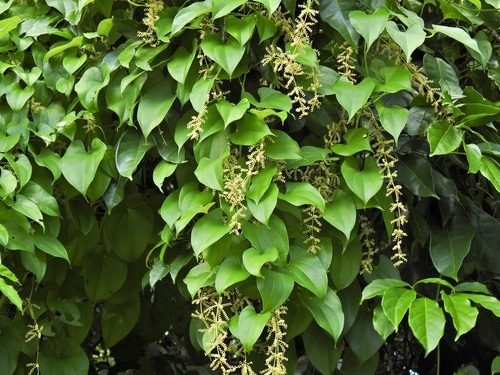
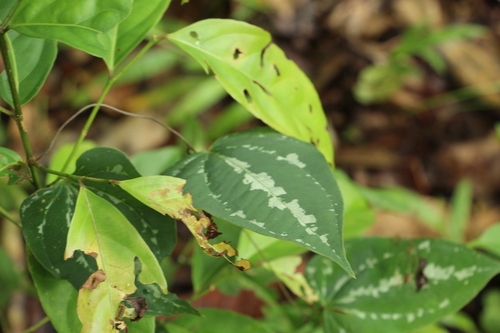
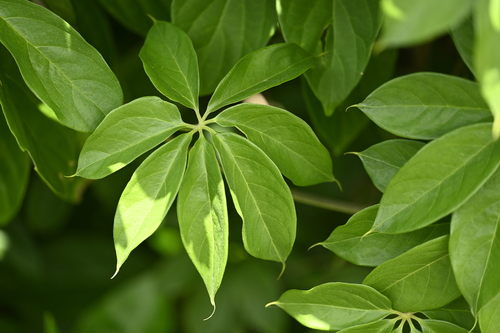
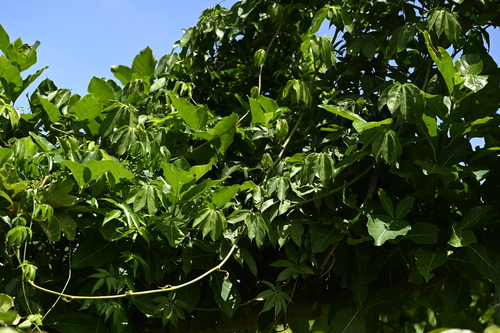
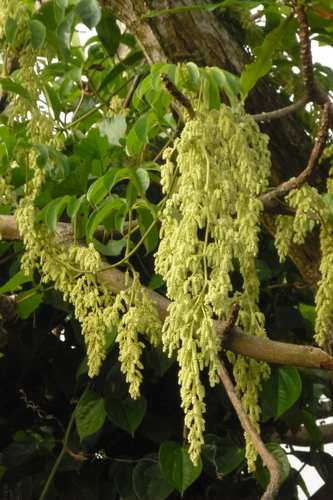
A yam. It keeps growing from year to year by shooting from the tubers. The vine is prickly. It twines to the left. The leaves are compound with 3-5-7 leaflets. They are arranged like fingers on a hand. They are covered with short soft brown hairs. There are 4 to 6 side nerves on the leaves. The leaf stalk is as long as the middle leaflet. The leaflet stalks are 1 cm long. The leaflets can be 18 cm long. The male flower is on the uppermost leaf axils and the female flowers are scattered on other leaf axils. The male flowering stalk is 70 cm long. The female flower stalks bear up to 30 flowers. The capsule is 2.5-4 cm long. It has wings.
Notes
There are about 650 species of Dioscorea.
Names & Synonyms
Kasi, Lima-lima, Lu song shu yu, Pari
References (5)
- Ding Zhizun, Gilbert, M. G., DIOSCOREACEAE, shu yu ke, Flora of China,
- Lim, T. K., 2015, Edible Medicinal and Non Medicinal Plants. Volume 9, Modified Stems, Roots, Bulbs. Springer p 34
- Monsalud, M.R., Tongacan, A.L., Lopez, F.R., & Lagrimas, M.Q., 1966, Edible Wild Plants in Philippine Forests. Philippine Journal of Science. p 461
- PROSEA handbook Volume 9 Plants yielding non-seed carbohydrates. p 171
- Reis, S. V. and Lipp, F. L., 1982, New Plant Sources for Drugs and Foods from the New York Botanical Garden herbarium. Harvard. p 29