Dioscorea elephantipes
(L'Her.) Engl.
Elephant’s foot, Hottentot bread
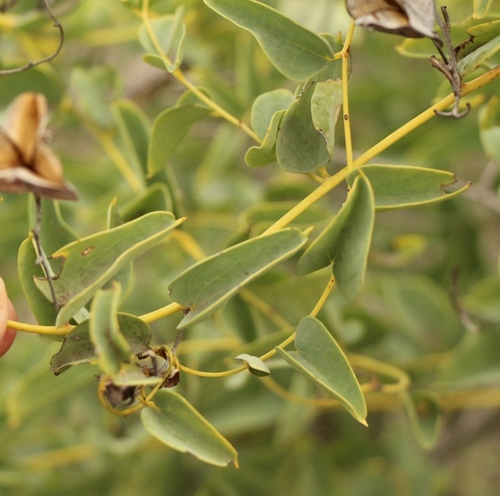
(c) Sandra Falanga, some rights reserved (CC BY-NC), uploaded by Sandra Falanga
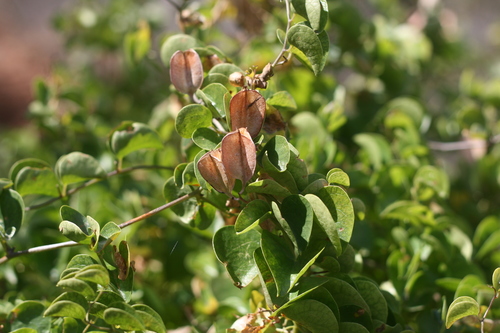
(c) Luc Strydom, some rights reserved (CC BY-NC), uploaded by Luc Strydom
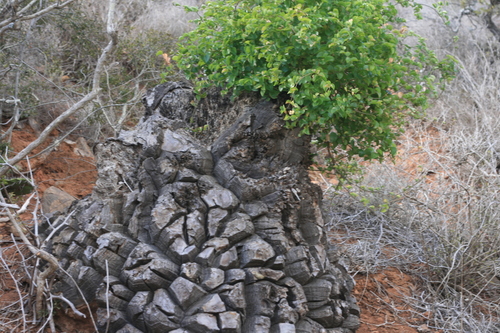
(c) Luc Strydom, some rights reserved (CC BY-NC), uploaded by Luc Strydom
What to Eat
Edible parts: Tuber, Root
The tubers are cooked and eaten, and are also processed for starch. Historically used as a famine food by Hottentots in South Africa.
Where to Find It
It is a warm temperate to subtropical plant. It cannot tolerate frost. It grows naturally on dry rocky slopes in South Africa. It is best in light, well-drained soils. It needs an open, sunny position. In South Africa it grows between 250-1,250 m above sea level. It can grow in arid places. Hobart Botanical Gardens hot house. It suits hardiness zones 9-11.
Australia, Angola, Botswana, Central Africa, Hawaii, Namibia, Pacific, Slovenia, South Africa*, Southern Africa, Tasmania, USA,
How to Identify
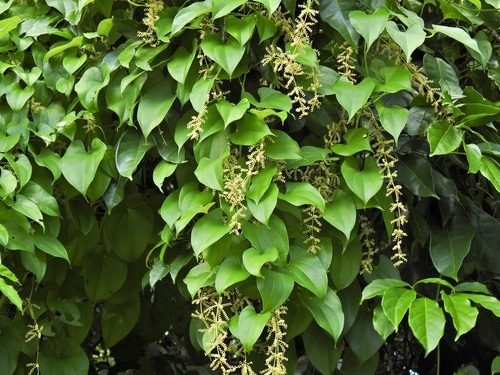
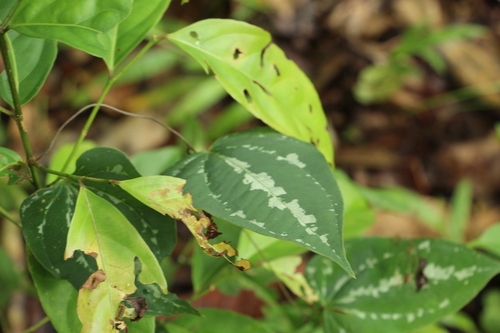
A yam. A vine with a succulent growth near ground level. This can grow 1 m long and 1 m high. It is above ground. It has angular lumps. It is hard and corky. The stems twine to the left. The leaves are heart shaped. The flowers are yellowish-green. The male flowers are in erect flowering stalks and the female flowers are nodding and spiny.
Nutrition Score: 10/100
| Part | Moisture | kJ | kcal | Protein | Vit A | Vit C | Iron | Zinc |
|---|---|---|---|---|---|---|---|---|
| Tubers | 92.7 | 98 | 23 | 0.3 | — | 2.9 | 0.4 | 0.2 |
How to Grow
Plants are grown from seed. They can also be grown by cuttings.
Wikipedia
Source ↗Dioscorea elephantipes, the elephant's foot yam or Hottentot bread, is a species of flowering plant in the genus Dioscorea of the family Dioscoreaceae, native to the dry interior of South Africa.
Other Information
It is a famine food. It is cultivated.
Notes
There are about 650 species of Dioscorea.
Names & Synonyms
Nakaa, Olifantsvoet, Razbrazdana dioskoreja
References (18)
- Anderson, M., 2002, The World Encyclopedia of Cacti and Succulents. Hermes House, New York. p 149
- Bodkin, F., 1991, Encyclopedia Botanica. Cornstalk publishing, p 345
- Brickell, C. (Ed.), 1999, The Royal Horticultural Society A-Z Encyclopedia of Garden Plants. Convent Garden Books. p 370
- Cheifetz, A., (ed), 1999, 500 popular vegetables, herbs, fruits and nuts for Australian Gardeners. Random House p 66
- Coursey, D.G., 1979, Yams, in Simmonds N.W.,(ed), Crop Plant Evolution. Longmans. London. p 70
- Cundall, P., (ed.), 2004, Gardening Australia: flora: the gardener's bible. ABC Books. p 503
- H. G. A. Engler & C. G. O. Drude, Veg. Erde 9(II):367. 1908 (Pflanzenw. Afrikas)
- Fox, F. W. & Young, M. E. N., 1982, Food from the Veld. Delta Books. p 182
- Hedrick, U.P., 1919, (Ed.), Sturtevant's edible plants of the world. p 645 (As Testudinaria elephantipes)
- Llamas, K.A., 2003, Tropical Flowering Plants. Timber Press. p 185
- Plowes, N. J. & Taylor, F. W., 1997, The Processing of Indigenous Fruits and other Wildfoods of Southern Africa. in Smartt, L. & Haq. (Eds) Domestication, Production and Utilization of New Crops. ICUC p 190
- Royal Botanic Gardens, Kew (1999). Survey of Economic Plants for Arid and Semi-Arid Lands (SEPASAL) database. Published on the Internet; http://www.rbgkew.org.uk/ceb/sepasal/internet [Accessed 16th April 2011]
- Ruiters-Welcome, A. K., 2019, Food plants of southern Africa. Ph.D. thesis. Univ. of Johannesburg p 51
- Staples, G.W. and Herbst, D.R., 2005, A tropical Garden Flora. Bishop Museum Press, Honolulu, Hawaii. p 659
- van Wyk, Be., & Gericke, N., 2007, People's plants. A Guide to Useful Plants of Southern Africa. Briza. p 86
- Welcome, A. K. & Van Wyk, B.-E., 2019, An inventory and analysis of the food plants of southern Africa. South African Journal of Botany 122 (2019) 136–179
- World Checklist of Useful Plant Species 2020. Royal Botanic Gardens, Kew
- Zeven, A. C. & de West, J. M. J., 1982, Dictionary of cultivated plants and their regions of diversity. Wageningen. p 125