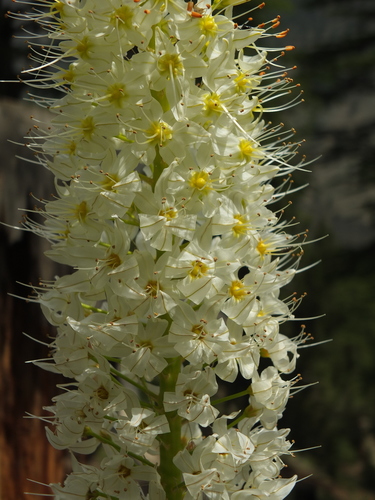
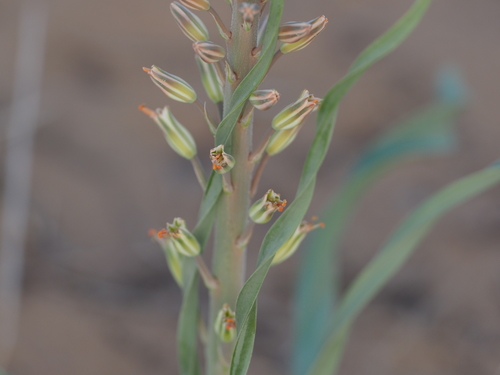
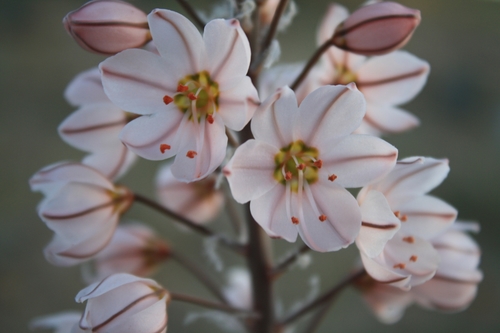
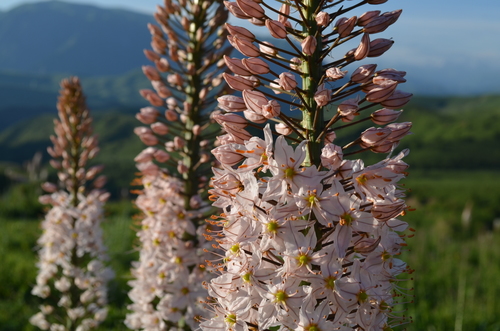
Hemerocallis coreana
Nakai.

Kousvet (via Wikimedia Commons)
What to Eat
Edible parts: Flowers, Leaves, Root, Shoots
Leaves and young shoots - cooked. They must be consumed when very young or else they become fibrous. Flowers and flower buds - raw or cooked. The flowers can be up to 12cm long. The flower buds contain about 43mg vitamin C per 100g, 983 IU vitamin A and 3.1% protein. If this species has swollen roots then they can be eaten raw or cooked.
Known Hazards
Where to Find It
E. Asia - China, Japan, Korea.
TEMPERATE ASIA: Korea, South
How to Identify
Hemerocallis coreana is a PERENNIAL growing to 0.4 m (1ft 4in). It is not frost tender. The species is hermaphrodite (has both male and female organs) and is pollinated by Insects. Suitable for: light (sandy), medium (loamy) and heavy (clay) soils and can grow in heavy clay soil. Suitable pH: mildly acid, neutral and basic (mildly alkaline) soils. It can grow in semi-shade (light woodland) or no shade. It prefers dry or moist soil.
How to Grow
Succeeds in most soils, including dry ones, preferring a rich moist soil and a sunny position. Grows well in heavy clay soils. Succeeding in sun or shade, it produces more flowers in a sunny position though these flowers can be shorter-lived in very sunny positions. Succeeds in short grass if the soil is moist. Prefers a pH between 6 and 7. According to the Flora of China, this species is no more than a synonym for H. citrina. It is, however, seen as a distinct species in other treatments and so is maintained here as a separate species. This species has not yet been grown in Europe (1994) so its hardiness is not known. Hybridizes freely with other members of this genus. Individual flowers only live for one day, however there are 50 - 80 flowers produced on each scape. Plants take a year or two to become established after being moved. Plants seem to be immune to the predations of rabbits. The plants are very susceptible to slug and snail damage, the young growth in spring is especially at risk.
Propagation: Seed - sow in the middle of spring in a greenhouse. Germination is usually fairly rapid and good. Prick out the seedlings into individual pots when they are large enough to handle. Grow the plants on for their first winter in a greenhouse and plant out in late spring. Division in spring or after flowering in late summer or autumn. Division is very quick and easy, succeeding at almost any time of the year. Larger clumps can be replanted direct into their permanent positions, though it is best to pot up smaller clumps and grow them on in a cold frame until they are rooting well. Plant them out in the spring.
Medicinal Uses
Antidote Diuretic Vitamin CThe juice of the roots is an effective antidote in cases of arsenic poisoning. A tea made from the boiled roots is used as a diuretic.
Other Uses
Weaving. The tough dried foliage is plaited into cord and used for making footwear.