Encephalartos spp.
Various
Bread trees, Bread palms, Kaffir bread

Bart Wursten

Bart Wursten

Bart Wursten
What to Eat
Edible parts: Stem
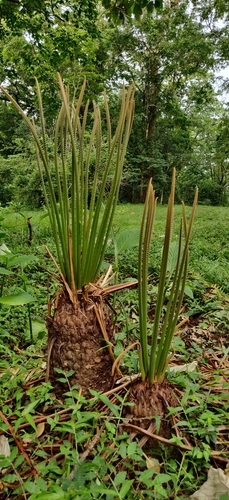
The pith of the trunk, in some species, contains large amount of high quality starch below the crown. This was formerly cut out by native people as food. Encephalartos, like all cycads, are toxic, but the pith, if buried for several years, gets the toxins leached out of it, and then it can safely be cooked into a bread-like food.
Known Hazards
Where to Find It
Africa - south, east and central.
AFRICA: Sudan, Kenya, Tanzania, Uganda, Democratic Republic of the Congo, Benin, Ghana, Nigeria, Togo, Angola, Mozambique, Malawi, Zambia, Zimbabwe, Eswatini, South Africa (Cape Province, Kwa. Zulu-Natal, Transvaal)
How to Identify
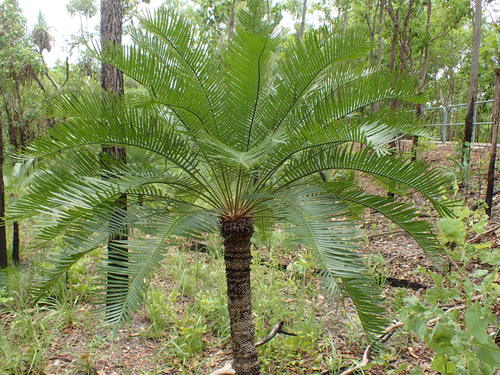
Encephalartos spp. is an evergreen Perennial growing to 3 m (9ft) by 3 m (9ft) at a slow rate. See above for USDA hardiness. It is hardy to UK zone 10. Suitable for: light (sandy) and medium (loamy) soils and prefers well-drained soil. Suitable pH: mildly acid, neutral and basic (mildly alkaline) soils. It can grow in semi-shade (light woodland) or no shade. It prefers dry or moist soil and can tolerate drought.
How to Grow
Hypothetical Crop Industrial Crop: Starch Management: Standard. Climate: warm temperate to tropical. Humidity: arid to humid. Usually heat-loving succulents that do not like excessive watering or shade. Species have adapted to full sun or shade, and extremes of moisture. Drought-tolerant; suitable for xeriscaping. Average Water Needs; Water regularly; do not overwater. Full Sun but some species can tolerate some shade. They can produce occasional suckers. Some are dioecious species, both male and female forms need to be grown if fruit and seed are required. All Encephalartos species are considered endangered though many are not threatened currently. The whole genus is listed under CITES Appendix I / EU Annex A. CITES prohibits international trade in specimens of these species except for certain non-commercial motives, such as scientific research. Carbon Farming Solutions - Cultivation: hypothetical. Management: standard (Describes the non-destructive management systems that are used in cultivation).
Propagation: By dividing rhizomes, tubers, corms or bulbs (including offsets). From seed; germinate in vitro in gelatin, agar or other medium.
Other Uses
Carbon Farming Solutions - Industrial Crop: starch (Crops grown for non-food uses. Industrial crops provide resources in three main categories: materials, chemicals, and energy. Traditional materials include lumber and thatch, paper and cardboard, and textiles). Female cones are consequently destroyed by baboons, for the tasty pith around the seeds. Vervet monkeys, rodents and birds also feed on the seeds. Ornamental - Drought-tolerant; suitable for xeriscaping.
Names & Synonyms
Encephalartos species, Bread trees, Bread palms, Kaffir bread