Glochidion rubrum
Bl.
Red glochidion
no rights reserved, uploaded by 葉子
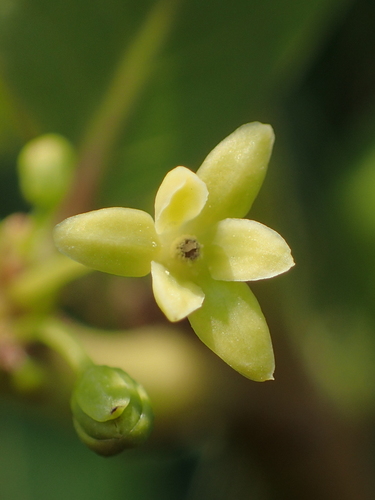
no rights reserved, uploaded by 葉子
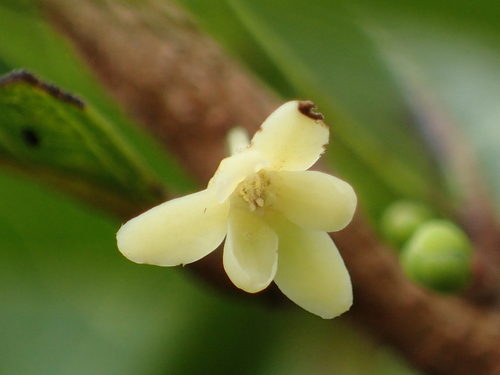
no rights reserved, uploaded by 葉子
What to Eat
Edible parts: Leaves
Young leaves are eaten.
Where to Find It
It is a tropical plant. It grows in clear forests. It grows from the lowlands to the high mountains in Java. In SE China it grows between 200-600 m above sea level. It can be up to 2,400 m above sea level.
Asia, Cambodia, China, India, Indochina, Indonesia, Japan, Malaysia, Myanmar, Philippines, SE Asia, Singapore, Taiwan, Thailand, Vietnam,
How to Identify
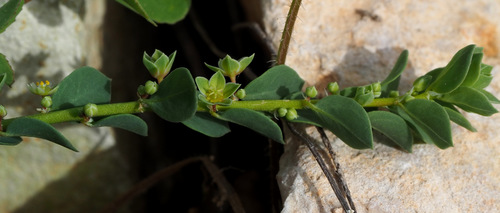
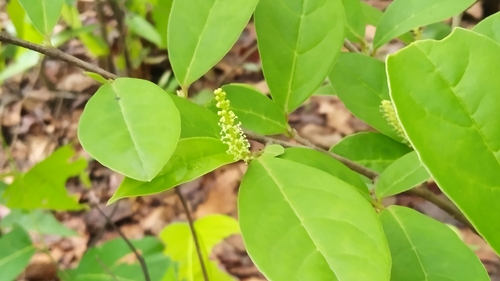
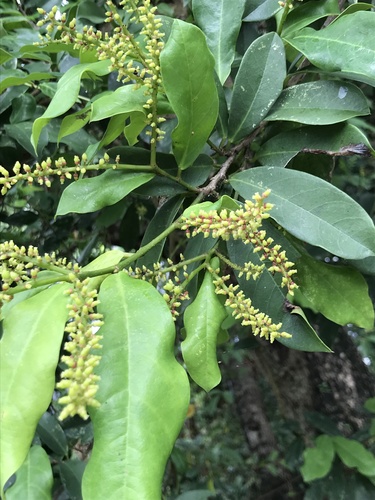
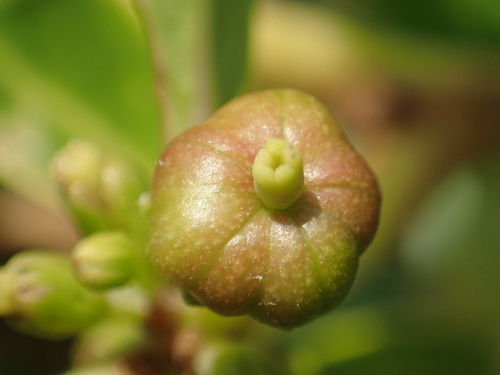
A shrub or tree. It grows 4-20 m tall. The leaves are oblong or sword shaped and oblique, They are 3-15 cm long by 1-6 cm wide. The flowers are small and yellowish white.
How to Grow
Plants are grown from seeds.
Medicinal Uses
The macerated leaves are used in the treatment of haemorrhoids.
Other Uses
The wood is used for timber.
Notes
There are about 300 Glochidion species.
Names & Synonyms
Dempul, Dempul lele, Dempul merah, Gambiran, Kitimbel, Lamer, Lew aw
References (5)
- Burkill, I.H., 1966, A Dictionary of the Economic Products of the Malay Peninsula. Ministry of Agriculture and Cooperatives, Kuala Lumpur, Malaysia. Vol 1 (A-H) p 1095
- Martin, F.W. & Ruberte, R.M., 1979, Edible Leaves of the Tropics. Antillian College Press, Mayaguez, Puerto Rico. p 89, 192
- Ochse, J.J. et al, 1931, Vegetables of the Dutch East Indies. Asher reprint. p 276
- Sukarya, D. G., (Ed.) 2013, 3,500 Plant Species of the Botanic Gardens of Indonesia. LIPI p 633
- Terra, G.J.A., 1973, Tropical Vegetables. Communication 54e Royal Tropical Institute, Amsterdam, p 49