Hemerocallis fulva
(L.) L.
Common day lily, Tawny Daylily

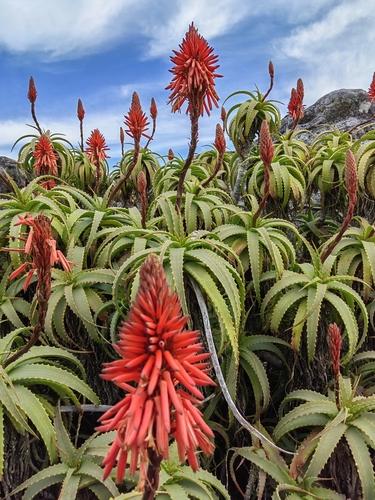
(c) lisacd, some rights reserved (CC BY-NC)

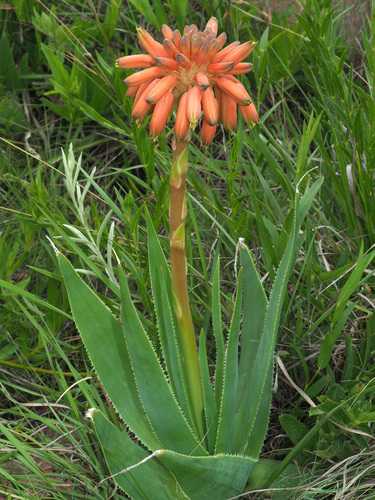
(c) Susan Elliott, some rights reserved (CC BY-NC), uploaded by Susan Elliott
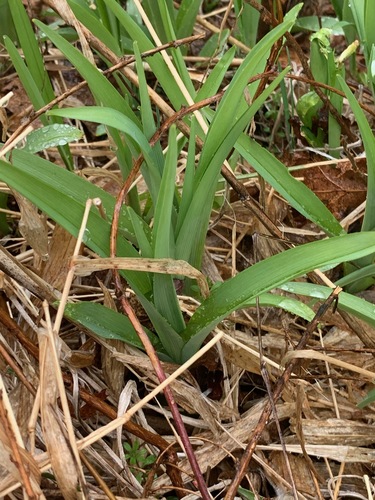
(c) Edward J Norton, some rights reserved (CC BY-NC), uploaded by Edward J Norton
What to Eat
Edible parts: Flowers, Leaves, Root, Bulb, Shoots, Vegetable
Leaves and young shoots are cooked and used as an asparagus or celery substitute — an excellent, sweet-tasting vegetable, though some caution is recommended. They must be harvested while still very young, as they quickly become fibrous. Flowers can be eaten raw or cooked; the petals are thick and crunchy with a pleasant sweetness from nectar at the base. Flowers can also be dried and used as a thickener in soups, in which case they are picked when somewhat withered and closed. Fresh flowers are a rich source of iron. Flower buds have a pea-like flavour and can be dried and used as a relish; dried buds contain approximately 9.3% protein, 25% fat, 60% carbohydrate (rich in sugar), and 0.9% ash, and are rich in vitamin A. Tubers are edible raw or cooked with a nutty flavour; young tubers are best, though the central portion of older tubers is also good.
Known Hazards
Where to Find It
It is a temperate plant. It grows in forests and thickets in grasslands and near streams from 300-2500 m altitude in China. It suits hardiness zones 4-9. In XTBG Yunnan. In Sichuan.
Africa, Asia, Australia, Austria, Balkans, Bangladesh, Belgium, Bosnia, Britain, Bulgaria, Canada, Caucasus, Central America, China*, Costa Rica, Cuba, Czech Republic, Dominican Republic, Egypt, Europe, Eswatini, France, Germany, Haiti, Hawaii, Himalayas, Honduras, Hungary, India, Indochina, Italy, Jamaica, Japan*, Korea, Kyrgyzstan, Mexico, Myanmar, Nepal, New Zealand, North Africa, North America, Northeastern India, Pacific, Pakistan, Panama, Puerto Rico, Romania, Russia, SE Asia, Slovenia, South Africa, Southern Africa, Swaziland, Switzerland, Taiwan, Thailand, Tibet, Turkey, Türkiye, Ukraine, USA, Vietnam, Yugoslavia,
How to Identify
A herb. It grows 40-150 cm tall. Plants usually lose their leaves during the winter. The roots are fleshy with swollen tubers near the tip. There can be stolons or runners up to 30 cm long. The leaves are narrow and 50-90 cm long by 1-2.8 cm wide. The flowers occur as double groups of 2-5 flowers. The flowers are yellow or orange. They do not have a scent. They open in the morning and close in the evening of the same day. The fruit is a capsule. It is oval and 2-2.5 cm long by 1.2-1.5 cm wide. Several varieties are recognised.
How to Grow
Succeeds in most soils, including dry ones, though it prefers a rich moist soil and a sunny position but tolerating partial shade. Plants flower less freely in a shady position though the flowers can last longer in such a position. Grows well in heavy clay soils. Succeeds in short grass if the soil is moist. Prefers a pH between 6 and 7. This species is hardy to about -20°c. Plants take a year or two to become established after being moved. The roots have spindle-shaped swellings and spread freely, the plant can become invasive. A very ornamental plant, it is cultivated in China and Japan for its edible flowers and leaves, there are many named varieties. Individual flowers are short-lived, opening in the morning and withering in the evening. The plant, however, produces a succession of flowers over a period of about 6 weeks. The sterile cultivar 'Kwanzo' has double flowers, it has been especially mentioned for these flowers which are said to be crunchy with a nutty aftertaste. 'Flore Pleno' is another form with double-flowers that have a delicious taste. The sterile cultivar 'Europa' is very vigorous, with long stolons, and each piece of root is capable of growing into a new plant. This cultivar, which is the form usually supplied from nurseries, succeeds in lawns and has even been known to grow through tarmac. Hybridizes freely with other members of this genus. Many forms of this plant are sterile triploids, probably of garden origin, and do not set seed. The pollen, however, is fertile and can be used to fertilize other plants. The plants are very susceptible to slug and snail damage, the young growth in spring is especially at risk.
Propagation: Sow seed in mid-spring in a greenhouse; germination is usually fairly rapid and good. Prick seedlings into individual pots when large enough to handle, overwinter in the greenhouse, and plant out in late spring. Divide plants in spring or after flowering in late summer or autumn — division is quick and easy at almost any time of year. Larger clumps can go straight into permanent positions; smaller clumps are best potted up and grown on in a cold frame until rooting well, then planted out in spring.
Medicinal Uses
The plant has diuretic, febrifuge, and mild laxative properties. Flowers are anodyne, antiemetic, antispasmodic, depurative, febrifuge, and sedative; in China they are used as an anodyne for women in childbirth, and an extract of the flowers is used as a blood purifier. The rhizome has demonstrated antimicrobial activity and is tuberculostatic, with action against the parasitic worms responsible for filariasis. In Korea the plant is used to treat oppilation, jaundice, constipation, and pneumonia. The juice of the roots is an effective antidote in cases of arsenic poisoning. The root also has a folk history of use in cancer treatment, and root extracts have shown antitumour activity. A tea made from boiled roots is used as a diuretic.
Other Uses
The tough dried foliage can be plaited into cord and used for making footwear. Plants spread into clumps and work well as ground cover when spaced about 90cm apart each way; dead leaves should be left on the ground over winter to ensure effective cover. The cultivar 'Kwanso Flore Pleno' has been especially noted for this purpose. Flowers are rich in nectar and pollen, attracting bees, butterflies, and other pollinators. The dense foliage can provide shelter for small wildlife, and the leaf litter offers overwintering habitat for beneficial insects.
Wikipedia
Source ↗Hemerocallis fulva, the orange day-lily, tawny daylily, corn lily, tiger daylily, fulvous daylily, ditch lily or Fourth of July lily (also railroad daylily, roadside daylily, outhouse lily, track lily, and wash-house lily), is a species of daylily native to Asia. It is very widely grown as an ornamental plant in temperate climates for its showy flowers and ease of cultivation. It is not a true lily in the genus Lilium, but gets its common name from the superficial similarity of its flowers to Lilium and from the fact that each flower lasts only one day.
Other Information
It is a commercially cultivated vegetable.
Notes
There are about 15 Hemerocallis species. Chemical composition (flowers): Protein = 9.3%. Fat = 25%. Ash = 0.9%. Carbohydrate = 60% (rich in sugar). Rich in Vitamin A and some B vitamins. Also put in the family Hemerocallidaceae.
Names & Synonyms
Chin cheng tsai, Chu-ta, Dok mai cheen, Fulvus daylily, Golden needles, Hoa hien, Huanghuacai, Kanzou, Kim cham, Orange day lily, Rumenorjava maslenica, Shina-kanzo, Wonchurri, Xuan cao, Yabu-kanzo, Yellow flower vegetable
References (44)
- Ambasta, S.P. (Ed.), 2000, The Useful Plants of India. CSIR India. p 262
- Bodkin, F., 1991, Encyclopedia Botanica. Cornstalk publishing, p 550
- Brickell, C. (Ed.), 1999, The Royal Horticultural Society A-Z Encyclopedia of Garden Plants. Convent Garden Books. p 513
- Burkill, I.H., 1966, A Dictionary of the Economic Products of the Malay Peninsula. Ministry of Agriculture and Cooperatives, Kuala Lumpur, Malaysia. Vol 1 (A-H) p 1155
- Chao, Pi-Yu, et al, 2014, Antioxidant Activity in Extracts of 27 Indigenous Taiwanese Vegetables. Nutrients 2014, 6, 2115-2130
- Crawford, M., 2012, How to grow Perennial Vegetables. Green Books. p 93
- Chen, B. & Qiu, Z., Consumer's Attitudes towards Edible Wild Plants, Ishikawa Prefecture, Japan. p 23 www.hindawi.com/journals/ijfr/aip/872413.pdf (var. kwanso)
- Chen Xinqi, Liang Songyun, Xu Jiemei, Tamura M.N., Liliaceae. Flora of China. p 93
- Cundall, P., (ed.), 2004, Gardening Australia: flora: the gardener's bible. ABC Books. p 692
- Duke, J.A., 1992, Handbook of Edible Weeds. CRC Press. p 110
- Elias, T.S. & Dykeman P.A., 1990, Edible Wild Plants. A North American Field guide. Sterling, New York p 136
- Esperanca, M. J., 1988. Surviving in the wild. A glance at the wild plants and their uses. Vol. 1. p 260
- Facciola, S., 1998, Cornucopia 2: a Source Book of Edible Plants. Kampong Publications, p 143
- Hibbert, M., 2002, The Aussie Plant Finder 2002, Florilegium. p 127
- Hu, Shiu-ying, 2005, Food Plants of China. The Chinese University Press. p 318
- Hwang, H., et al, 2013, A Study on the Flora of 15 Islands in the Western Sea of Jeollanamdo Province, Korea. Journal of Asia-Pacific Biodiversity Vol. 6, No. 2 281-310
- Hwang, HS, et al, 2014, Distribution characteristics of plant in the Ungseokbong Mountain, Gyeongsangnam-do, Korea. Journal of Asia-Pacific Biodiversity. 7(2014) e164-e178
- Irving, M., 2009, The Forager Handbook, A Guide to the Edible Plants of Britain. Ebury Press p 341
- Jackes, D. A., Edible Forest Gardens
- Kang, Y., et al, 2012, Wild food plants and wild edible fungi in two valleys on the Qinling Mountains (Shaanxi, central China) Journal of Ethnobiology and Ethnomedicine; 9:26
- Kays, S. J., and Dias, J. C. S., 1995, Common Names of Commercially Cultivated Vegetables of the World in 15 languages. Economic Botany, Vol. 49, No. 2, pp. 115-152
- Kew Plants of the World Online
- Levy-Yamamori, R., & Taaffe, G., 2004, Garden Plants of Japan. Timber Press. p 324
- Li, S., et al, 2020, Monpa, memory, and change: an ethnobotanical study of plant use in Mêdog County, South-east Tibet, China. Journal of Ethnobiology and Ethnomedicine. (2020) 16:5 p 24
- Lim, T. K., 2015, Edible Medicinal and Non Medicinal Plants. Volume 9, Modified Stems, Roots, Bulbs. Springer p 46
- Liu, Yi-tao, & Long, Chun-Lin, 2002, Studies on Edible Flowers Consumed by Ethnic Groups in Yunnan. Acta Botanica Yunnanica. 24(1):41-56
- Low, T., 1992, Bush Tucker. Australia’s Wild Food Harvest. Angus & Robertson. p 174
- Pemberton, R. W. & Lee, N. S., 1996, Wild Food Plants in South Korea: Market Presence, New Crops, and Exports to the United States. Economic Botany, Vol. 50, No. 1, pp. 57-70
- Plants for a Future database, The Field, Penpol, Lostwithiel, Cornwall, PL22 0NG, UK. http://www.scs.leeds.ac.uk/pfaf/
- READ,
- Redzic, S., 2010, Use of Wild and Semi-Wild Edible Plants in Nutrition and Survival of People in 1430 Days of Siege of Sarajevo during the War in Bosnia and Herzegovina (1992–1995). Coll. Antropol 34 (2010) 2:551-570
- Romanowski, N., 2007, Edible Water Gardens. Hyland House. p 87
- Seidemann J., 2005, World Spice Plants. Economic Usage, Botany, Taxonomy. Springer. p 175
- Slocum, P.D. & Robinson, P., 1999, Water Gardening. Water Lilies and Lotuses. Timber Press. p 121
- Solomon, C., 2001, Encyclopedia of Asian Food. New Holland. p 118
- Song, M., et al, 2013, Traditional knowledge of wild edible plants in Jeju Island, Korea. Indian Journal of Traditional Knowledge. 12(2) pp 177-194
- Sp. pl. ed. 2, 1:462. 1762
- Staples, G.W. and Herbst, D.R., 2005, A tropical Garden Flora. Bishop Museum Press, Honolulu, Hawaii. p 688
- Swaziland's Flora Database http://www.sntc.org.sz/flora
- Tanaka, Y & Van Ke, N., 2007, Edible Wild Plants of Vietnam. Orchid Press. p 85
- Valder, P., 1999, The Garden Plants of China. Florilegium. p 360
- Wiersema, J. H. & Leon, B., 2013, World Economic Plants. A Standard Reference CRC Press. 2nd Ed. p 346
- Woodward, P., 2000, Asian Herbs and Vegetables. Hyland House. p 77
- World Checklist of Useful Plant Species 2020. Royal Botanic Gardens, Kew