Hemerocallis yezoensis
H. Hara

(c) 空猫 T. N, some rights reserved (CC BY-NC), uploaded by 空猫 T. N
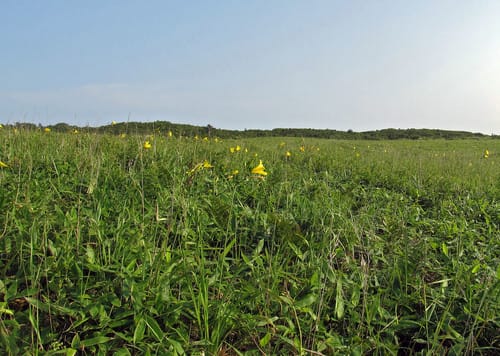
(c) Yury O. Kopylov-Guskov, some rights reserved (CC BY-NC)
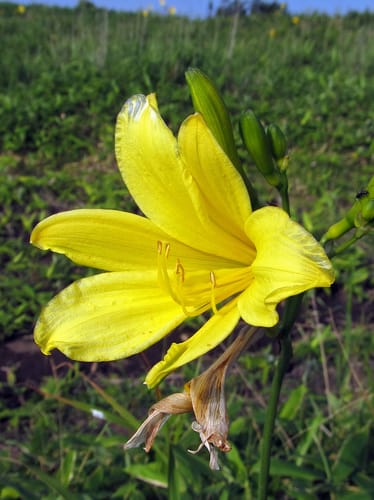
(c) Yury O. Kopylov-Guskov, some rights reserved (CC BY-NC)
What to Eat
Edible parts: Flowers, Leaves
Leaves and young shoots are edible cooked, but must be harvested when very young before they turn fibrous. Flowers and flower buds can be eaten raw or cooked, and the dried flowers work well as a thickener in soups. The flower buds are notably nutritious, containing approximately 43mg of vitamin C per 100g, 983 IU of vitamin A, and 3.1% protein.
Known Hazards
Where to Find It
It is a temperate plant.
Asia, China, Japan, Korea,
How to Identify
A perennial daylily growing to 0.8 m (2ft 7in). Hardy to UK zone 5 and USDA zones as indicated. Blooms May to June. Hermaphroditic and suited to light sandy, medium loamy, and heavy clay soils across mildly acid to basic pH ranges. Grows well in semi-shade or full sun and tolerates dry or moist soil conditions.
How to Grow
Succeeds in most soils, including dry ones, preferring a rich moist soil and a sunny position but tolerating partial shade. Plants flower less freely in a shady position though the flowers can last longer in such a position. Grows well in heavy clay soils. Succeeds in short grass if the soil is moist. Prefers a pH between 6 and 7. A very cold-hardy plant, tolerating temperatures down to about -25°c. The roots are slender and not swollen. The scapes carry between 4 and 12 blooms. Hybridizes freely with other members of this genus. It is closely related to H. vespertina Hara.. Plants take a year or two to become established after being moved. Plants seem to be immune to the predations of rabbits. The plants are very susceptible to slug and snail damage, the young growth in spring is especially at risk.
Propagation: Sow seed in mid-spring in a greenhouse; germination is generally quick and reliable. Prick seedlings into individual pots once large enough to handle, overwinter them under glass, and plant out in late spring. Alternatively, divide plants in spring or after flowering in late summer or autumn — division is straightforward and can be done almost any time of year. Larger clumps can go directly into permanent positions, while smaller ones are best potted into a cold frame until well rooted, then planted out in spring.
Medicinal Uses
The juice of the roots acts as an effective antidote to arsenic poisoning. A tea brewed from boiled roots is used as a diuretic.
Other Uses
The tough dried foliage can be plaited into cord and fashioned into footwear.
Wikipedia
Source ↗Hemerocallis yezoensis (Japanese: エゾキスゲ, romanized: ezokisuge, Russian: Красоднев иезский, romanized: Krasodnev iyezskiy) is a species of plant in the genus Hemerocallis, native to eastern Hokkaido and the southernmost extremities of the Kuril Islands.
Notes
There are about 15 Hemerocallis species. Also put in the family Hemerocallidaceae.
Names & Synonyms
References (2)
- J. Jap. Bot. 14:520. 1938
- Plants for a Future database, The Field, Penpol, Lostwithiel, Cornwall, PL22 0NG, UK. http://www.scs.leeds.ac.uk/pfaf/