Phyllanthus muellerianus
(Kuntze) Exell

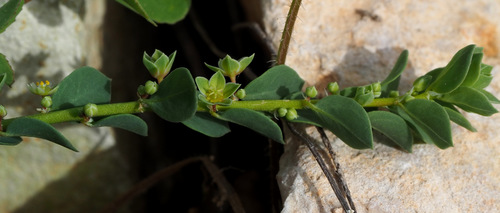
(c) Marco Schmidt, some rights reserved (CC BY-NC-SA)

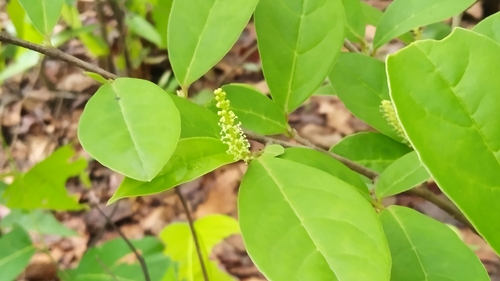
(c) Marco Schmidt, some rights reserved (CC BY-NC-SA)

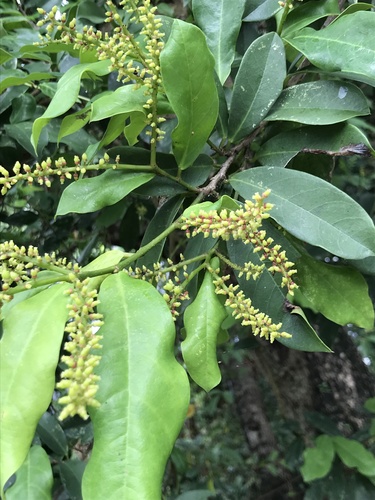
(c) Marco Schmidt, some rights reserved (CC BY-NC-SA)
What to Eat
Edible parts: Leaves, Fruit, Root, Stems - juice, Bark
The fruits are edible and slightly acidic. The red to black, fleshy, almost globose fruit is 3 - 4mm in diameter, containing six seeds. The clear sap that flows from the cut stems is considered drinkable. The bark is sometimes added to palm wine to render it strongly intoxicating. Consuming the drink may give rise to a sort of frenzy. The leaves are sometimes used as a supplement - cooked with food or in soup as a seasoning.
Where to Find It
A tropical plant. It grows is deciduous and secondary forests in West Africa. In Malawi it grows near rivers and the lake. It grows in the humid zone in West Africa.
Africa, Angola, Benin, Burkina Faso, Cameroon, Central Africa, Central African Republic, CAR, Congo DR, Côte d'Ivoire, East Africa, Gabon, Ghana, Guinea, Guinée, Guinea-Bissau, Ivory Coast, Kenya, Malawi, Mali, Mozambique, Nigeria, Sao Tome and Principe, Senegal, Sierra Leone, Tanzania, Togo, Uganda, West Africa, Zambia,
How to Identify
A shrub or woody climber. The stems can be 10 cm across. The spur shoots have sharp spines. The fruit is a small black spine.
Nutrition Score: 39/100
| Part | Moisture | kJ | kcal | Protein | Vit A | Vit C | Iron | Zinc |
|---|---|---|---|---|---|---|---|---|
| Fruit | 77 | 294 | 70 | 9.7 | — | — | — | — |
How to Grow
The plant is reported as a weed of rice fields in parts of Nigeria - this is plainly caused by a lack of timely cultivation. The plant can be coppiced.
Propagation: Seed - Stem cuttings.
Medicinal Uses
The plant is widely used in traditional medicine, especially to treat intestinal troubles. A preliminary phytochemical screening of the leaves and stem bark showed the presence of tannins, flavonoids, saponins, alkaloids and anthraquinones. A leaf extract showed moderate antiplasmodial activity and low cytotoxicity in mammalian cell lines. Both the aqueous and methanol extracts of the leaves and stem bark showed high antibacterial activity against Staphylococcus aureus and Pseudomonas aeruginosa. The activity of the extracts was relatively stable at high temperatures and was enhanced at low pH. In another test a chloroform extract showed high antifungal activity against Candida albicans and antibacterial activity against Escherichia coli. An infusion of the young shoots is taken to treat severe dysentery and chest complaints. A decoction of the leaves is taken to treat anaemia and constipation. The twigs are sucked to prevent toothache. The roasted powdered twigs are eaten with plant ash to treat dysmenorrhoea. The leaves are eaten, together with young leaves of Funtumia elastica, to improve male fertility. The leaves, boiled with palm fruits, are a general tonic and are given as a soup to women after giving birth. The pounded fresh leaves are commonly applied as a wound dressing. A leaf decoction is used as a mouthwash to treat toothache, after which the cooked leaves are applied to the gums. A leaf extract is used as a bath and a vapour bath to treat venereal diseases. The leaf sap, or the sap from the thick hollow stem, is applied as eye drops to treat pain in the eyes, eye infections or to remove a foreign body. The leaf-sap is used as a wash when treating fevers and skin-eruptions. The pulped leafy twigs are rubbed on the body to treat paralysis. Stem ash is applied to scarifications to treat rheumatism and intercostal pain. A maceration of the leaves and roots is used to wash the body to treat rash with fever in children. A decoction of the young leafy twigs and young roots is mildly purgative. It is taken to treat jaundice, dysentry and urethral discharges. The roots are widely used to treat intestinal problems. They are cooked, sometimes with maize meal or other plants, as a remedy for severe dysentery. Powdered, roasted and mixed with palm oil, they are taken to treat stomach problems and as an anti-emetic. The liquid from roots pounded in water is drunk to treat diarrhoea. Boiled roots are also applied as enema to treat stomach-ache. A decoction is also used as a febrifuge, and to treat anaemia, hard abscesses, throat troubles with glandular fever etc. A decoction of the root, which is cut into small pieces and combined with the roots of Psychotria calva and Harrisonia abyssinica, is drunk as a treatment for coughs and whooping-cough. A decoction is drunk, and also used as a vapour-bath on the exposed genitals, to act as a pelvic decongestant. The dried and powdered roots, combined with the stem bark, are sprinkled on wounds as a dressing. The dried and powdered roots are used as a snuff to treat a sore throat, cough, pneumonia and enlarged glands. A root bark decoction is taken as an alterative and febrifuge. Fresh root bark is crushed and macerated in water or palm wine, and the liquid drunk as an aphrodisiac. A root bark decoction is applied to swellings and is drunk to treat gonorrhoea. A bark decoction is taken to treat a sore throat, cough, pneumonia and enlarged glands. The dried bark powder is sniffed to treat colds and sinusitis. A flower infusion is cooling and gently aperient.
Other Uses
A brown dye obtained from the bark is used to dye mats and fishing lines. From the whole plant a black dye is obtained used to colour fibres. The young branches are used to make fish traps and basketry. The twigs, with their spines removed, are used as chew-sticks to clean the teeth and maintain oral hygiene. The fruit pulp is used as a hair fixative. The wood is used for rafters and other construction work. The younger stems are considered to be an excellent firewood, though branches thicker than 15cm usually become hollow and are less used.
Production
In Central African Republic plants have flowered and fruited in January.
Notes
There are about 750 Phyllanthus species. They are mostly in the tropics.
Names & Synonyms
Angandoram, Kapele, Larorogo, Mafer, Mamamomoti, Mulembalemba, Mupetwa-lupe, Mupetwalupe, Potopoleboblo
References (21)
- Abbiw, D.K., 1990, Useful Plants of Ghana. West African uses of wild and cultivated plants. Intermediate Technology Publications and the Royal Botanic Gardens, Kew. p 42, 48
- Atato, A., et al, 2012 Especes lianescentes a fruits comestibles du Togo. Fruits. 67(5): 353-368
- Avouhou, H. T., et al, 2012, Ethnobotanical Factors Influencing the Use and Management of Wild Edible Plants in Agricultural Environments in Benin. Ethnobotany Research & Applications Vol 10:571-592
- Batawila, K., et al, 2007, Diversite et gestion des legumes de cueillete au Togo. African Journal of Food, Agriculture, Nutrition and Development 7( 3& 4): 65
- Bongers, F. et al (Eds), Forest Climbing Plants of West Africa: Diversity, Ecology and Management. CABI
- Burkill, H. M., 1985, The useful plants of west tropical Africa, Vol. 2. Kew.
- Dalziel, J. M., 1937, The Useful plants of west tropical Africa. Crown Agents for the Colonies London.
- FAO Corporate Document Repository. The Major Significance of 'Minor' Forest Products. Appendix 3
- Fowler, D. G., 2007, Zambian Plants: Their Vernacular Names and Uses. Kew. p 27
- Hahn, K., et al, 2018, The Use of Wild Plants for Food: a National Scale Analysis for Burkina Faso (West Africa) Flora et Vegetatio Sudano-Sambesica 21, 25-33
- Jardin, C., 1970, List of Foods Used In Africa, FAO Nutrition Information Document Series No 2.p 94, 154
- Le Houerou, H. N., (Ed.), 1980, Browse in Africa. The current state of knowledge. International Livestock Centre for Africa, Ethiopia. p 162
- Malaisse, F., 1997, Se nourrir en floret claire africaine. Approche ecologique et nutritionnelle. CTA., p 67
- Martin, F.W. & Ruberte, R.M., 1979, Edible Leaves of the Tropics. Antillian College Press, Mayaguez, Puerto Rico. p 192
- Oryema, C., et al, 2013, Edible wild fruit species of Gulu District, Uganda. International Journal of Biology and Biological Sciences Vol 2(4) pp 068-082
- Peters, C. R., O'Brien, E. M., and Drummond, R.B., 1992, Edible Wild plants of Sub-saharan Africa. Kew. p 111
- Terashima, H., et al, 1992, Ethnobotany of the Lega in the Tropical Rainforest of Eastern Zaire (Congo): Part Two, Zone de Walikale, African Study Monographs, Suppl. 19:1-60
- von Katja Rembold, 2011, Conservation status of the vascular plants in East African rain forests. Dissertation Universitat Koblenz-Landau p 177
- White, F., Dowsett-Lemaire, F. and Chapman, J. D., 2001, Evergreen Forest Flora of Malawi. Kew. p 258
- Williamson, 1972,
- World Checklist of Useful Plant Species 2020. Royal Botanic Gardens, Kew