Phyllanthus urinaria
L.
Leaf-Blossum

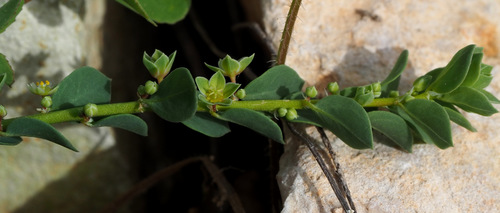
(c) budak, some rights reserved (CC BY-NC), uploaded by budak

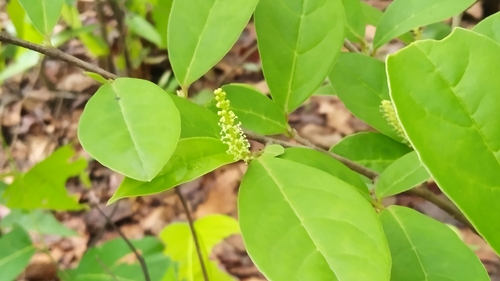
(c) krancmm, some rights reserved (CC BY-NC), uploaded by krancmm

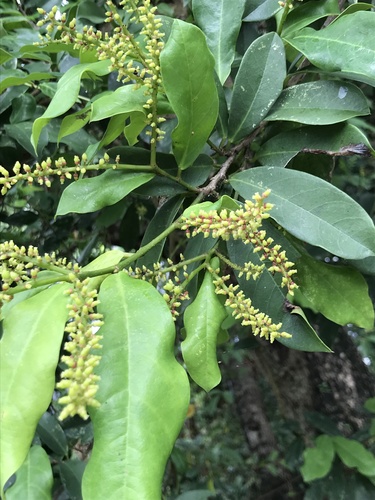
(c) Douglas Goldman, some rights reserved (CC BY-SA), uploaded by Douglas Goldman
What to Eat
Edible parts: Leaves, Leaves - tea
The leaves are cooked with oil and salt, and also used for tea. The plant is sold in local markets in China.
Known Hazards
Where to Find It
It is a tropical plant. It grows near river flats and on alluvial soil. It grows along the sides of marshy areas. In Fiji it grows from sea level up to 1,130 m altitude. In China it grows in dry fields and on the edges of forests between 100-600 m above sea level. In Sichuan and Yunnan.
Africa, American Samoa, Asia, Australia, Bangladesh, Bhutan, Brazil, Cambodia, Central America, China, Costa Rica, Dominican Republic, East Africa, East Timor, Fiji, Guiana, Guianas, Guyana, Himalayas, India, Indochina, Indonesia, Japan, Korea, Laos, Madagascar, Malaysia, Maldives, Marquesas, Myanmar, Nepal, Pacific, Pakistan, Papua New Guinea, PNG, Puerto Rico, Sao Tome and Principe, SE Asia, Sierra Leone, South America, Sri Lanka, Suriname, Taiwan, Thailand, Tibet, Timor-Leste, Tuvalu, Venezuela, Vietnam, West Africa, West Indies,
How to Identify
A herb. It keeps growing from year to year. It grows 10-30 cm high. The leaves are simple and alternate. They are 6-12 mm long by 4-6 mm wide The male flowers are in clusters in the axils of leaves. The female flowers occur singly in the lower axils. The flowers are green and cream. The fruit have 6 shallow lobes. The fruit are 2.5 mm across.
How to Grow
Grows in the wild on well-drained, fertile, sandy soils, sometimes on limestone, often in humid places or even in marshy ground. The plant has spread as a weed throughout the tropics. It is a prolific seed producer. The seeds can remain dormant for an extended period of time. They germinate massively during the rainy season and the seedlings are very fast growing.
Propagation: Seed - requires light to germinate. A germination rate of up to 80% was observed at temperatures of 25 - 35°c, but germination was poor at 20°c or 40°c. Germination of seed is also poor under moisture stress conditions. Stratification significantly improved the germination of the seeds.
Medicinal Uses
The plant is characteristically diuretic due to high potash content and has anticancer properties.
Wikipedia
Source ↗Phyllanthus urinaria is a species of annual flowering plant in the family Phyllanthaceae. It is native to Asia and has an introduced presence in tropical and subtropical areas worldwide. It has common names such as chamber bitter, gripeweed, shatterstone, stonebreaker, and leafflower.
Other Information
It is sold in local markets in China.
Notes
The plant is characteristically diuretic, due to the presence of large quantities of potash. It has anticancer properties. There are about 750 Phyllanthus species. They are mostly in the tropics.
Names & Synonyms
Chakpa-heikru, Cho de, Choi aei, Chuosh-engchuan, Gripe weed, Hazarmani, Keezhamelli, Meyyalunboa, Mye-shit-sha, Mye-ziphyu, Shatterstone, Sohlhu, Yajinlong, Zhu zai cao
References (16)
- Borrell, O.W., 1989, An Annotated Checklist of the Flora of Kairiru Island, New Guinea. Marcellin College, Victoria Australia. p 79
- Cowie, I, 2006, A Survey of Flora and vegetation of the proposed Jaco-Tutuala-Lore National Park. Timor-Lests (East Timor) www.territorystories.nt/gov.au p 47
- Flora of Pakistan. www.eFloras.org
- Kintzios, S. E., 2006, Terrestrial Plant-Derived Anticancer Agents and Plant Species Used in Anticancer research. Critical Reviews in Plant Sciences. 25: pp 79-113
- Li, D. et al, 2017, Ethnobotanical survey of herbal tea plants from the traditional markets in Chaoshan, China. Journal of Ethnopharmacology. 205 (2017) 195-206
- Meitei, L. R., et al, 2022, An ethnobotanical study on the wild edible plants used by forest dwellers in Yangoupokpi Lokchao Wildlife Sanctuary, Manipur, India. Ethnobotany Research and Application 23:15
- Narayanan Ratheesh, M. K. et al, 2011, Wild edible plants used by the Kattunaikka, Paniya and Kuruma tribes of Wayanad District, Kerala, India. Journal of Medicinal Plants Research Vol. 5(15), pp. 3520-3529
- Ogle, B. M., et al, 2003, Food, Feed or Medicine: The Multiple Functions of Edible Wild Plants in Vietnam. Economic Botany 57(1): 103-117
- Paczkowska, G. & Chapman, A.R., 2000, The Western Australian Flora. A Descriptive Catalogue. Western Australian Herbarium. p 248
- READ,
- Smith, A.C., 1981, Flora Vitiensis Nova, Lawaii, Kuai, Hawaii, Volume 2 p 464
- Sp. pl. 2:982. 1753
- Sujanapal, P., & Sankaran, K. V., 2016, Common Plants of Maldives. FAO & Kerala FRI, p 207
- Thaman, R. R, 2016, The flora of Tuvalu. Atoll Research Bulletin No. 611. Smithsonian Institute p 87
- World Checklist of Useful Plant Species 2020. Royal Botanic Gardens, Kew
- Xu, You-Kai, et al, 2004, Wild Vegetable Resources and Market Survey in Xishuangbanna, Southwest China. Economic Botany. 58(4): 647-667.