Physalis angulata
L.
Toothed-leaved winter cherry, Angular winter-cherry
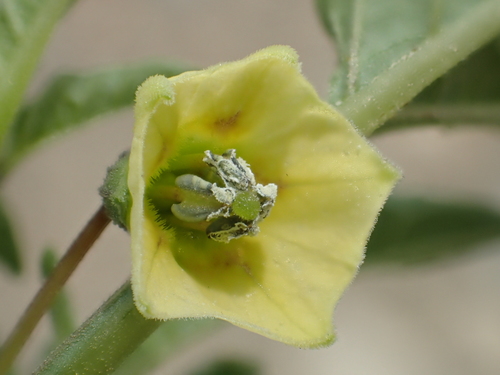
no rights reserved, uploaded by 葉子
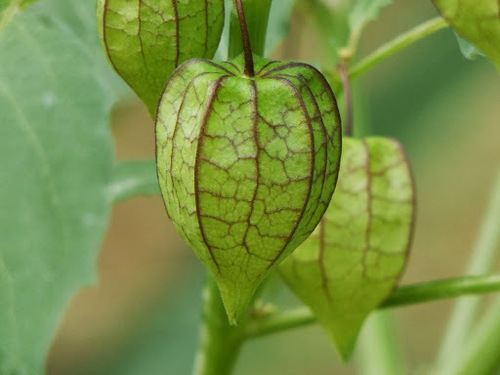
(c) 106611639464075912591, some rights reserved (CC BY-NC-SA), uploaded by 106611639464075912591

(c) Douglas Goldman, some rights reserved (CC BY-SA), uploaded by Douglas Goldman
What to Eat
Edible parts: Fruit, Leaves, Vegetable
The fruit can be eaten raw or cooked — it is juicy and mildly sub-acid, reaching up to 30mm in diameter. Each fruit is enclosed in a papery calyx husk that naturally protects it from pests and the elements. The calyx itself is toxic and must not be eaten. Young leaves can be cooked and used as a potherb, though some caution is advised given the plant's noted toxicity.
Known Hazards
Where to Find It
It is a tropical plant. It mostly occurs above 1000 m and up to 2800 m altitude. It can grow in arid places. In Yunnan.
Africa, Amazon, American Samoa, Angola, Argentina, Asia, Australia, Bahamas, Bangladesh, Benin, Bolivia, Botswana, Brazil*, Burkina Faso, Burundi, Cambodia, Cameroon, Caribbean, Central Africa, Central America*, Central Asia, Chad, China, Colombia, Congo DR, Cook Islands, Costa Rica, Dominican Republic, East Africa, Ecuador, Egypt, Equatorial Guinea, Eswatini, Fiji, Gabon, Gambia, Ghana, Guiana, Guianas, Guinea, Guinée, Guinea-Bissau, Guyana, Haiti, Honduras, India, Indochina, Indonesia, Japan, Kenya, Kiribati, Korea, Laos, Lesotho, Lesser Antilles*, Liberia, Libya, Madagascar, Mali, Marquesas, Mexico, Micronesia, Mozambique, Myanmar, Namibia, Nauru, Nicaragua, Niger, Nigeria, North Africa, North America, Northeastern India, Pacific, Palau, Panama, Papua New Guinea, PNG, Paraguay, Peru*, Puerto Rico*, Rotuma, Samoa, Sao Tome and Principe, Saudi Arabia, SE Asia, Senegal, South Africa, Southern Africa, South America*, Suriname, Swaziland, Taiwan, Tajikistan, Tanzania, Thailand, Togo, Tonga, Torres Strait, Trinidad, Tuvalu, Uruguay, USA, Vanuatu, Venezuela, Vietnam, West Africa, West Indies*, West Timor, Zambia, Zimbabwe,
How to Identify
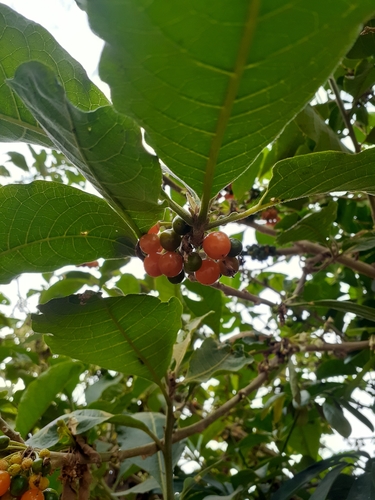
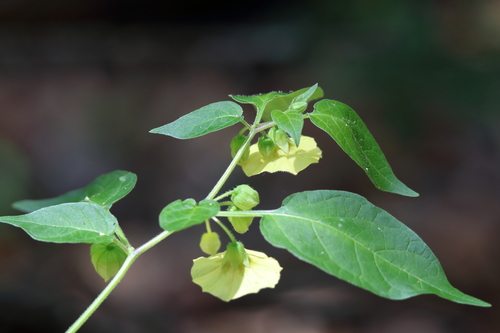
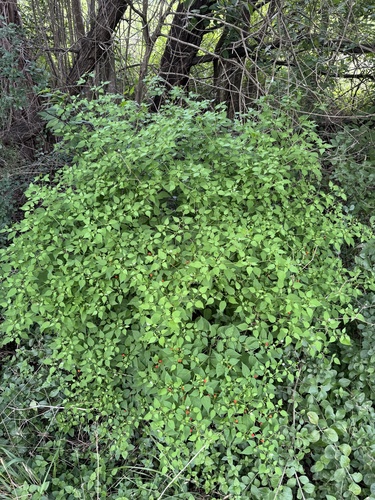
A perennial herb up to about 1 m high. The leaves are smooth. The stems are angular. The leaves are oval and have teeth along the edge. They are 5-10 cm long by 3-6 cm wide. The flowers occur singly. The flowers are small and cream coloured. They do not have a dark spot. It has a yellow berry with many seeds inside. The berry is enclosed in a veiny inflated case about 3 cm across. This has reddish brown veins. The berries are sticky.
Nutrition Score: 36/100
| Part | Moisture | kJ | kcal | Protein | Vit A | Vit C | Iron | Zinc |
|---|---|---|---|---|---|---|---|---|
| Leaves | 83.9 | 113 | 27 | 4 | — | 58 | — | — |
| Fruit raw | 89.9 | 113 | 27 | 3.2 | — | — | — | — |
How to Grow
It is easily grown by sprinkling a few seeds into moist ground. It grows easily under most conditions. If the plants are in a very sheltered place, fertilization is improved by spraying the plants with water.
Propagation: Sow seed in March or April in a greenhouse, barely covering it. Germination is generally quick and reliable. Prick seedlings out into individual pots of reasonably rich soil once large enough to handle, then plant outside after the last expected frosts, ideally with cloche protection until they are growing well. Diurnal temperature fluctuations aid germination.
Medicinal Uses
The plant has diuretic, expectorant, and febrifuge properties. The leaves have been used to treat stomach disorders.
Other Uses
None known.
Wikipedia
Source ↗Physalis angulata is an erect herbaceous annual plant belonging to the nightshade family Solanaceae. Its leaves are dark green and roughly ovate, often with serrate margins. The flowers are five-sided and pale yellow; the yellow-orange fruits are borne inside a balloon-like calyx. The exact native range is uncertain. The species may be naturally endemic to Australia or the Americas or the native range may encompass both the Americas and Australia. It is now widely distributed and naturalized in tropical and subtropical regions worldwide. The plant produces edible fruit that can be eaten raw, cooked, jammed, etc. However, all other parts of the plant are poisonous. Members of the Toba-Pilagá ethnic group of Gran Chaco traditionally eat the ripe fruits raw. Unripe raw fruits, flowers, leaves, and stems of the plant contain solanine and solanidine alkaloids that may cause poisoning if ingested by humans, cattle, or horses.
Production
In southern India plants flower and fruit July to December.
Other Information
In Papua New Guinea a common plant and the fruit is being used more commonly. The fruit are especially eaten by children. It is sold in local markets in China. It is cultivated.
Notes
There are about 75-100 Physalis species.
Names & Synonyms
Alkekenje, Baa tom tok, Balao, Balao-rajado, Bate-testa, B'lito, Bolsa mullaca, Bucho-de-ra, Bulabula, Bule-bule, Butulituli, Camapu, Camapum, Camaru, Camu apu, Camunbu, Capod, Cecenetan, Ceplukan, Chipluan, Chubobo, Ciplokan, Ciplukan, Cutleaf ground-cherry, Deng long cao, Ding rai, Embolsado, Farolito, Globito, Jambumbo, Joa, Joa-de-capote, Jua-poca, Lapuik-lapuik, Leletup, Mata-fome, Matsarmama, Morok poklaobi, Motojobobo ambolsado, Msupu, Muguzubheri, Mullaca blanco, Njottanjodiyan, Peng pahs sraom, Pengposprey, Pini, Popa, Potka, Potolai, Pultak-pultak, Pung ping, Putok-putokan, Rubooro, Songwa, Tau-tau, Te baraki, Thong theng, Tino tino, Tipai, Toltolaya, Tomatillo, Topotoropo, Ubat pekong, Vi vao
References (88)
- Achigan-Dako, E, et al (Eds), 2009, Catalogue of Traditional Vegetables in Benin. International Foundation for Science.
- Ajesh, T. P., et al, 2012, Ethnobotanical Documentation of Wild Edible Fruits used by Muthuvan Tribes of Idukki, Kerala-India. International Journal of Pharma and Bio Sciences 3(3): 479-487
- Altschul, S.V.R., 1973, Drugs and Foods from Little-known Plants. Notes in Harvard University Herbaria. Harvard Univ. Press. Massachusetts. no. 4017
- Barfod, A. S. & Kvist, L. P., 1996, Comparative Ethnobotanical Studies of the Amerindian Groups in Coastal Ecuador. The Danish Academy of Sciences and Letters. p 79
- Bernholt, H. et al, 2009, Plant species richness and diversity in urban and peri-urban gardens of Niamey, Niger. Agroforestry Systems 77:159-179
- Borrell, O.W., 1989, An Annotated Checklist of the Flora of Kairiru Island, New Guinea. Marcellin College, Victoria Australia. p 222
- Brack, P., et al, 2020, Frutas nativas do Rio Grande do Sul, Brasil: riqueza e potencial alimentício. Native fruits of Rio Grande do Sul, Brazil: richness and potential as food. Rodriguésia 71: e03102018
- Burkill, H. M., 1985, The useful plants of west tropical Africa, Vol. 5. Kew.
- Cabalion, P. and Morat, P., 1983, Introduction le vegetation, la flore et aux noms vernaculaires de l'ile de Pentcoste (Vanuatu), In: Journal d'agriculture traditionnelle et de botanique appliquee JATBA Vol. 30, 3-4
- Codjia, J. T. C., et al, 2003, Diversity and local valorisation of vegetal edible products in Benin. Cahiers Agricultures 12:1-12
- CRÉAC'H,
- Cruz, I. M., et al, 2015, Edible fruits and seeds in the State of Mexico. Revista Mexicana de Ciencias Agricolas. Vol. 6. Num. 2 pp 331-346
- Etkin, N. L. (Ed.), 1994, Eating on the Wild Side, Univ. of Arizona. p 140
- Facciola, S., 1998, Cornucopia 2: a Source Book of Edible Plants. Kampong Publications, p 234
- FAO, 1988, Traditional Food Plants, FAO Food and Nutrition Paper 42. FAO Rome p 406
- Fongnzossie Fedoung, E., et al, 2020, Wild edible plants and mushrooms of the Bamenda Highlands in Cameroon: ethnobotanical assessment and potentials for enhancing food security. Journal of Ethnobiology and Ethnomedicine 16:12
- Franklin, J., Keppel, G., & Whistler, W., 2008, The vegetation and flora of Lakeba, Nayau and Aiwa Islands, Central Lau Group, Fiji. Micronesica 40(1/2): 169–225, 2008
- French, B.R., 1986, Food Plants of Papua New Guinea, A Compendium. Asia Pacific Science Foundation p 260
- Grubben, G. J. H. and Denton, O. A. (eds), 2004, Plant Resources of Tropical Africa 2. Vegetables. PROTA, Wageningen, Netherlands. p 564
- Habitat Management Profile – Saibai Island. Appendix C. Preliminary List of Useful Plants for Saibai Island. p 117
- Hedrick, U.P., 1919, (Ed.), Sturtevant's edible plants of the world. p 490
- Henty, E.E., & Pritchard, G.S., 1973, Weeds of New Guinea and their control. Botany Bulletin No 7, Division of Botany, Lae, PNG. p 148
- Hibbert, M., 2002, The Aussie Plant Finder 2002, Florilegium. p 232
- Hu, Shiu-ying, 2005, Food Plants of China. The Chinese University Press. p 665
- Hunter, D., et al, 2019, The potential of neglected and underutilized species for improving diets and nutrition. Planta (2019) 250:709-729
- Jardin, C., 1970, List of Foods Used In Africa, FAO Nutrition Information Document Series No 2.p 94, 155
- Kinupp, V. F., 2007, Plantas alimenticias nao-convencionais da regiao metropolitana de Porto Alegre, RS, Brazil p 101
- Kinupp, V. F. & Bergman, I., 2008, Protein and minerals of native species, potential vegetables and fruits. Cienc.Tecnol. Aliment. Vol. 28 No. 4 Campinas Oct/Dec.
- Kuo, W. H. J., (Ed.) Taiwan's Ethnobotanical Database (1900-2000), http://tk.agron.ntu.edu.tw/ethnobot/DB1.htm
- Lamp, C & Collet F., 1989, Field Guide to Weeds in Australia. Inkata Press. p 212
- Latham, P & Mbuta, A., 2017, Useful Plants of Central Province, Democratic Republic of Congo. Volume 2. Salvation Army p 103
- Li, D. et al, 2017, Ethnobotanical survey of herbal tea plants from the traditional markets in Chaoshan, China. Journal of Ethnopharmacology. 205 (2017) 195-206
- Liefting, A., et al, Samoan plant names. http://en.wikipedia.org
- Lopez-Diago, D. & Garcia, N., 2021, Wild edible fruits of Colombia. Biota ColomBiana 22 (2) p 52
- Lokho, K. & Narasimhan, D., 2013, Ethnobotany of Mao-Naga Tribe of Manipur, India. Pleione 7(2): 314-324
- Long, C., 2005, Swaziland's Flora - siSwati names and Uses http://www.sntc.org.sz/flora/
- Mahklouf, M. H., 2019, Ethnobotanical Study of Edible Wild Plants in Libya. European Journal of Ecology. 5(2): 30-40
- Malezas Comestibles del Cono Sur, INTA, 2009, Buernos Aires
- Mapes, C. & Basurto, F., 2016, Biodiversity and Edible Plants of Mexico. Chapter 5 in R. Lira, et al. (eds.), Ethnobotany of Mexico, Ethnobiology, Springer. p 107
- Maroyi, A., 2011, The Gathering and Consumption of Wild Edible Plants in Nhema Communal Area, Midlands Province, Zimbabwe. Ecology of Food and Nutrition 50:6, 506-525
- Maroyi, A., 2013, Use of weeds as traditional vegetables in Shurugwi District, Zimbabwe. Journal of Ethnobiology and Ethnomedicine 9:60
- Martin, F.W. & Ruberte, R.M., 1979, Edible Leaves of the Tropics. Antillian College Press, Mayaguez, Puerto Rico. p 76, 220
- Martin, M.A., 1971, Introduction L'Ethnobotanique du Cambodge. Centre National de la Recherche Scientifique. Paris.
- McMakin, P.D., 2000, Flowering Plants of Thailand. A Field Guide. White Lotus. p 102
- Meitei, L. R., et al, 2022, An ethnobotanical study on the wild edible plants used by forest dwellers in Yangoupokpi Lokchao Wildlife Sanctuary, Manipur, India. Ethnobotany Research and Application 23:15
- Misra S. & Misra M., 2016, Ethnobotanical and Nutritional Evaluation of Some Edible Fruit Plants of Southern Odisha, India. International Journal of Advances in Agricultural Science and Technology, Vol.3 Issue.1, March- 2016, pg. 1-30
- MORTIMORE,
- Mot So Rau Dai an Duoc O Vietnam. Wild edible Vegetables. Ha Noi 1994, p 178
- Msuya, T. S., et al, 2010, Availability, Preference and Consumption of Indigenous Foods in the Eastern Arc Mountains, Tanzania, Ecology of Food and Nutrition, 49:3, 208-227
- Mutie, F. M., et al, 2023, Important Medicinal and Food Taxa (Orders and Families) in Kenya, Based on Three Quantitative Approaches. Plants 2023, 12, 1145
- Nzigidahera, B., 2006, Assessment of Socio-cultural, Economic Characteristics and Livelihood of Riparian Population of the Kibira National Park. (Rukoma-Mutana locality). UNDP p 30
- Omawale, 1973, Guyana's edible plants. Guyana University, Georgetown p 31
- Pawera, L., et al, 2020, Wild Food Plants and Trends in Their Use: From Knowledge and Perceptions to Drivers of Change in West Sumatra, Indonesia, Foods. 2020, 9, 1240
- Paz, F. S., et al, 2021, Edible Fruit Plant Species in the Amazon Forest Rely Mostly on Bees and Beetles as Pollinators. Journal of Economic Entomology, XX(XX), 2021, 1–13
- Phon, P., 2000, Plants used in Cambodia. © Pauline Dy Phon, Phnom Penh, Cambodia. p 499
- Piedra-Malagón, E. M., et al, 2022, Edible native plants of the Gulf of Mexico Province. Biodiversity Data Journal 10: e80565 p 30
- Plants for a Future database, The Field, Penpol, Lostwithiel, Cornwall, PL22 0NG, UK. http://www.scs.leeds.ac.uk/pfaf/
- Plants of Haiti Smithsonian Institute http://botany.si.edu/antilles/West Indies
- Priyadi, H., et al, Five hundred plant species in Gunung Halimun Salak National Park West Java. A checklist including Sundanese names, distribution and use. CIFOR, FFPRI, SLU p 18
- Rasingam, L., 2012, Ethnobotanical studies on the wild edible plants of Irula tribes of Pillur Valley, Coimbatore district, Tamil Nadu, India. Asian Pacific Journal of Tropical Biomedicine. (2012) S1493-S1497
- Roa, J. A. G. & Boada, D. S. G., 2018, Fundación para el Fortalecimiento de la Fruticultura y Plantas Alimenticias no Convencionales en Colombia.
- Royal Botanic Gardens, Kew (1999). Survey of Economic Plants for Arid and Semi-Arid Lands (SEPASAL) database. Published on the Internet; http://www.rbgkew.org.uk/ceb/sepasal/internet [Accessed 11th June 2011]
- Ruiters-Welcome, A. K., 2019, Food plants of southern Africa. Ph.D. thesis. Univ. of Johannesburg p 103
- Samuels, J., 2015, Biodiversity of Food Species of the Solonaceae Family: A Preliminary Taxonomic Inventory of Subfamily Solanoideae. Resources 2015, 4. 277-322
- Scarpa, G. F., 2009, Wild food plants used by the indigenous peoples of South American Gran Chaco: A general synopsis and intercultural comparison. Journal of Applied Botany and Food Quality 83:90-101
- Segura, S., et al, 2018, The edible fruit species in Mexico. Genet Resour Crop Evol (2018) 65:1767–1793
- Shin, T., et al, 2018, Traditional knowledge of wild edible plants with special emphasis on medicinal uses in Southern Shan State, Myanmar. Journal of Ethnobiology and Ethnomedicine (2018) 14:48
- Smith, A.C., 1991, Flora Vitiensis Nova, Lawaii, Kuai, Hawaii, Volume 5 p 29
- Smith, N., et al, 2007, Amazon River Fruits. Flavors for Conservation. Missouri Botanical Gardens Press. p 238
- Sp. pl. 1:183. 1753
- Suwardi, A. B., et al, 2020, Wild edible fruits generate substantial income for local people of the Gunung Leuser National Park, Aceh Tamiang Region. Ethnobotany Research & Applications 20:11
- Swaziland's Flora Database http://www.sntc.org.sz/flora
- Terashima, H., et al, 1991, Ethnobotany of the Lega in the tropical rainforest of eastern Zaire: part 1, Zone de Mwenga. African Study Monographs. Suppl. 15:1-61
- Terra, G.J.A., 1973, Tropical Vegetables. Communication 54e Royal Tropical Institute, Amsterdam, p 67
- Thaman, R. R., 1987, Plants of Kiribati: A listing and analysis of vernacular names. Atoll Research Bulletin No. 296
- Thaman, R. R, 2016, The flora of Tuvalu. Atoll Research Bulletin No. 611. Smithsonian Institute p 115
- Torre, de la, L., et al, 2008, Enciclopedia de las Plantas Útiles del Ecuador. Herbario QCA. Pontificia Universidad Católica del Ecuador. p 587
- Turreira Garcia, N., et al, 2017, Ethnobotanical knowledgeof the Kuy and Khmer people in Prey Lang, Cambodia. Cambodian Journal of Natural History 2017 (1): 76-101
- USDA, ARS, National Genetic Resources Program. Germplasm Resources Information Network - (GRIN). [Online Database] National Germplasm Resources Laboratory, Beltsville, Maryland. Available: www.ars-grin.gov/cgi-bin/npgs/html/econ.pl (10 April 2000)
- Vasquez, R. and Gentry, A. H., 1989, Use and Misuse of Forest-harvested Fruits in the Iquitos Area. Conservation Biology 3(4): 350f
- Vasquez, Roberto Ch. & Coimbra, German S., 1996, Frutas Silvestres Comestibles de Santa Cruz. p 230
- Vigilante, T., et al, 2013, Island country: Aboriginal connections, values and knowledge of the Western Kimberley islands in the context of an island biological survey. Records of the Western Australian Museum Supplement 81: 145-182
- Welcome, A. K. & Van Wyk, B.-E., 2019, An inventory and analysis of the food plants of southern Africa. South African Journal of Botany 122 (2019) 136–179
- Wiersema, J. H. & Leon, B., 2013, World Economic Plants. A Standard Reference CRC Press. 2nd Ed. p 523
- World Checklist of Useful Plant Species 2020. Royal Botanic Gardens, Kew
- www.colecionandofrutas.org
- Xu, You-Kai, et al, 2004, Wild Vegetable Resources and Market Survey in Xishuangbanna, Southwest China. Economic Botany. 58(4): 647-667.
- Yuncker, T.G., 1959, Plants of Tonga, Bernice P. Bishop Museum, Hawaii, Bulletin 220. p 236