Physalis ixocarpa
Brot. ex Hornem.
Tomatillo

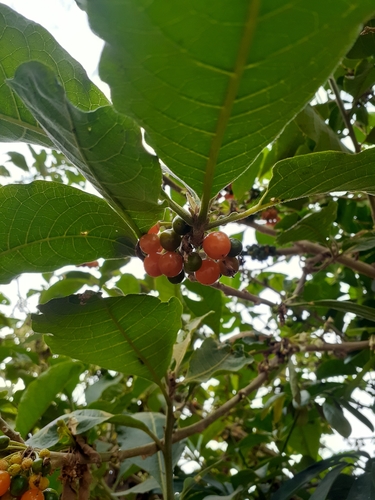
(c) andrey_belechov, some rights reserved (CC BY-NC), uploaded by andrey_belechov

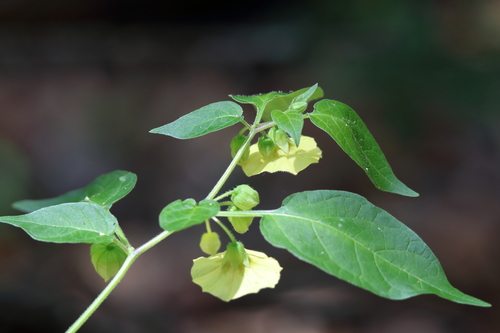
(c) andrey_belechov, some rights reserved (CC BY-NC), uploaded by andrey_belechov

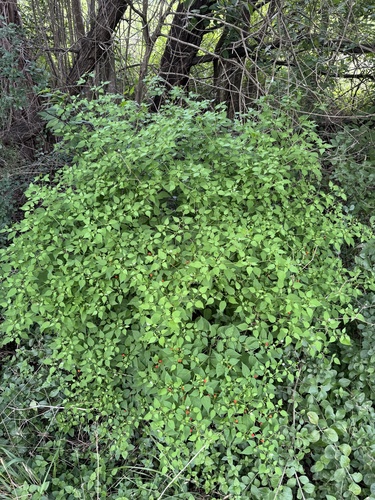
(c) Alba Rovira, some rights reserved (CC BY-NC), uploaded by Alba Rovira
What to Eat
Edible parts: Fruit, Vegetable
The fruit is a berry 2.5cm or more in diameter. When unripe, it can be cooked into curries, sauces, soups, and stews, where it works much like a tomato. Fully ripe fruits are sweeter and can be eaten fresh, added to salads, or used in pies and preserves. Each fruit is naturally enclosed in its own papery calyx, which protects it from pests and the elements — but this calyx is toxic and must not be eaten. Fruits picked before full ripeness and left inside their calyx can be stored for up to a year.
Known Hazards
Where to Find It
A tropical plant. It suits temperate to subtropical climates. It suits warmer climates. Plants are damaged by frost. They do best in rich soil in full sun. A temperature above 16°C is best. In Zimbabwe it grows up to 1,500 m above sea level.
Africa, Australia, Bahamas, Botswana, Central Africa, Central America, Congo, Cook Islands, East Africa, Europe, Guatemala, India, Jamaica, Kenya, Lord Howe Island, Mexico, North America, Puerto Rico, Slovenia, South Africa, Southern Africa, Taiwan, Tanzania, Trinidad, Uganda, USA, West Indies, Zambia, Zimbabwe,
How to Identify
A branched annual/perennial herb growing up to 1 m tall. The leaves are oval and 5 cm long by 3 cm wide. The edges of the leaves are entire or slightly wavy. They are smooth. The flower stalk is up to 7 mm long. The flower is small about 2 cm across. It is yellow with five dark purple brown markings at the throat. The fruit is yellow with purple veins and sticky. They are 4 cm across. There are several named cultivated varieties.
Nutrition Score: 24/100
| Part | Moisture | kJ | kcal | Protein | Vit A | Vit C | Iron | Zinc |
|---|---|---|---|---|---|---|---|---|
| Fruit - raw | 91.6 | 134 | 32 | 0.96 | 11.4 | 12 | 0.62 | 0.2 |
How to Grow
Plants are grown from seed. Seed germinate in 7-10 days. Plants should be spaced 40 cm apart. Plants are best staked to prevent plants sprawling and fruit rotting. Plants can be grown from cuttings. Flowers are self fertile.
Propagation: Sow seed in March or April in a greenhouse, barely covering it. Germination is usually quick and reliable; diurnal temperature fluctuations help. Prick seedlings into individual pots of fairly rich soil once large enough to handle, then plant out after the last expected frost, with cloche protection if needed until established.
Other Uses
Tomatillo flowers attract native bees, bumblebees, and other beneficial pollinators, providing nectar and pollen over an extended blooming period. The plant has been trialled as a trap crop in integrated pest management, drawing pests such as flea beetles and whiteflies away from more vulnerable crops like tomatoes and peppers — research is still limited but shows promise in organic and permaculture systems. The fast-growing foliage produces useful biomass for green mulch or compost, making it suitable for chop-and-drop systems to build soil fertility and retain moisture. The attractive papery husks are sometimes used in folk art, natural decoration, or educational displays, similar to those of Physalis alkekengi.
Wikipedia
Source ↗Frost-tender annual reaching 1.2 m tall. Hardy to UK zone 8. Flowers July to September; seeds mature August to October. Hermaphroditic, bee-pollinated. Grows in light sandy, medium loamy, and heavy clay soils with good drainage. Tolerates mildly acid, neutral, and mildly alkaline pH. Grows in semi-shade or full sun. Tolerates dry or moist soil and drought conditions.
Production
Plants fruit in their first year. Fruit fall to the ground and are collected and ripen over the next 4 weeks. Yields of about 1 kg per plant are possible.
Other Information
It is a commercially cultivated vegetable.
Notes
There are about 75-100 Physalis species.
Names & Synonyms
Farolito, Jamberberry, Jamberry, Mexican Ground cherry, Miltomate, Purple gooseberry, Tomatd mexicano, Tomatilo, Tomete verde, Tumat
References (25)
- Ambasta, S.P. (Ed.), 2000, The Useful Plants of India. CSIR India. p 452
- Bodkin, F., 1991, Encyclopedia Botanica. Cornstalk publishing, p 790
- Creasey, R., 2000, Edible Mexican Garden. Periplus p 55
- Facciola, S., 1998, Cornucopia 2: a Source Book of Edible Plants. Kampong Publications, p 235
- FAO, 1988, Traditional Food Plants, FAO Food and Nutrition Paper 42. FAO Rome p 407
- Flora of Australia Volume 49, Oceanic Islands 1, Australian Government Publishing Service, Canberra. (1994) p 302
- Flowerdew, B., 2000, Complete Fruit Book. Kyle Cathie Ltd., London. p 110
- Hardwick, G., 2001, Economically Useful Plants for Northern Australia: Master Species List. Crusader eBooks.
- http://www.botanic-gardens-ljubljana.com/en/plants
- Jardin, C., 1970, List of Foods Used In Africa, FAO Nutrition Information Document Series No 2.p 155
- John, L., & Stevenson, V., 1979, The Complete Book of Fruit. Angus & Robertson p 94
- Kays, S. J., and Dias, J. C. S., 1995, Common Names of Commercially Cultivated Vegetables of the World in 15 languages. Economic Botany, Vol. 49, No. 2, pp. 115-152
- Kiple, K.F. & Ornelas, K.C., (eds), 2000, The Cambridge World History of Food. CUP p 1744, 1869
- Lazarides, M. & Hince, B., 1993, Handbook of Economic Plants of Australia, CSIRO. p 188
- Low, T., 1991, Wild Herbs of Australia and New Zealand. Angus & Robertson. p 100
- Lyle, S., 2006, Discovering fruit and nuts. Land Links. p 322
- Morton, Julia F., 1987, Fruits of Warm Climates. Creative Resources Systems, Inc. . p. 434
- Pascual-Mendoza, S. et al, 2021, Traditional knowledge of edible plants in an indigenous community in the Sierra Norte of Oaxaca, Mexico. Plant Biosystems - An International Journal Dealing with all Aspects of Plant Biology
- Physalis ixocarpa Brot. ex Hornem. (Hort. bot. hafn. suppl. 26. 1819) was applied to naturalized plants in Portugal, which probably also = Physalis philadelphica fide F Veracruz
- Piedra-Malagón, E. M., et al, 2022, Edible native plants of the Gulf of Mexico Province. Biodiversity Data Journal 10: e80565 p 31
- Plants for a Future database, The Field, Penpol, Lostwithiel, Cornwall, PL22 0NG, UK. http://www.scs.leeds.ac.uk/pfaf/
- Schneider, E., 2001, Vegetables from Amaranth to Zucchini: The essential reference. HarperCollins. p 667
- Self, M., 199, Phoenix Seeds catalogue. p 8
- van Wyk, B., 2005, Food Plants of the World. An illustrated guide. Timber press. p 293
- http://cookislands.bishopmuseum.org