Physalis peruviana
L.
Cape gooseberry

(c) lorenzodotti, some rights reserved (CC BY-NC), uploaded by lorenzodotti
(c) Sonja Bouwman-Gringhuis, some rights reserved (CC BY-NC), uploaded by Sonja Bouwman-Gringhuis

(c) Cesar Ormazabal, some rights reserved (CC BY), uploaded by Cesar Ormazabal
What to Eat
Edible parts: Fruit, Leaves, Vegetable
The fruit can be eaten fresh or cooked into pies, cakes, jellies, compotes, and jams. It has a pleasant bitter-sweet flavour, with smaller but sweeter fruits than the cultivar 'Edulis'. Dried fruit can serve as a raisin substitute, though it is less sweet. The dried fruit is also said to be a substitute for yeast. Each berry is about 2cm in diameter and is rich in vitamin A (3000 I.U. of carotene per 100g), vitamin C, and several B vitamins including thiamine, niacin, and B12; protein and phosphorus levels are exceptionally high for a fruit. Each fruit is naturally enclosed in its own papery calyx, protecting it from pests and the elements — this calyx is toxic and must not be eaten. Fruits picked carefully with the calyx intact can be stored for three months or more.
Known Hazards
Where to Find It
A temperate plant. It grows in the tropical highlands. It suits warm climates. It does best in warm sunny conditions. It needs well drained soil. It is best free from severe frosts and strong winds. In Nepal it grows between 900-2200 m altitude. Plants are not killed by a slight frost. In Indonesia plants are found between 700-2300 m altitude but fruit best above 1500 m. In the Andes it grows between 2,000-2,800 m above sea level. It can grow in arid places. It suits hardiness zones 8-10. Tasmania Herbarium. In Yunnan.
Africa, Andes*, Angola, Australia, Austria, Bangladesh, Bolivia, Botswana, Brazil, Britain, Bulgaria, Burundi, Cameroon, Canary Is., Cape Verde, Central Africa, Central African Republic, CAR, Chad, Chile, China, Colombia, Cook Islands, Congo DR, Congo R, Cook Is., Costa Rica, Czech Republic, Dominican Republic, East Africa, Ecuador, Egypt, Equatorial Guinea, Eritrea, Eswatini, Ethiopia, Europe, Fiji, France, Gabon, Ghana, Guinea, Haiti, Hawaii, Himalayas, Hungary, India, Indochina, Indonesia, Italy, Jamaica, Kenya, Kiribati, Lebanon, Lesotho, Madagascar, Malawi, Malaysia, Marquesas, Mauritius, Mediterranean, Mexico, Morocco, Mozambique, Myanmar, Namibia, Nepal, New Caledonia, New Zealand, Nigeria, Niue, Norfolk Island, North America, Northeastern India, Pacific, Pakistan, Palestine, Papua New Guinea, PNG, Peru, Philippines, Portugal, Puerto Rico, Reunion, Rwanda, Samoa, Sao Tome and Principe, SE Asia, Seychelles, Sierra Leone, Slovenia, Somalia, South Africa, Southern Africa, South America, South Sudan, Spain, St Helena, Sri Lanka, Sudan, Swaziland, Syria, Tanzania, Tasmania, Thailand, Tonga, Trinidad-Tobago, Uganda, USA, Vanuatu, Venezuela, Vietnam, West Africa, West Indies, Zambia, Zimbabwe,
How to Identify
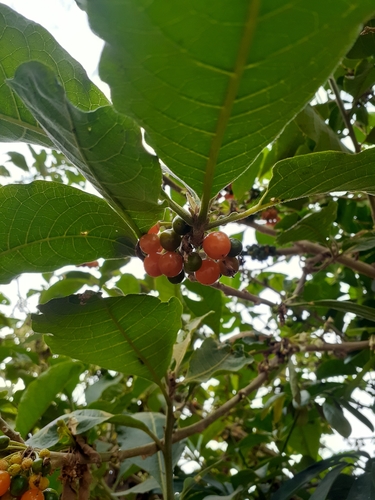
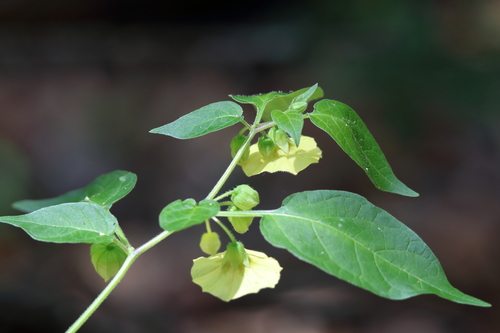
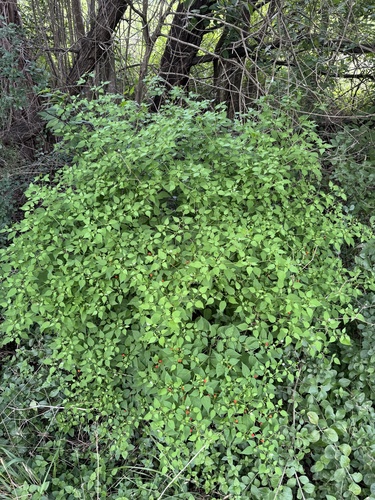
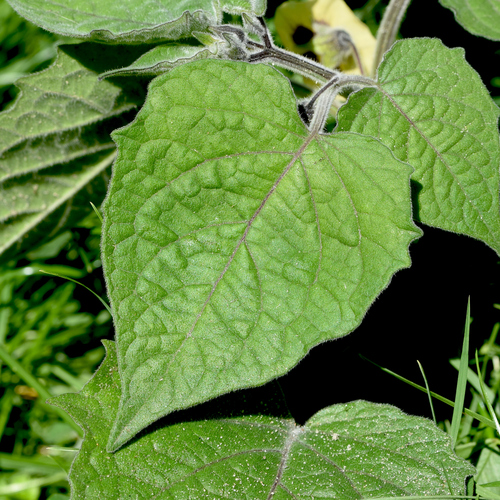
Perennial herbs which grow to 45-90 cm high. They are often grown as annuals. It is only slightly branched but is hairy. The branches are purplish and ribbed. They are spreading. The leaf blade is 6-15 cm long by 4-10 cm wide. The leaves are heart shaped at the base and taper to the tip. They are slightly wavy and toothed along the edge. The flowers occur singly and hang down in the axils of leaves. The flowers are white with violet anthers and slightly spotted petals. The fruit is a berry 1-1.5 cm across. They are orange-yellow or pale brown. This is inside an inflated husk. The seeds are yellow and 2 mm across. There are several named cultivated varieties.
Nutrition Score: 46/100
| Part | Moisture | kJ | kcal | Protein | Vit A | Vit C | Iron | Zinc |
|---|---|---|---|---|---|---|---|---|
| Fruit mature | 84.2 | 201 | 48 | 2 | 1200 | 30 | 1.5 | — |
How to Grow
Succeeds in a sheltered position in any well-drained soil in full sun or light shade. Prefers a rich loam but tolerates poor soils. If the soil is too rich it encourages leaf production at the expense of fruiting. Plants tolerate a pH in the range 4.5 to 8.2. The Cape Gooseberry is an evergreen shrub in its native environment. It is not very cold-hardy in Britain, however, though it can succeed outdoors as a herbaceous perennial in the mildest areas of the country or when grown in favoured positions such as the foot of a sunny wall. Some cultivars will tolerate temperatures down to about -10° when grown in this way. It would be wise to apply a good protective mulch to the roots in late autumn after the top growth has been cut back by frosts. In most areas of Britain, however, it needs to be grown as an annual in much the same way as tomatoes. The plant is usually naturally bushy, but it can be useful to pinch out the growing tip whilst the shoots are less than 30cm tall in order to encourage side shoots. This species is often cultivated for its edible fruit in warm temperate and tropical zones; there are some named varieties. 'Edulis' is the most common cultivar in Britain; it has considerably larger fruits than the species, but these do not have quite such a good flavour. Yields of 20 tonnes per hectare are common in S. America, 33 tonnes has been achieved. Groundcherry is generally self-fertile. The fruit is typically harvested in late summer to early autumn (August to October in Northern Hemp.) when the husks turn brown and the fruits drop to the ground. Ground cherry usually flowers in late spring to summer. It grows moderately and typically matures about 100 to 120 days after sowing.
Propagation: Sow seed in March or April in a greenhouse, barely covering it. Germination is usually quick and reliable; diurnal temperature fluctuations help. Prick seedlings into individual pots of fairly rich soil once large enough to handle, then plant out after the last expected frost, with cloche protection if needed until established. Division can be done in spring without digging up the whole plant — remove young shoots growing from the side of the clump, ensuring a section of below-ground stem is included. Shoots with some roots attached are ideal, but rootless shoots will develop new roots fairly quickly if potted up and kept for a few weeks in a shady, humid part of the greenhouse.
Medicinal Uses
Leaf juice has been used to treat intestinal worms and bowel complaints. The plant also has diuretic properties.
Other Uses
Groundcherry can be used as a companion plant, attracting pollinators and beneficial insects while also providing ground cover. Its flowers produce nectar that draws bees and butterflies. The fruit provides food for wildlife including birds and mammals. The foliage and surrounding leaf litter offer shelter and overwintering sites for beneficial insects and other invertebrates, supporting a more biodiverse growing environment.
Wikipedia
Source ↗Physalis peruviana is a species of plant in the nightshade family (Solanaceae) native to Chile and Peru. Within that region, it is called aguaymanto, uvilla or uchuva, in addition to numerous indigenous and regional names. In English, its common names include Cape gooseberry, goldenberry and Peruvian groundcherry. The history of Physalis peruviana cultivation in South America can be traced to the Inca Empire. It has been cultivated in England since the late 18th century, and in South Africa in the Cape of Good Hope since at least the start of the 19th century. Widely introduced in the 20th century, Physalis peruviana is now cultivated or grows wild across the world in temperate and tropical regions.
Production
Plants produce in 1 year. A single plant can produce 300 fruit. Fruit can be stored for several months in dry conditions.
Other Information
It is a commercially cultivated vegetable. The fruit are popular especially with children.
Notes
There are about 75-100 Physalis species.
Names & Synonyms
Aguaymanto, Appelliefie, Awxetecha, Aztec berry, Bari-papaton, Bolsa de amor, Bosiya, Buddabasara, Buhkol, Butuanyil, Buufu, Capuli, Cecendet badak, Ceplukan, Cereza del Peru, Chinese lantern, Chirboti, Chirput, Chunchoch, Deng long guo, Donam as, Entutu, Entutunu, Etagoli loapolon, Giant ground cherry, Gobbayas, Golden berry, Goldenberry, Gongor, Gooseberry-tomato, Guchavo, Gudde hannu, Gumbais, Gusboeri, Habit bokbok, Harankash, Hawteta, Hozuki, Hpaung-hpaung-ti, Inca berry, Jam, Jamo, Jamu, Jangali mewa, Kala-myetsi-pinzauk-gyi, Kamaigomara, Karimpotti, Khaokhashi, Korelashii, Lobo-lobahan, Loliy, Luketa karma, Maree'ra, Mchupwa, Mewar rashberry, Moti popti, Motojobobo embolsado, Msupu, Mtumbua, Murungudane, Nsongwa, Ntongo, Ntuntunu, Ntuutu, Pa'ina, Perijsko volčje jabolko, Peruvian ground-cherry, Peruvian-cherry, Phopti, Poha, Pok pok, Ras bhari, Rasbharry, Sambaruf, Shawa, Songwa, Subba ruufoo, Tankari, Te baraki, Tepari, Thamungwal, Thebong kang, Tholtakkali, Tipari, Tipariya, Tongogwai, Tunaye, Uchuba, Uchuva, Uvilla, Vejigon, Voanaka, Xoosi
References (135)
- Addis, G., et al, 2005, Ethnobotanical Study of Edible Wild Plants in Some Selected Districts of Ethiopia. Human Ecology, Vol. 33, No. 1, pp. 83-118
- Addis, G., Asfaw, Z & Woldu, Z., 2013, Ethnobotany of Wild and Semi-wild Edible Plants of Konso Ethnic Community, South Ethiopia. Ethnobotany Research and Applications. 11:121-141
- Agea, J. G., et al 2011, Wild and Semi-wild Food Plants of Bunyoro-Kitara Kingdom of Uganda: etc. Environmental Research Journal 5(2) 74-86
- Ajesh, T. P., et al, 2012, Ethnobotanical Documentation of Wild Edible Fruits used by Muthuvan Tribes of Idukki, Kerala-India. International Journal of Pharma and Bio Sciences 3(3): 479-487
- Ambasta, S.P. (Ed.), 2000, The Useful Plants of India. CSIR India. p 452
- Arora, R. K., 2014, Diversity in Underutilized Plant Species - An Asia-Pacific Perspective. Bioversity International. p 81
- Asfaw, Z. and Tadesse, M., 2001, Prospects for Sustainable Use and Development of Wild Food Plants in Ethiopia. Economic Botany, Vol. 55, No. 1, pp. 47-62
- Ashagre, M., et al, 2016, Ethnobotanical study of wild edible plants in Burji District, Segan Area Zone of Southern Nations, Nationalities and Peoples Region (SNNPR), Ethiopia. Journal of Ethnobiology and Ethnomedicine (2016) 12:32
- Awas, T., 1997, A Study on the Ecology and Ethnobotany of Non-cultivated Food Plants and Wild Relatives of Cultivated crops in Gambella Region, Southwestern Ethiopia. Addis Ababa University. p 68
- Balemie, K., & Kebebew, F., 2006, Ethnobotanical study of wild edible plants in Derashe and Kucha Districts, South Ethiopia. Journal of Ethnobiology and Ethnomedicine.
- Barcelo, R., 2015, Phytochemical Screening and Antioxidant Activity of Edible Wild Fruits in Benguet, Cordillera Administrative Region, Philippines. Electronic Journal of Biology, 2015, Vol.11(3): 80-89
- Barrau, J., 1976, Subsistence Agriculture in Polynesia and Micronesia. Bernice P. Bishop Museu, Bulletin 223 Honolulu Hawaii. Kraus reprint. p 59
- Berihun, T. & Molla, E., 2017, Study on the Diversity and Use of Wild Edible Plants in Bullen District Northwest Ethiopia. Hindawi Journal of Botany. Article ID 8383468
- Blamey, M and Grey-Wilson, C., 2005, Wild flowers of the Mediterranean. A & C Black London. p 404
- Bortolotto, I. M., et al, 2018, Lista preliminar das plantas alimenticias nativas de Mato Grosso do Sul, Brasil. Iheringia, Serie Botanica, Porto Alegre, 73 (supl.):101-116
- Bourke, R. M., Altitudinal limits of 230 economic crop species in Papua New Guinea. Terra australis 32.
- Burkill, H. M., 1985, The useful plants of west tropical Africa, Vol. 5. Kew.
- Burnie, G.(Ed.), 2003, Annuals and Bulbs. The Gardener's Handbooks. Fog City Press. p 210
- Bvenura, C. and Afolayan, A. J., 2017, Tackling food and nutrition insecurity using leafy wild vegetables: The nutritional compositions of some selected species.
- Castillo, R. O., 1995, Plant Genetic Resources in the Andes: Impact, Conservation, and Management. Crop Science 35:355-360
- Caballero-Serrano, V., et al, 2019, Traditional ecological knowledge and medicinal plant diversity in Ecuadorian Amazon home gardens. Global Ecology and Conservation 17 (2019) e00524 p 14
- Cheifetz, A., (ed), 1999, 500 popular vegetables, herbs, fruits and nuts for Australian Gardeners. Random House p 218
- Chowdery, T., et al, 2014, Wild edible plants of Uttar Dinajpur District, West Bengal. Life Science Leaflets. 47:pp 20-36 http://lifesciencesleaflets.ning.com
- Chua-Barcelo, R. T., 2014, Ethnobotanical survey of edible wild fruits in Benguet, Cordillera administrative region, the Philippines. Asian Pac. J. Trop. Biomed. 4(Suppl. 1):S525-S538
- Cooper, W. and Cooper, W., 2004, Fruits of the Australian Tropical Rainforest. Nokomis Editions, Victoria, Australia. p 518
- Cribb, A.B. & J.W., 1976, Wild Food in Australia, Fontana. p 73
- Cundall, P., (ed.), 2004, Gardening Australia: flora: the gardener's bible. ABC Books. p 1037
- Cunningham, A. B., 1996, People, park and plant use. Division of Ecological Sciences, UNESCO. p 56
- Das, S. and De, B., 2013, Evaluation of Angiotension I-Converting Enzyme (ACE) inhibitory potential of some underutilized indigenous fruits of West Bengal using an in vitro model. Fruits, Vol. 68:499-506
- Demise, S. & Asfaw, Z., 2020, Ethno Botanical Study of Wild Edible Plants in Adola District, Southern, Ethiopia. International Journal of Research and Analytical Reviews (IJRAR) 7(2).
- Emire, A., et al, 2021, Ethnobotanical Study of Wild Edible Fruit Tree and Shrub Species in Adola Rede and Odo Shakiso Midland Districts of Guji Zone, Southern Ethiopia. Int. J. Adv. Res. Biol. Sci. (2021). 8(12): 96-109
- Ethnobotany of Karbis. Chapter 4 in p 99, 105
- Facciola, S., 1998, Cornucopia 2: a Source Book of Edible Plants. Kampong Publications, p 235
- FAO, 1988, Traditional Food Plants, FAO Food and Nutrition Paper 42. FAO Rome p 408
- Flora of Australia Volume 49, Oceanic Islands 1, Australian Government Publishing Service, Canberra. (1994) p 302
- Flora of Pakistan. www.eFloras.org
- Fowler, D. G., 2007, Zambian Plants: Their Vernacular Names and Uses. Kew. p 61
- Fox, F. W. & Young, M. E. N., 1982, Food from the Veld. Delta Books. p 344
- Franklin, J., Keppel, G., & Whistler, W., 2008, The vegetation and flora of Lakeba, Nayau and Aiwa Islands, Central Lau Group, Fiji. Micronesica 40(1/2): 169–225, 2008
- Godfrey, J. et al, 2013, Harvesting, preparationand preservation of commonly consumed wild and semi-wild food plants in Bunyoro-Kitara Kingdom, Uganda. Int. J. Med. Arom. Plants. Vol.3 No.2 pp 262-282
- Goode, P., 1989, Edible Plants of Uganda. FAO p 27
- Goode, P., 1989, Edible Plants of Uganda. FAO p 40
- Gouldstone, S., 1983, Growing your own Food-bearing Plants in Australia. Macmillan p 83
- Grubben, G. J. H. and Denton, O. A. (eds), 2004, Plant Resources of Tropical Africa 2. Vegetables. PROTA, Wageningen, Netherlands. p 564
- Hardwick, G., 2001, Economically Useful Plants for Northern Australia: Master Species List. Crusader eBooks.
- Harkonen, M. & Vainio-Mattila, K., 1998, Some examples of Natural Products in the Eastern Arc Mountains. Journal of East African Natural History 87:265-278
- Harris, S., Buchanan, A., Connolly, A., 2001, One Hundred Islands: The Flora of the Outer Furneaux. Tas Govt. p 202
- Hazarika, B. et al. (2020). An overview of the unexplored underutilized fruit crops of Assam, India. Journal of Applied and Natural Science, 12(3): 442 - 453
- Hedrick, U.P., 1919, (Ed.), Sturtevant's edible plants of the world. p 492
- Hermandez Bermejo, J.E., and Leon, J. (Eds.), 1994, Neglected Crops. 1492 from a different perspective. FAO Plant Production and Protection Series No 26. FAO, Rome. p 117 (As Physalis chenopodifolia)
- Hibbert, M., 2002, The Aussie Plant Finder 2002, Florilegium. p 232
- Hiddins, L., 1999, Explore Wild Australia with the Bush Tucker Man. Penguin Books/ABC Books. p 133
- Hermandez Bermejo, J.E., and Leon, J. (Eds.), 1994, Neglected Crops. 1492 from a different perspective. FAO Plant Production and Protection Series No 26. FAO, Rome. p17
- http://www.botanic-gardens-ljubljana.com/en/plants
- Hussey, B.M.J., Keighery, G.J., Cousens, R.D., Dodd, J., Lloyd, S.G., 1997, Western Weeds. A guide to the weeds of Western Australia. Plant Protection Society of Western Australia. p 220
- Hu, Shiu-ying, 2005, Food Plants of China. The Chinese University Press. p 665
- INFOODS:FAO/INFOODS Databases
- Jardin, C., 1970, List of Foods Used In Africa, FAO Nutrition Information Document Series No 2.p 155
- John, L., & Stevenson, V., 1979, The Complete Book of Fruit. Angus & Robertson p 94
- Kar, A., & Borthakur, S. K., 2008, Wild vegetables of Karbi - Anglong district, Assam, Natural Product Radiance, Vol. 7(5), pp 448-460
- Katende, A.B., Birnie, A & Tengnas B., 1995, Useful Trees and Shrubs for Uganda. Identification, Propagation and Management for Agricultural and Pastoral Communities. Technical handbook No 10. Regional Soil Conservation Unit, Nairobi, Kenya. p 490
- Kays, S. J., and Dias, J. C. S., 1995, Common Names of Commercially Cultivated Vegetables of the World in 15 languages. Economic Botany, Vol. 49, No. 2, pp. 115-152
- Kew Plants of the World Online
- Khan, D. & Shaukat, S.S., 2006, The Fruits of Pakistan: Diversity, Distribution, Trends of Production and Use. Int. J. Biol. Biotech., 3(3):463-499
- Kiple, K.F. & Ornelas, K.C., (eds), 2000, The Cambridge World History of Food. CUP p 1744
- Latham, P & Mbuta, A., 2017, Useful Plants of Central Province, Democratic Republic of Congo. Volume 2. Salvation Army p 101
- Lazarides, M. & Hince, B., 1993, Handbook of Economic Plants of Australia, CSIRO. p 189
- Leon-Lobos, P., et al, 2022, Patterns of Traditional and Modern Uses of Wild Edible Native Plants of Chile: Challenges and Future Perspectives. Plants (Basel) v 11 (6) Table S1
- Long, C., 2005, Swaziland's Flora - siSwati names and Uses http://www.sntc.org.sz/flora/
- Low, T., 1991, Wild Herbs of Australia and New Zealand. Angus & Robertson. p 100 (Drawing)
- Low, T., 1991, Wild Food Plants of Australia. Australian Nature FieldGuide, Angus & Robertson. p 112
- Low, T., 1992, Bush Tucker. Australia’s Wild Food Harvest. Angus & Robertson. p 76
- Lyle, S., 2006, Discovering fruit and nuts. Land Links. p 323
- Macmillan, H.F. (Revised Barlow, H.S., et al) 1991, Tropical Planting and Gardening. Sixth edition. Malayan Nature Society. Kuala Lumpur. p 316
- Magwede, K., van Wyk, B.-E., & van Wyk, A. E., 2019, An inventory of Vhavenḓa useful plants. South African Journal of Botany 122 (2019) 57–89
- Malaisse, F., 1997, Se nourrir en floret claire africaine. Approche ecologique et nutritionnelle. CTA., p 67
- Manandhar, N.P., 2002, Plants and People of Nepal. Timber Press. Portland, Oregon. p 361
- Martin, F.W. & Ruberte, R.M., 1979, Edible Leaves of the Tropics. Antillian College Press, Mayaguez, Puerto Rico. p 76, 220
- Maundu, P. et al, 1999, Traditional Food Plants of Kenya. National Museum of Kenya. 288p
- Mbuvi, M. T. E., et al, 2019, Annonated checklist of plant species of Loita Forest Narok County, Kenya. Int. J. Adv. Res. Biol. Sci. (2019). 6(3): 54-110
- Morton, Julia F., 1987, Fruits of Warm Climates. Creative Resources Systems, Inc. . p. 430
- Msuya, T. S., et al, 2010, Availability, Preference and Consumption of Indigenous Foods in the Eastern Arc Mountains, Tanzania, Ecology of Food and Nutrition, 49:3, 208-227
- Murtem, G. & Chaudhrey, P., 2016, An ethnobotanical note on wild edible plants of Upper Eastern Himalaya, India. Brazilian Journal of Biological Sciences, 2016, v. 3, no. 5, p. 63-81
- Musinguzi, E., et al, 2006, Utilization of Indigenous Food Plants in Uganda: A Case Study of South-Western Uganda. AJFAND Vol. 6(2):
- Mutie, F. M., et al, 2023, Important Medicinal and Food Taxa (Orders and Families) in Kenya, Based on Three Quantitative Approaches. Plants 2023, 12, 1145
- Nayaham, M. C., et al, 1993, Less Known Edible Fruit - Yielding plants of Nilgiris. Ancient Science of Lif. Vol. X11 Nos. 3 & 4, pp 363-376
- Ojelel, S. & Kakudidi, E. K., 2015, Wild edible plant species utilized by a subsistence farming community in the Obalanga sub-county, Amuria district, Uganda. Journal of Ethnobiology and Ethnomedicine. 11:7
- Ojelel, S., et al, 2019, Wild edible plants used by communities in and around selected forest reserves of Teso-Karamoja region, Uganda. Journal of Ethnobiology and Ethnomedicine (2019) 15:3
- Oryema, C., et al, 2013, Edible wild fruit species of Gulu District, Uganda. International Journal of Biology and Biological Sciences Vol 2(4) pp 068-082
- Paczkowska, G . & Chapman, A.R., 2000, The Western Australian Flora. A Descriptive Calatogue. Western Australian Herbarium. p 537
- Pasha, M. K. & Uddin, S. B., 2019, Minor Edible Fruits of Bangladesh. Bangladesh J. Plant Taxon. 26(2): 299–313
- Pfoze, N. L., et al, 2012, Survey and assessment of floral diversity on wild edible plants from Senapati district of Manipur, Northeast India. Journal of Biodiversity and Environmental Sciences. 1(6):50-52
- Phangchopi, U., et al, 2015, Diversity of wild edible plants in Marat Longri Wildlife Sanctuary, Assam. Indian Journal of Natural Products and Resources Vol. 6(4), December 2015 pp. 305-313
- Plants for a Future database, The Field, Penpol, Lostwithiel, Cornwall, PL22 0NG, UK. http://www.scs.leeds.ac.uk/pfaf/
- Plants of Haiti Smithsonian Institute http://botany.si.edu/antilles/West Indies
- Porcher, V., et al, 2022, Growing up in the Betsileo landscape: Children’s wild edible plants knowledge in Madagascar. PLoS ONE 17(2): e0264147.
- PROSEA (Plant Resources of South East Asia) handbook, Volume 2, 1991, Edible fruits and nut. p 254
- Purseglove, J.W., 1968, Tropical Crops Dicotyledons, Longmans. p 523
- Rashid, H. E., 1977, Geography of Bangladesh. Westview. p 349
- Roa, J. A. G. & Boada, D. S. G., 2018, Fundación para el Fortalecimiento de la Fruticultura y Plantas Alimenticias no Convencionales en Colombia.
- Royal Botanic Gardens, Kew (1999). Survey of Economic Plants for Arid and Semi-Arid Lands (SEPASAL) database. Published on the Internet; http://www.rbgkew.org.uk/ceb/sepasal/internet [Accessed 11th June 2011]
- Ruiters-Welcome, A. K., 2019, Food plants of southern Africa. Ph.D. thesis. Univ. of Johannesburg p 103
- Samuels, J., 2015, Biodiversity of Food Species of the Solonaceae Family: A Preliminary Taxonomic Inventory of Subfamily Solanoideae. Resources 2015, 4. 277-322
- Sasi, R. & Rajendran, A., 2012, Diversity of Wild Fruits in Nilgiri Hills of the Southern Western Ghats - Ethnobotanical Aspects. IJABPT, 3(1) p 82-87
- Segura, S., et al, 2018, The edible fruit species in Mexico. Genet Resour Crop Evol (2018) 65:1767–1793
- Senbeta, F., et al, 2013, Diversity of Useful Plants in the Coffee Forests of Ethiopia. Ethnobotany Research & Applications 11:049-069
- Sharma, B.B., 2005, Growing fruits and vegetables. Publications Division. Ministry of Information and broadcasting. India. p 30
- Sillitoe, P. 1995, An Ethnobotanical Account of the Plant Resources of the Wola Region, Southern Highlands Province, Papua New Guinea. J. Ethnobiol. 15(2): 201-235
- Sina, B. & Degu, H. D., 2015, Knowledge and use of Wild Edible Plants in the Hula District of the Sidama Zone. International Journal of Bio-resource and Stress Management 6(3):352-365
- Skinner, G. & Brown, C., 1981, Simply Living. A gatherer's guide to New Zealand's fields, forests and shores. Reed. p 36
- Solomon, C., 2001, Encyclopedia of Asian Food. New Holland. p 175
- Sp. pl. ed. 2, 2:1670. 1763
- Stanley, T. D. & Ross, E. M., 1986, Flora of south-eastern Queensland Volume 2. Queensland Government p 428
- Swaziland's Flora Database http://www.sntc.org.sz/flora
- Tasmanian Herbarium Vascular Plants list p 56
- Teron, R. & Borthakur, S. K., 2016, Edible Medicines: An Exploration of Medicinal Plants in Dietary Practices of Karbi Tribal Population of Assam, Northeast India. In Mondal, N. & Sen, J.(Ed.) Nutrition and Health among tribal populations of India. p 155
- Terra, G.J.A., 1973, Tropical Vegetables. Communication 54e Royal Tropical Institute, Amsterdam, p 67
- Tindall, H.D., 1983, Vegetables in the Tropics, Macmillan p 359
- Thaman, R. R., 1987, Plants of Kiribati: A listing and analysis of vernacular names. Atoll Research Bulletin No. 296
- TodaFruta.com.br
- Torre, de la, L., et al, 2008, Enciclopedia de las Plantas Útiles del Ecuador. Herbario QCA. Pontificia Universidad Católica del Ecuador. p 587
- Tugume, P. & Nyakoojo, C., 2020, Traditional use of wild edible plants in the communities adjacent to Mabira Central Forest Reserve, Uganda. Ethnobotany Research & Applications 20:15 (2020)
- USDA, ARS, National Genetic Resources Program. Germplasm Resources Information Network - (GRIN). [Online Database] National Germplasm Resources Laboratory, Beltsville, Maryland. Available: www.ars-grin.gov/cgi-bin/npgs/html/econ.pl (10 April 2000)
- Van den Eynden, V., et al, 2003, Wild Foods from South Ecuador. Economic Botany 57(4): 576-603
- van Wyk, B., 2005, Food Plants of the World. An illustrated guide. Timber press. p 294
- van Wyk, Be., & Gericke, N., 2007, People's plants. A Guide to Useful Plants of Southern Africa. Briza. p 54
- Vivien, J., & Faure, J.J., 1996, Fruitiers Sauvages d'Afrique. Especes du Cameroun. CTA p 334
- Wehmeyer, A. S, 1986, Edible Wild Plants of Southern Africa. Data on the Nutrient Contents of over 300 species
- Welcome, A. K. & Van Wyk, B.-E., 2019, An inventory and analysis of the food plants of southern Africa. South African Journal of Botany 122 (2019) 136–179
- Williamson, J., 2005, Useful Plants of Malawi. 3rd. Edition. Mdadzi Book Trust. p 200
- World Checklist of Useful Plant Species 2020. Royal Botanic Gardens, Kew
- Yamada, T., 1999, A report of the Ethnobotany of the Nyindu in the Eastern part of the former Zaire. African Study Monographs 20(1):1-72
- Yimer, A., et al, 2021, Ethnobotanical study of wild edible plants used by Meinit Ethnic Community at Bench-Maji Zone, Southwest Ethiopia. Research Square. p 6
- Yuncker, T. G., 1943, The Flora of Niue Island. Bernice P. Bishop Museum Bulletin 178 p 105
- Yuncker, T.G., 1959, Plants of Tonga, Bernice P. Bishop Museum, Hawaii, Bulletin 220. p 236