Phyllanthus warnockii
G. L. Webster
Sand reverchonia
(c) Nathan Taylor, some rights reserved (CC BY-NC), uploaded by Nathan Taylor
(c) Elliot Robison, some rights reserved (CC BY-NC)
What to Eat
Edible parts: Fruit
The sweet berries are eaten and contain oil that was traditionally used to oil and season food.
Known Hazards
Where to Find It
It is a warm temperate plant.
Mexico, North America, USA,
How to Identify
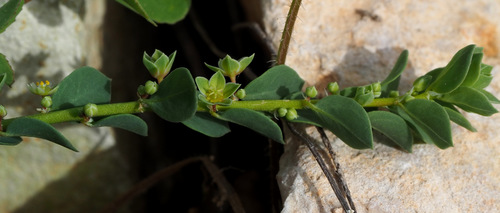
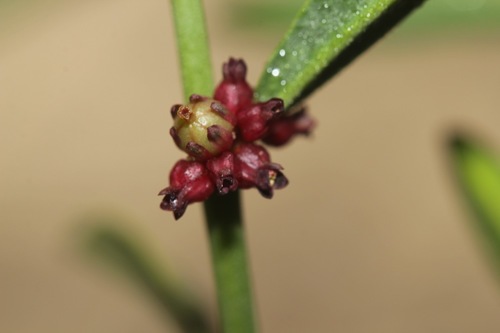
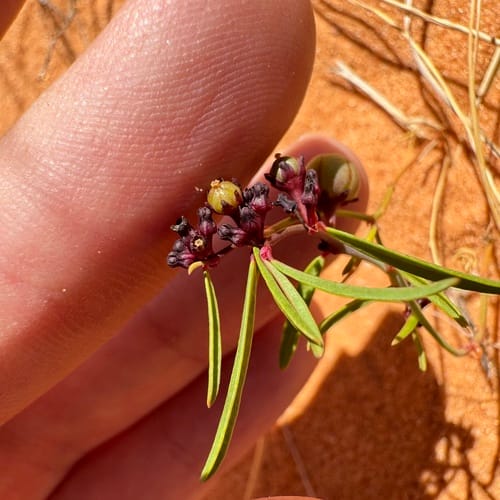
An annual plant that grows on sand dunes. The leaves are long and narrow. The flowers and then the fruit are in the axils of leaves.
Wikipedia
Source ↗Phyllanthus warnockii, the sand reverchonia, is a plant species of the leaf-flower family. It is an annual that specializes in growing on sand dunes in the Southwestern United States and adjacent northeastern Mexico. Though experiments found it to be poisonous to sheep, members of the Hopi Tribe in northeastern Arizona traditionally use the berries to oil and season cooking slabs for making corn wafer bread.
Notes
Also put in the Euphorbiaceae,
Names & Synonyms
References (2)
- Beckstrom-Sternberg, Stephen M., and James A. Duke. "The Foodplant Database." http://probe.nalusda.gov:8300/cgi-bin/browse/foodplantdb.(ACEDB version 4.0 - data version July 1994) (As Reverchonia arenaria)
- Proc. Amer. Acad. Arts 16:107. 1881 (As Reverchonia arenaria)