Antidesma sinuatum
Benth.
Currant bush
PhyllanthaceaeFruit

iNaturalist · cc-by-nc-sa
(c) Reiner Richter, some rights reserved (CC BY-NC-SA), uploaded by Reiner Richter
(c) Reiner Richter, some rights reserved (CC BY-NC-SA), uploaded by Reiner Richter

gbif · cc-by
Royal Botanic Gardens, Kew
Royal Botanic Gardens, Kew

iNaturalist · cc-by-nc-sa
(c) Matt Campbell, some rights reserved (CC BY-NC-SA), uploaded by Matt Campbell
(c) Matt Campbell, some rights reserved (CC BY-NC-SA), uploaded by Matt Campbell
What to Eat
Edible parts: Fruit
The fruit are used for jam.
Where to Find It
It is a tropical plant. It grows in drier rainforests. It needs well drained soil and a sunny position.
Australia*,
Countries: Australia
How to Identify
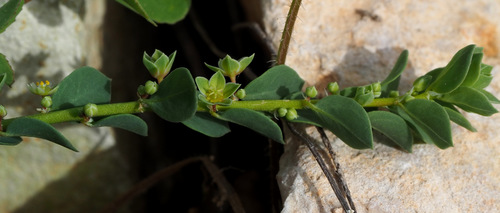
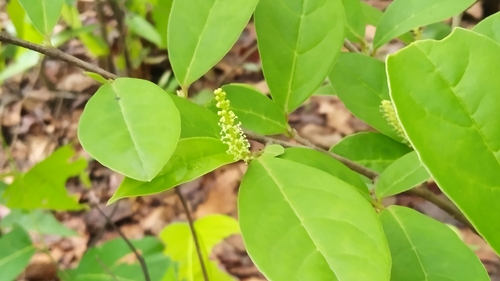
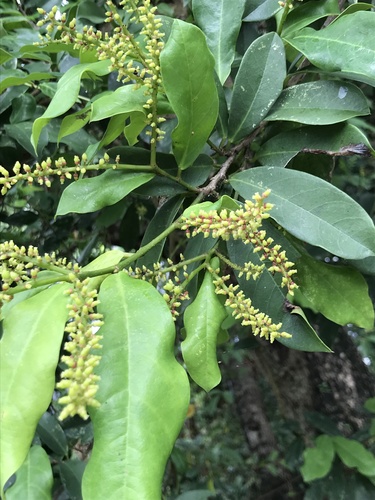
A small tree. It grows 6-10 m high and spreads 3-6 m across. The young shoots are smooth or slightly hairy. The leaves are 5-10 cm long by 2-4 cm wide. They are oblong. They are dark green with wavy edges. The male spikes are 1-2 cm long. The female stalk is 2-8 cm long. These are in the axils of leaves. The fruit is 6-8 mm long and flattened. They are red.
How to Grow
Plants can be grown from seed or cuttings.
Notes
There are about 100-170 Antidesma species.
References (2)
- Cherikoff V. & Isaacs, J., The Bush Food Handbook. How to gather, grow, process and cook Australian Wild Foods. Ti Tree Press, Australia p 198
- Elliot, W.R., & Jones, D.L., 1982, Encyclopedia of Australian Plants suitable for cultivation. Vol 2. Lothian. p 209