Antidesma fordii
Hemsl.
Choi moi van nam
PhyllanthaceaeFruit

iNaturalist · cc-by-nc
(c) Lag, some rights reserved (CC BY-NC), uploaded by Lag
(c) Lag, some rights reserved (CC BY-NC), uploaded by Lag
What to Eat
Edible parts: Fruit
The acidic fruits are eaten.
Where to Find It
A tropical plant. It grows on fallow land on the edge of forests below 400 m altitude. In southern China it grows in dense forests between 200-2,300 m above sea level. In Yunnan.
Asia, China, Indochina, Laos, SE Asia, Vietnam,
Countries: United Arab Emirates, Afghanistan, Armenia, Azerbaijan, Bangladesh, Bahrain, Brunei, Bhutan, China, Georgia, Indonesia, Israel, India, Iraq, Iran, Jordan, Japan, Kyrgyzstan, Cambodia, North Korea, South Korea, Kuwait, Kazakhstan, Laos, Lebanon, Sri Lanka, Myanmar, Mongolia, Maldives, Malaysia, Nepal, Oman, Philippines, Pakistan, Qatar, Saudi Arabia, Singapore, Syria, Thailand, Tajikistan, Timor-Leste, Turkmenistan, Turkey, Taiwan, Uzbekistan, Vietnam, Yemen
How to Identify
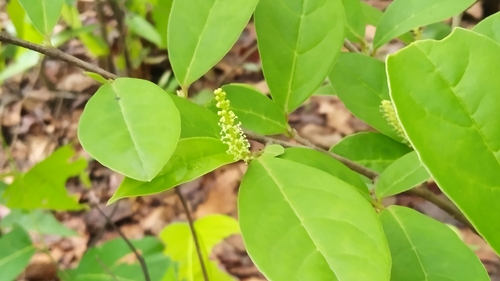
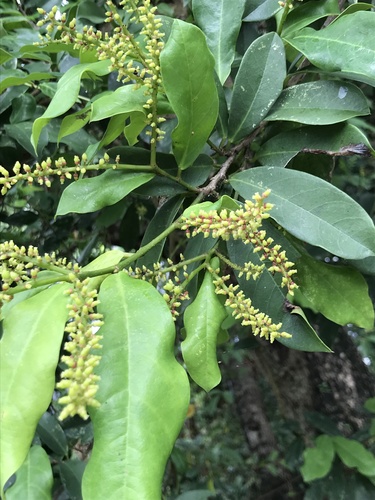
An evergreen medium sized tree. It grows 10-12 m high. The trunk is 25 cm across. The leaves are oblong and 7-20 cm long by 3-11 cm wide. The flowering stalks are at the ends of branches and in the axils of leaves. The fruit are purple when ripe. They are 6-7 mm long by 3-4 mm wide.
Notes
There are about 100-170 Antidesma species.
Names & Synonyms
Antidesma yunnanense Pax & K. Hoffm.
References (2)
- Forest Inventory and Planning Institute, 1996, Vietnam Forest Trees. Agriculture Publishing House p 185 (As Antidesma yunnanense)
- Reis, S. V. and Lipp, F. L., 1982, New Plant Sources for Drugs and Foods from the New York Botanical Garden herbarium. Harvard. p 154