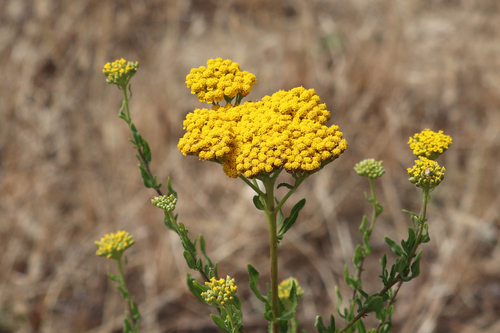
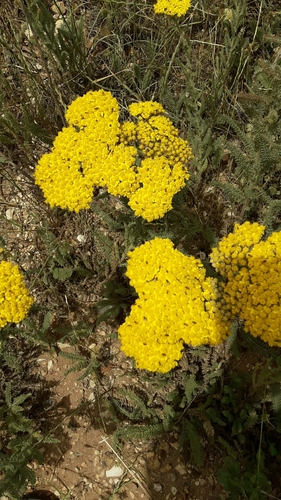
Sonchus oleraceus
L.
Milk thistle, Sow thistle

(c) Jean-Philippe BASUYAUX, some rights reserved (CC BY-NC), uploaded by Jean-Philippe BASUYAUX
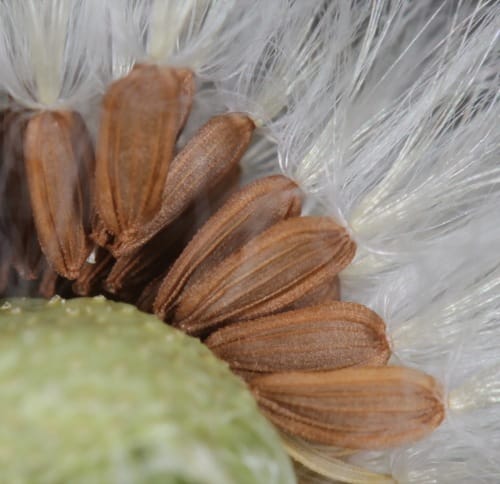
(c) Nathan Taylor, some rights reserved (CC BY-NC)
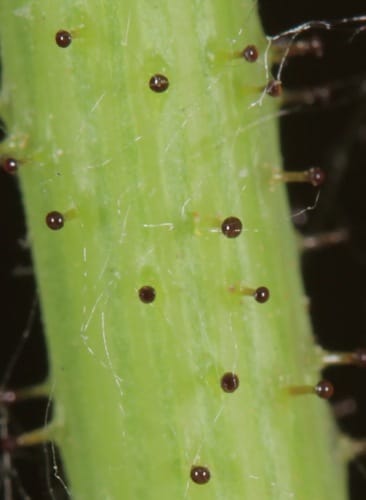
(c) Nathan Taylor, some rights reserved (CC BY-NC)
What to Eat
Edible parts: Root, Leaves, Berries, Fruit, Vegetable, Stems, Flowers
Young leaves can be eaten raw or cooked — this species has the best-tasting leaves in the genus, typically mild and agreeable, especially in spring. They work well in salads, cooked like spinach, or added to soups. The leaves contain approximately 30–40mg of vitamin C per 100g, 1.2% protein, 0.3% fat, 2.4% carbohydrate, and 1.2% ash. On a dry weight basis, the leaves provide 265 calories per 100g and contain: protein 28g, fat 4.5g, carbohydrate 45g, fibre 5.9g, ash 22g, calcium 1500mg, phosphorus 500mg, iron 45.6mg, vitamin A 35mg, thiamine (B1) 1.5mg, riboflavin (B2) 5mg, niacin 5mg, and vitamin C 60mg. Removing the marginal prickles is advisable though not essential. Stems can be cooked like asparagus or rhubarb and are best with the outer skin removed first. Young roots can be cooked, though they are woody and not particularly palatable. The milky sap has been used as a chewing gum by the Māori of New Zealand.
Known Hazards
Where to Find It
It is a temperate climate plant. It is found occasionally in disturbed or cultivated soil, especially in Mt Province in the Philippines. It occurs between 1000 m and 2500 m altitude. In Java it occurs between 200-2,200 m above sea level. In Nepal it grows between 2000-2800 m altitude. It grows in the central highlands of Vietnam. It can grow in arid places. Tasmania Herbarium. In Sichuan and Yunnan.
Afghanistan, Africa, Albania, Algeria, Andes, Andorra, Angola, Argentina, Asia, Australia, Austria, Bahrain, Balkans, Bangladesh, Belarus, Belgium, Belize, Bolivia, Bosnia, Botswana, Brazil, Britain, Bulgaria, Burkina Faso, Cameroon, Canada, Canary Is., Caribbean, Caucasus, Chad, Central Africa, Central America, Central Asia, Chile, China, Colombia, Congo DR, Cook Islands, Costa Rica, Crete, Croatia, Cuba, Cyprus, Czech Republic, Denmark, Djibouti, Dominica, Dominican Republic, East Africa, Easter Island, Ecuador, Egypt, El Salvador, Eritrea, Eswatini, Ethiopia, Europe, Falklands, Fiji, Finland, France, Gabon, Georgia, Germany, Ghana, Greece, Guatemala, Haiti, Hawaii, Himalayas, Honduras, Hungary, India, Indochina, Indonesia, Iran, Iraq, Ireland, Italy, Ivory Coast, Jamaica, Japan, Jordan, Kazakhstan, Kenya, Korea, Kuwait, Kyrgyzstan, Lebanon, Leeward Is., Lesotho, Libya, Luxembourg, Madagascar, Malawi, Malaysia, Mali, Manchuria, Marianas, Marquesas, Mauritania, Mauritius, Mediterranean, Mexico, Middle East, Moldova, Mongolia, Morocco, Mozambique, Namibia, Nepal, Netherlands, New Caledonia, New Zealand, Nicaragua, Niue, Norfolk Island, North Africa, North America, Northeastern India, Norway, Oman, Pacific, Pakistan, Palestine, Panama, Papua New Guinea, PNG, Paraguay, Peru, Philippines, Poland, Portugal, Puerto Rico, Qatar, Reunion, Romania, Russia, Rwanda, Sao Tome and Principe, Saudi Arabia, Scandinavia, SE Asia, Senegal, Siberia, Sicily, Sinai, Slovenia, Socotra, Somalia, South Africa, Southern Africa, South America, South Sudan, Spain, Sri Lanka, St Helena, Swaziland, Sweden, Switzerland, Syria, Taiwan, Tajikistan, Tanzania, Tasmania, Thailand, Tibet, Tonga, Trinidad-Tobago, Tunisia, Turkey, Türkiye, Turkmenistan, Ukraine, United Arab Emirates, UAE, Uganda, Uruguay, USA, Uzbekistan, Vanuatu, Venezuela, Vietnam, West Africa, West Indies, Yemen, Yugoslavia, Zambia, Zimbabwe, Zululand,
How to Identify
An erect annual hairy herb. It has milky sap. It is 40 to 60 cm high. The plant is bluish-green. The leaves are alternate. The leaves do not have stalks and half clasp the stem. Leaves are 10 to 20 cm long and very coarsely lobed. Flower heads are about 1 cm long and yellow. The fruit is dry and 3 ribbed. It opens to a round white ball. The seeds blow in the wind.
Nutrition Score: 41/100
| Part | Moisture | kJ | kcal | Protein | Vit A | Vit C | Iron | Zinc |
|---|---|---|---|---|---|---|---|---|
| Leaves | 94 | 109 | 26 | 2.3 | 678 | 22 | 1.6 | 0.7 |
| Leaves | 93.2 | 75 | 18 | 1.9 | 85 | — | 3.1 | — |
How to Grow
Succeeds in most soils in a sunny position. This plant has been cultivated for its edible leaves by the Maoris of New Zealand. The plant is a good companion for onions, tomatoes, corn as well as the cucumber and squash family. In garden design, as well as the above-ground architecture of a plant, root structure considerations help in choosing plants that work together for their optimal soil requirements including nutrients and water.
Propagation: Sow seed in spring directly in situ. As a common garden weed, this species should not need any special encouragement to establish.
Medicinal Uses
The plant is emmenagogue and hepatic. An infusion has been used to stimulate delayed menstruation and to treat diarrhoea. The latex in the sap is used to treat warts and is also said to have anticancer activity. The stem juice is a powerful hydrogogue and cathartic but should be used with great caution as it can cause colic and tenesmus. The gum has been used as a remedy for the opium habit. Leaves applied as a poultice help treat inflammatory swellings. An infusion of the leaves and roots is both febrifuge and tonic.
Other Uses
The latex in the stem contains 0.14% rubber, which is too low for commercial use. The plant makes a good companion for onions, tomatoes, corn, cucumbers, and the squash family. It is also suitable for food forest plantings.
Wikipedia
Source ↗Sonchus oleraceus is a species of flowering plant in the tribe Cichorieae of the family Asteraceae, native to Europe and Western Asia. It has many common names including common sowthistle, sow thistle, smooth sow thistle, annual sow thistle, puha (in New Zealand English, from Māori pūhā), hare's colwort, hare's thistle, milky tassel, milk thistle, and soft thistle.
Production
The tender leaves can be picked or the whole plant up rooted.
Other Information
It is a commercially cultivated vegetable. Leaves are sold in local markets.
Notes
Chemical composition (Chinese sample): Protein = 1.2%. Fat = 0.3%. Carbohydrate = 2.4%. Ash = 1.2%. Reportedly rich in Vitamin C. There are about 60 Sonchus species. Contains flavonoids, proanthocyanids, saponins, alkaloids, fatty acids, vitamin C, carotenoids. Mineral elements: sodium, potassium, calcium, magnesium, phosphorus, iron, copper, zinc, manganese.
Names & Synonyms
Amargon, Anakisoa, Apuruku, Beroberoka, Bhattal, Bono sa lekwaba, Borraja, Burchkhala, Cardedda bianca, Cascigno, Cerraja, Cerrajilla, Cevceg, Chikoka chisiwere, Chinguwo, Cicerbica, Cicerbita, Common sowthistle, Crujiera, Delgiyu, Dente-de-leao, Diente de leon, Dodak, Dodhak, Dudhejhar, Dudhi, Dudhi kanda, Esek marulu, Forrajas, Gagalang, I'lk-khai, Idwingabane, Ihanenabe, Ihlaba, Ingabe, Irhabe, JIkigeembegeembe, u'thaith, Kasni, Khala, Kizimhamucho, Kolfidekamajun, Kostrijec, Kostris, Ku mai cai, Lechuguilla, Lesabe, Lesese, Leshabe, Lessan albuqri, Lessan-athawr, Lessan al-baqarah, Lessan-imthawr, Lihabe, Lletsons, Makutaasila, Malai booti, Matakoatsila, Mhatara, Milk tassel, Mlee zelinny, Mlicz, Molaba, Mshunga kwake, Mshunga, Odaid, Pathari, Peeli dodhak, Puha rauriki, Pwake, Q'ara sapi, Quelete, Quelite cuan guiti, Ratrinta, Rau cuc sua, Rau diep dang, Rurimirwemombe, Rwabe, Sevone, Shashe, Sinbanggu, Soon dodak, Sutlengec, Talabretraka, Tarizha, Thalaak, Tifef, Titaliya, Tokkiboribab, Tong tong cai, Tshi-to-kangs-rba, Tsohos, Tue doan rau, Umeisennier, Yalanci marul, Zuccho
References (192)
- Abbiw, D.K., 1990, Useful Plants of Ghana. West African uses of wild and cultivated plants. Intermediate Technology Publications and the Royal Botanic Gardens, Kew. p 41
- Abbasi, A. M., et al, 2013, Ethnobotanical appraisal and cultural values of medicinally important wild edible vegetables of Lesser Himalayas-Pakistan. Journal of Ethnobiology and Ethnomedicine 9:66
- Acipa, A. et al, 2013, Nutritional Profile of some Selected Food Plants of Otwal and Ngai Counties, Oyam District, Northern Uganda. African Journal or Food, Agriculture, Nutrition and Development. 13(2)
- Agea, J. G., et al 2011, Wild and Semi-wild Food Plants of Bunyoro-Kitara Kingdom of Uganda: etc. Environmental Research Journal 5(2) 74-86
- Al-Fatimi, M. A., Wild Edible Plants Traditionally Collected and Used in Southern Yemen. Research Square. University of Aden. p 24
- Al-Qura'n, S. A., 2010, Ethnobotanical and Ecological Studies of Wild Edible Plants in Jordan. Libyan Agriculture Research Center Journal International 1(4):231-243
- Al-Sodany, Y. M., et al, 2013, Medicinal Plants in Saudi Arabia: I. Sarrwat Mountains at Taif, KSA. Academic Journal of Plant Sciences 6 (4): 134-145
- Altschul, S.V.R., 1973, Drugs and Foods from Little-known Plants. Notes in Harvard University Herbaria. Harvard Univ. Press. Massachusetts. no. 5031
- Ambasta, S.P. (Ed.), 2000, The Useful Plants of India. CSIR India. p 584
- Arellanes, Y., et al, 2013, Influence of traditional markets on plant management in the Tehuacan Valley. Journal of Ethnobiology and Ethnomedicine 9:38
- Arora, R. K., 2014, Diversity in Underutilized Plant Species - An Asia-Pacific Perspective. Bioversity International. p 46
- Ballabh, B., et al, 2007, Raw edible plants of cold desert Ladakh. Indian Journal of Traditional Knowledge. 6(1) pp 182-184
- Ben Ismail, H., 2013, Edible Wild Vegetables Used in North West of Tunisia. PARIPEX - Indian Journal of Reearch 2(9) :219-221
- Bidak, L. M., et al, 2015, Goods and services provided by native plants in desert ecosystems: Examples from the northwestern coastal desert of Egypt. Global Ecology and Conservation 3 (2015) 433–447
- Biscotti, N. & Pieroni, A., 2015, The hidden Mediterranean diet: wild vegetables Traditionallyy gathered and consumed in the Gargano area, Apulia, SE Italy. Acta Societatis Botanicorum Poloniae 84 (3): 327-338
- Biscotti, N. et al, 2018, The traditional food use of wild vegetables in Apulia (Italy) in the light of Italian ethnobotanical literature. Italian Botanist 5:1-24
- Blamey, M and Grey-Wilson, C., 2005, Wild flowers of the Mediterranean. A & C Black London. p 466
- Blanco-Salas, J., et al, 2019, Wild Plants Potentially Used in Human Food in the Protected Area “Sierra Grande de Hornachos” of Extremadura (Spain). Sustainability 2019, 11, 456
- Bodkin, F., 1991, Encyclopedia Botanica. Cornstalk publishing, p 937
- Bonet, M. A. & Valles, J., 2002, Use of non-crop food vascular plants in Montseny biosphere reserve (Catalonia, Iberian Peninsula). International Journal of Food Sciences and Nutrition (2002) 53, 225–248
- Brown, W.H., 1920, Wild Food Plants of the Philippines. Bureau of Forestry Bulletin No. 21 Manila. p 152
- Burkill, H. M., 1985, The useful plants of west tropical Africa, Vol. 1. Kew.
- Bvenura, C. and Afolayan, A. J., 2017, Tackling food and nutrition insecurity using leafy wild vegetables: The nutritional compositions of some selected species.
- Cao, Y., et al, 2020, Ethnobotanical study on wild edible plants used by three trans-boundary ethnic groups in Jiangcheng County, Pu’er, Southwest China. Journal of Ethnobiology and Ethnomedicine (2020) 16:66
- Cerne, M., 1992, Wild Plants from Slovenia used as Vegetables. Acta Horticulturae 318
- Chen, B. & Qiu, Z., Consumer's Attitudes towards Edible Wild Plants, Ishikawa Prefecture, Japan. p 26 www.hindawi.com/journals/ijfr/aip/872413.pdf
- Cherikoff V. & Isaacs, J., The Bush Food Handbook. How to gather, grow, process and cook Australian Wild Foods. Ti Tree Press, Australia p 191, 196
- Cordero, S. E., Abello, L. A., & Galvez, F. L., 2017, Plantas silvestres comestibles y medicinales de Chile y otras partes del mundo. CORMA p 242
- Cribb, A.B. & J.W., 1976, Wild Food in Australia, Fontana. p129
- Crowe, A., 1997, A Field Guide to the Native Edible Plants of New Zealand. Penguin. p 99
- Curtis, W.M., 1963, The Students Flora of Tasmania Vol 2 p 389
- Dangol, D. R. et al, 2017, Wild Edible Plants in Nepal. Proceedings of 2nd National Workshop on CUAOGR, 2017.
- Dashorst, G.R.M., and Jessop, J.P., 1998, Plants of the Adelaide Plains & Hills. Botanic Gardens of Adelaide and State Herbarium. p 152
- Della, A., et al, 2006, An ethnobotanical survey of wild edible plants of Paphos and Larnaca countryside of Cyprus. J. Ethnobiol. Ethnomed. 2:34
- de Polle, E., Plantas Silvestres Comestible de Guatemala. 1(1) Universidad de San Carlos de Guatemala.
- Diaz-Betancourt, M., et al, 1999, Weeds as a future source for human consumption. Rev. Biol. Trop. 47(3):329-338
- Ding, X., 2021, Collection calendar: the diversity and local knowledge of wild edible plants used by Chenthang Sherpa people to treat seasonal food shortages in Tibet, China. Journal of Ethnobiology and Ethnomedicine 17:40
- Dogan, Y., et al, 2004, The Use of Wild Edible Plants in Western and Central Anatolia (Turkey). Economic Botany 58(4) pp. 684-690
- Dogan, Y., 2012, Traditionallyy used wild edible greens in the Aegean Region of Turkey. Acta Societatis Botanicorum Poloniae 81(4): 329-342
- Dogan, Y. et al, 2013, Wild Edible Plants sold in the Local Markets of Izmir, Turkey. Pak. J. Bot. 45(S1): 177-184
- Dolina, K. & Luczaj, L., 2014, Wild food plants used on the Dubrovnik coast (south-eastern Croatia) Acta Soc Bot Pol 83(3):175–181
- Dop, M. C., et al, 2019, Identification and frequency of consumption of wild edible plants over a year in central Tunisia: a mixed-methods approach. Public Health Nutrition: 23(5), 782–794
- Dretakis, M. et al, 2012, Flora and Fauna Biodiversity in an ancient olive grove in Crete (Greece) in Calabrese G. (Ed.) Study on Biodiversity in Century-Old Olive Groves. CIHEAM - Mediterranean Agronomic Institute of Bari. p 94
- Duke, J.A., 1992, Handbook of Edible Weeds. CRC Press. p186
- Ertug, F., 2004, Wild Edible Plants of the Bodrum Area. (Mugla, Turkey). Turk. J. Bot. 28 (2004): 161-174
- Ertug, F, Yenen Bitkiler. Resimli Türkiye Florası -I- Flora of Turkey - Ethnobotany supplement
- Facciola, S., 1998, Cornucopia 2: a Source Book of Edible Plants. Kampong Publications, p 42
- Flora of Australia Volume 49, Oceanic Islands 1, Australian Government Publishing Service, Canberra. (1994) p 372
- Fowler, D. G., 2007, Zambian Plants: Their Vernacular Names and Uses. Kew. p 13
- Fox, F. W. & Young, M. E. N., 1982, Food from the Veld. Delta Books. p 125
- Franklin, J., Keppel, G., & Whistler, W., 2008, The vegetation and flora of Lakeba, Nayau and Aiwa Islands, Central Lau Group, Fiji. Micronesica 40(1/2): 169–225, 2008
- French, B.R., 1986, Food Plants of Papua New Guinea, A Compendium. Asia Pacific Science Foundation p 386
- GAMMIE
- Gautam, R. S., et al, 2022, Ethnobotanical Review of Wild Edible Plants of Nepal. Journal of Natural History Museum Volume 32, 2021-22 p 107
- Geng, Y., et al, 2016, Traditional knowledge and its transmission of wild edibles used by the Naxi in Baidi Village, northwest Yunnan province. Journal of Ethnobiology and Ethnomedicine. 12:10
- Geraci, A., et al, 2018, The wild taxa utilized as vegetables in Sicily (Italy): a traditional component of the Mediterranean diet. Journal of Ethnobiology and Ethnomedicine (2018) 14:14
- Godfrey, J. et al, 2013, Harvesting, preparation and preservation of commonly consumed wild and semi-wild food plants in Bunyoro-Kitara Kingdom, Uganda. Int. J. Med. Arom. Plants. Vol.3 No.2 pp 262-282
- Goode, P., 1989, Edible Plants of Uganda. FAO p 41
- Gott, B & Conran, J., 1991, Victorian Koorie Plants. PO Box 666 Hamilton, Victoria 3300, Australia. p 41
- Grivetti, L. E., 1980, Agricultural development: present and potential role of edible wild plants. Part 2: Sub-Saharan Africa, Report to the Department of State Agency for International Development. p 48, 71
- Grubben, G. J. H. and Denton, O. A. (eds), 2004, Plant Resources of Tropical Africa 2. Vegetables. PROTA, Wageningen, Netherlands. p 512
- Guil-Guerrero, J. L., et al, 2001, Edible Wild Plants. in Recent Progress in Medicinal Plants Vol. 8 Sci. Tech publishing, Texas
- Hadjichambis, A. C., et al, 2007, Wild and semi-domesticated food plant consumption in seven circum-Mediterranean areas. International Journal of Food Sciences and Nutrition. 2007, 1-32.
- Hammer, K. & Spahillari, M., 1999, Crops of European origin. in Report of a networking group on minor crops. IPGRI p 47
- Hancer, C. K., et al, 2020, Traditional Knowledge of Wild Edible Plants of Biga (Çanakkale), Turkey. Acta Societatis Botanicorum Poloniae / 2020 / Volume 89 / Issue 1 / Article 8914
- Harkonen, M. & Vainio-Mattila, K., 1998, Some examples of Natural Products in the Eastern Arc Mountains. Journal of East African Natural History 87:265-278
- Harris, S., Buchanan, A., Connolly, A., 2001, One Hundred Islands: The Flora of the Outer Furneaux. Tas Govt. p 231
- Hedrick, U.P., 1919, (Ed.), Sturtevant's edible plants of the world. p 627
- HELY-HUTCHINSON
- Hensen, I., 1992, La Flora de la Comunidad Chorojo, Su uso, taxonomía científica y vernacular. Agroecología Universidad Cochabamba p 23
- Henty, E.E., & Pritchard, G.S., 1973, Weeds of New Guinea and their control. Botany Bulletin No 7, Division of Botany, Lae, PNG. p 82
- https://www.fireflyforest.com/flowers/category/edible-plants/ Edible Plants – Southeastern Arizona Wildflowers and Plants
- Hunter, J. T. & Sheringham, P., 2006, Vegetation and Floristics of Melville Range Nature Reserve. A Report to the New South Wales Parks and Wildlife Service. p 181
- Hunter, J., 2012, Vegetation and Floristics of Gilwarny and Wingadee Nature Reserves. A Report to the New South Wales National Parks and Wildlife Service p 121
- Hunter, J.T., 2017, Is there a relationship between contemporary high Aboriginal plant resource locations and mapped vegetation communities? Cunninghamia 17:27-34. The Royal Botanic Garden Sydney. ISSN 2200 - 405X
- Hussey, B.M.J., Keighery, G.J., Cousens, R.D., Dodd, J., Lloyd, S.G., 1997, Western Weeds. A guide to the weeds of Western Australia. Plant Protection Society of Western Australia. p 106
- Hu, Shiu-ying, 2005, Food Plants of China. The Chinese University Press. p 746
- Hwang, H., et al, 2013, A Study on the Flora of 15 Islands in the Western Sea of Jeollanamdo Province, Korea. Journal of Asia-Pacific Biodiversity Vol. 6, No. 2 281-310
- Hyde-Wyatt, B.H. & Morris D.I., 1975, Tasmanian Weed Handbook. Dept of Ag Tasmania. p 35
- IRVINE
- Irving, M., 2009, The Forager Handbook, A Guide to the Edible Plants of Britain. Ebury Press p 160
- Jackes, B.R., 2001, Plants of the Tropics. Rainforest to Heath. An Identification Guide. James Cook University. p 43
- Jadhav, R., et al, 2015, Forest Foods of Northern Western Ghats: Mode of Consumption, Nutrition and Availability. Asian Agri-History Vol. 19, No. 4: 293-317
- Jardin, C., 1970, List of Foods Used In Africa, FAO Nutrition Information Document Series No 2.p 104
- Joshi, N., et al, 2007, Traditional neglected vegetables of Nepal: Their sustainable utilization for meeting human needs. Tropentag 2007. Conference on International Agricultural Research for Development.
- Joshi, N. & Siwakoti, M., 2012, Wild Vegetables Used by Local Community of Makawanpur District and Their Contribution to Food Security and Income Generation. Nepal Journal of Science and Technology Vol. 13, No. 1 (2012) 59-66
- Kang, Y., et al, 2012, Wild food plants and wild edible fungi in two valleys on the Qinling Mountains (Shaanxi, central China) Journal of Ethnobiology and Ethnomedicine; 9:26
- Kang, Y., et al, 2014, Wild food plants used by the Tibetans of Gongba Valley (Zouqu country, Gansu, China) Journal of Ethnobiology and Ethnomedicine 10:20
- Kapelle, M., et al, 2000, Useful plants within a Campesino Community in a Costa Rican Montane Cloud Forest. Mountain Research and Development, 20(2): 162-171.
- Kayabasi, N. P., et al, 2018, Wild edible plants and their traditional use in the human nutrition in Manyas (Turkey). Indian Journal of Traditional Knowledge. Vol. 17(2), April 2018, pp 299-306
- Kays, S. J., and Dias, J. C. S., 1995, Common Names of Commercially Cultivated Vegetables of the World in 15 languages. Economic Botany, Vol. 49, No. 2, pp. 115-152
- Kepe, T., 2008, Social Dynamics of the Value of Wild Edible Leaves (Imifino) in a South African Rural Area. Ecology of Food and Nutrition, 47:531-558
- Kew Plants of the World Online
- Kiple, K.F. & Ornelas, K.C., (eds), 2000, The Cambridge World History of Food. CUP p 1855
- Kujawska, M. & Luczaj, L., 2015, Wild Edible Plants Used by the Polish Community in Misiones, Argentina. Human Ecology 43:855-869
- Kuo, W. H. J., (Ed.) Taiwan's Ethnobotanical Database (1900-2000), http://tk.agron.ntu.edu.tw/ethnobot/DB1.htm
- Lamp, C & Collet F., 1989, Field Guide to Weeds in Australia. Inkata Press. p 282
- Lazarides, M. & Hince, B., 1993, Handbook of Economic Plants of Australia, CSIRO. p 224
- Leal, M. L. et al, 2018, Knowledge, use, and disuse of unconventional food plants. Journal of Ethnobiology and Ethnomedicine (2018) 14:6
- Lentini, F. and Venza, F., 2007, Wild food plants of popular use in Sicily. J Ethnobiol Ethnomedicine. 3: 15
- Lim, T. K., 2015, Edible Medicinal and Non Medicinal Plants. Volume 9, Modified Stems, Roots, Bulbs. Springer p 78
- Long, C., 2005, Swaziland's Flora - siSwati names and Uses http://www.sntc.org.sz/flora/
- Low, T., 1991, Wild Herbs of Australia and New Zealand. Angus & Robertson. p 33
- Low, T., 1991, Wild Food Plants of Australia. Australian Nature FieldGuide, Angus & Robertson. p 99
- Low, T., 1992, Bush Tucker. Australia’s Wild Food Harvest. Angus & Robertson. p 151
- Luczaj et al, 2013, Wild vegetable mixes sold in the markets of Dalmatia (southern Croatia). Journal of Ethnobiology and Ethnomedicine. 8:2
- Luczaj, L. et al, 2013, Wild food plants used in the villages of the Lake Vrana Nature Park (northern Dalmatia, Croatia). Acta Societatis Botanicorum Poloniae, 82(4): 275-281
- Luczaj, L. et al, 2014, Wild Food Plants of Dalmatia (Croatia). in A. Pieroni, C. L. Quave (eds.), Ethnobotany and Biocultural Diversities in the Balkans, p 138
- Luczaj, L. et al, 2017, Comfrey and Buttercup Eaters: Wild Vegetables of the Imereti Region in Western Georgia, Caucasus. Economic Botany, 71(2), 2017, pp. 188–193
- MacKinnon, A., et al, 2009, Edible & Medicinal Plants of Canada. Lone Pine. p 333
- Magwede, K., van Wyk, B.-E., & van Wyk, A. E., 2019, An inventory of Vhavenḓa useful plants. South African Journal of Botany 122 (2019) 57–89
- Majeed, M., et al, 2021, Gathered Wild Food Plants among Diverse Religious Groups in Jhelum District, Punjab, Pakistan. Foods 2021, 10, 594.
- Manandhar, N.P., 2002, Plants and People of Nepal. Timber Press. Portland, Oregon. p 433
- Maiden, JH, 1889, The Useful Native Plants of Australia. Compendium. Melbourne. Reprinted 1975.
- Maroyi, A., 2013, Use of weeds as traditional vegetables in Shurugwi District, Zimbabwe. Journal of Ethnobiology and Ethnomedicine 9:60
- Martin, F.W. & Ruberte, R.M., 1979, Edible Leaves of the Tropics. Antillian College Press, Mayaguez, Puerto Rico. p 186
- Massal, E. and Barrau, J., 1973, Food Plants of the South Sea Islands. SPC Technical Paper No 94. Noumea, New Caledonia. p 36
- McKerney, M. & White, H., 2011, Bush Tucker, Boomerangs & Bandages. Border River-Gwyder Catchment Management Authority p 161
- Melander, M., 2007, Endangered plants on the market in Havana City, Cuba. Uppsala University, Sweden p 19
- Michael, P., 2007, Edible Wild Plants and Herbs. Grub Street. London. p 224
- Moerman, D. F., 2010, Native American Ethnobotany. Timber Press. p 538
- Molina, M. et al, 2014, Weeds and Food Diversity: Natural Yield Assessment and Future Alternatives for Traditionallyy Consumed Wild Vegetables. Journal of Ethnobiology 34(1): 44–67
- Monsalud, M.R., Tongacan, A.L., Lopez, F.R., & Lagrimas, M.Q., 1966, Edible Wild Plants in Philippine Forests. Philippine Journal of Science. p 455
- Msuya, T. S., et al, 2010, Availability, Preference and Consumption of Indigenous Foods in the Eastern Arc Mountains, Tanzania, Ecology of Food and Nutrition, 49:3, 208-227
- Mutie, F. M., et al, 2023, Important Medicinal and Food Taxa (Orders and Families) in Kenya, Based on Three Quantitative Approaches. Plants 2023, 12, 1145
- Nassif, F., & Tanji, A., 2013, Gathered food plants in Morocco: The long forgotten species in Ethnobotanical Research. Life Science Leaflets 3:17-54
- Nebel, S., Pieroni, A. & Heinrich, M., 2006, Ta cho`rta: Wild edible greens used in the Graecanic area in Calabria, Southern Italy. Appetite 47 (2006) 333–342
- Nimis, P. L., et al, 2015, A guide to the vascular plants of the temporary ponds of Sardinia (Italy) p 171
- Ochse, J.J. et al, 1931, Vegetables of the Dutch East Indies. Asher reprint. p 144
- Ogle, B. M. & Grivetti, L. E., 1984, Legacy of the Chameleon: Edible Wild Plants in the Kingdom of Swaziland, Southern Africa. A Cultural, Nutritional Study. Part 4 - Nutritional Analysis and Conclusions. Ecology of Food and Nutrition. Vol 17, pp 431-64
- Ong, H. G., et al, 2015, Ethnobotany of the wild edible plants gathered in Ulleung Island, South Korea. Genet Resourc Crop Evol. Springer
- Paczkowska, G. & Chapman, A.R., 2000, The Western Australian Flora. A Descriptive Catalogue. Western Australian Herbarium. p 176
- Paoletti, M.G., Dreon, A.L., and Lorenzoni, G.G., 1995, Pistic, Traditional Food from Western Friuli, NE Italy. Economic Botany 49(1) pp 26-30
- Pascual-Mendoza, S. et al, 2021, Traditional knowledge of edible plants in an indigenous community in the Sierra Norte of Oaxaca, Mexico. Plant Biosystems - An International Journal Dealing with all Aspects of Plant Biology
- Pasta, S., et al, 2020, An Updated Checklist of the Sicilian Native Edible Plants: Preserving the Traditional Ecological Knowledge of Century-Old Agro-Pastoral Landscapes. Frontiers in Plant Science. Volume 11|Article 388
- Pieroni, A., 1999, Gathered wild food plants in the Upper Valley of the Serchio River (Garfagnana), Central Italy. Economic Botany 53(3) pp 327-341
- Phillips, D.C., 1988, Wild Flowers of Bahrain. A Field Guide to Herbs, Shrubs, and Trees. Privately published. p 82
- Plants for a Future database, The Field, Penpol, Lostwithiel, Cornwall, PL22 0NG, UK. http://www.scs.leeds.ac.uk/pfaf/
- Plants of Haiti Smithsonian Institute http://botany.si.edu
- Powell, J.M., Ethnobotany. In Paijmans, K., 1976, New Guinea Vegetation. Australian National University Press. p 111
- Quintana, C. M., 2010, Wild Plants in the Dry Valleys Around Quito Ecuador. An Illustrated Guide. Publicationes del Harbario, QCA p 75
- Raponda-Walker, A & Sillans, R., 1961, Les Plantes Utiles du Gabon. Editions Paul Lechevalier, Paris. p 130
- Razanameharizaka, J., et al, 2022, Catalogue Legumes Traditionnels de Madagascar. Université d’Antananarivo, Antananarivo (101), Madagascar. Vol. 1. p 26
- READ
- Redzic, S. J., 2006, Wild Edible Plants and their Traditional Use in the Human Nutrition in Bosnia-Herzegovina. Ecology of Food and Nutrition, 45:189-232
- Redzic, S., 2010, Use of Wild and Semi-Wild Edible Plants in Nutrition and Survival of People in 1430 Days of Siege of Sarajevo during the War in Bosnia and Herzegovina (1992–1995). Coll. Antropol 34 (2010) 2:551-570
- Rivera, C., et al, 2005, The Ethnobotanical Study of Local Mediterranean Food Plants as Medicinal Resources in Southern Spain. Journal of Physiologyand Pharmacology. 56, Suppl. 1, 97-114
- Rivera, D. et al, 2006, Gathered Mediterranean Food Plants - Ethnobotanical Investigations and Historical Development, in Heinrich M, Müller WE, Galli C (eds): Local Mediterranean Food Plants and Nutraceuticals. Forum Nutr. Basel, Karger, 2006, vol 59, pp 18–74
- Royal Botanic Gardens, Kew (1999). Survey of Economic Plants for Arid and Semi-Arid Lands (SEPASAL) database. Published on the Internet; http://www.rbgkew.org.uk/ceb/sepasal/internet [Accessed 14th April 2011]
- Ruiters-Welcome, A. K., 2019, Food plants of southern Africa. Ph.D. thesis. Univ. of Johannesburg p 37
- Sansanelli, S., et al, 2017, Ethnobotanical survey of wild food plants Traditionallyy collected and consumed in the Middle Agri Valley (Basilicata region, southern Italy). Journal of Ethnobiology and Ethnomedicine (2017) 13:50
- Shackleton, S. E., et al, 1998, Use and Trading of Wild Edible Herbs in the Central Lowveld Savanna Region, South Africa. Economic Botany, Vol. 52, No. 3, pp. 251-259
- Sharma, L. et al, 2018, Diversity, distribution pattern, endemism and indigenous uses of wild edible plants in Cold Desert Biosphere Reserve of Indian Trans Himalaya. Indian Journal of Traditional Knowledge. Vol 17(1) January 2018 pp 122-131
- Shava, S., 2000, The Use of Indigenous Plants as Food by a Rural Community in the Eastern Cape: an Educational Exploration. Masters Thesis Rhodes University. p 67
- Siminiuc, R. & Turcanu, D., 2021, Study of Edible Spontaneous Herbs in the Republic of Moldova for Ensuring a Sustainable Food System. Food and Nutrition Sciences, 2021, 12, 703-718 p 710
- Simkova, K. et al, 2014, Ethnobotanical review of wild edible plants used in the Czech Republic. Journal of Applied Botany and Food Quality 88, 49-67
- Singh, H.B., Arora R.K.,1978, Wild edible Plants of India. Indian Council of Agricultural Research, New Delhi. p 37
- Skinner, G. & Brown, 1981, C., Simply Living. A gatherer's guide to New Zealand's fields, forests and shores. Reed. p 23
- Skoula, M & Sarpaki, A., 2005, Traditional knowledge on the uses of wild plants in Crete, Greece.
- Smith, A.C., 1991, Flora Vitiensis Nova, Lawaii, Kuai, Hawaii, Volume 5 p 265
- Smith, F. I. and Eyzaquirre, P., 2007, African leafy vegetables: Their role in the World Health Organization's global Fruit and Vegetables Initiative. AJFAND, Vol. 7 No. 3
- Sp. pl. 2:794. 1753 (type species)
- Stanley, T. D. & Ross, E. M., 1986, Flora of south-eastern Queensland Volume 2. Queensland Government p 596
- Stern, G., 1986, Australian Weeds. A Source of Food and Medicine. Harper & Row. p 189
- Swaziland's Flora Database http://www.sntc.org.sz/flora
- Tanaka, Y. & Van Ke, N., 2007, Edible Wild Plants of Vietnam: The bountiful garden. Orchid books. p 52
- Tasmanian Herbarium Vascular Plants list p 14
- Tardio, J., et al, Ethnobotanical review of wild edible plants in Spain. Botanical J. Linnean Soc. 152 (2006), 27-71
- Terra, G.J.A., 1973, Tropical Vegetables. Communication 54e Royal Tropical Institute, Amsterdam, p 76
- Thaman, R.R., 1976, The Tongan Agricultural System, University of the South Pacific, Suva, Fiji. p 424
- Thapa, L. B., et al, 2014, Wild Edible Plants used by endangered and Indigenous Raji Tribe in Western Nepal. International Journal of Applied Sciences and Biotechnology. Vol 2(3):243-252
- The Pacific Islands Food Composition Tables http://www.fao.org/docrep No C092
- Thomas, E., et al, 2008, The Relationship Between Plant Use and Plant Diversity in the Bolivian Andes, with Special Reference to Medicinal Plant Use. Hum Ecol (2008) 36:861–879
- Turner, N. J. et al, 2011, Edible and Tended Wild Plants, Traditional Ecological Knowledge and Agroecology. Critical Reviews in Plant Sciences, 30:198-225
- Upson, R., & Lewis R., 2014, Updated Vascular Plant Checklist and Atlas for the Falkland Islands. Falklands Conservation and Kew.
- Urgamal, M., Oyuntsetseg, B., Nyambayar, D. & Dulamsuren, Ch. 2014. Conspectus of the vascular plants of Mongolia. (Editors: Sanchir, Ch. & Jamsran, Ts.). Ulaanbaatar, Mongolia. “Admon“ Press. 334pp. (p. 199-230).
- Vainio-Mattila, K., 2000, Wild vegetables used by the Sambaa in the Usumbara Mountains, NE Tanzania. Ann. Bot. Fennici 37:57-67
- van Wyk, B., 2005, Food Plants of the World. An illustrated guide. Timber press. p 363
- Vartak, V.D. and Kulkarni, D.K., 1987, Monsoon wild leafy vegetables from hilly regions of Pune and neighbouring districts, Maharashtra state. J. Econ. Tax. Bot. Vol. 11 No. 2 pp 331-335
- Vernon, R., 1983, Field Guide to Important Arable Weeds of Zambia. Dept of Agriculture, Chilanga, Zambia. p 94
- Wang, J., et al, 2020, An ethnobotanical survey of wild edible plants used by the Yi people of Liangshan Prefecture, Sichuan Province, China. Journal of Ethnobiology and Ethnomedicine 16:10 p 7
- Weckerle, C. S., et al, 2006, Plant Knowledge of the Shuhi in the Hengduan Mountains, Southwest China. Economic Botany 60(1):2-23
- Wehmeyer, A. S, 1986, Edible Wild Plants of Southern Africa. Data on the Nutrient Contents of over 300 species
- Welcome, A. K. & Van Wyk, B.-E., 2019, An inventory and analysis of the food plants of southern Africa. South African Journal of Botany 122 (2019) 136–179
- Williamson, J., 2005, Useful Plants of Malawi. 3rd. Edition. Mdadzi Book Trust. p 230
- http://cookislands.bishopmuseum.org
- World Checklist of Useful Plant Species 2020. Royal Botanic Gardens, Kew
- Wujisguleng, W., & Khasbagen. K., 2010, An integrated assessment of wild vegetable resources in Inner Mongolian Autonomous Region, China. Journal or Ethnobiology and Ethnomedicine 6:34
- www.ediblewildfood.com
- Yimer, A., et al, 2021, Ethnobotanical study of wild edible plants used by Meinit Ethnic Community at Bench-Maji Zone, Southwest Ethiopia. Research Square. p 5
- Yuncker, T.G., 1959, Plants of Tonga, Bernice P. Bishop Museum, Hawaii, Bulletin 220. p 270
- Zizka, G., 1991, Flowering Plants of Easter Island. Palmarum Hortus Francofurtensis