Phyllanthus acidus
(L.) Skeels
Grosella, Otaheite gooseberry
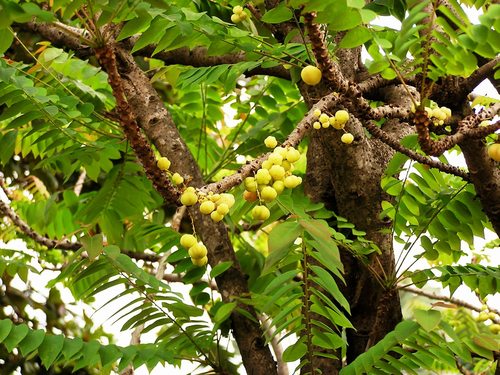
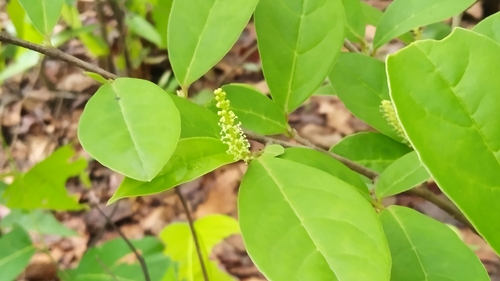
(c) Nasser Halaweh, some rights reserved (CC BY), uploaded by Nasser Halaweh
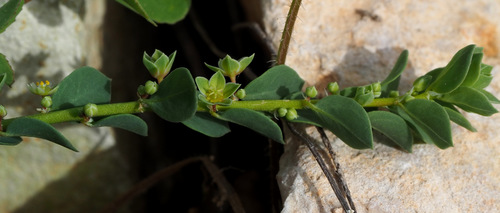
(c) Smithsonian Institution, National Museum of Natural History, Department of Botany, some rights reserved (CC BY-NC-SA)

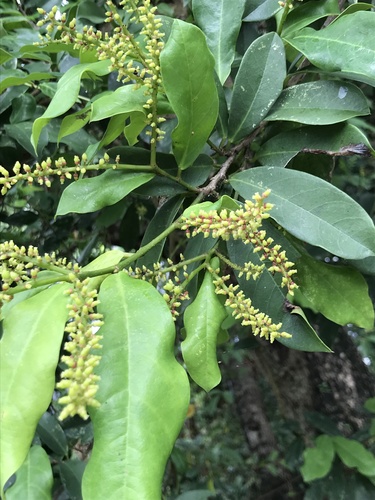
(c) Forest & Kim Starr, some rights reserved (CC BY)
What to Eat
Edible parts: Fruit, Leaves, Vegetable
Various parts of the plant are used for food. In Bangladesh, India and Indonesia, the cooked leaves are eaten. While the fruit is eaten fresh, and is sometimes used as flavoring for other dishes in Indonesia, it is generally regarded as too tart to eat by itself in its natural form and is processed further. It is candied in sugar or pickled in salt, used in chutney, relish or preserves. In the Philippines, it is used to make vinegar as well as eaten raw, soaked in salt or vinegar-salt solution and sold along the roadside. It is candied as well, usually stored in jars with syrup. They make these into a syrup in Malaysia. Liberally sugared, it is also used to make fruit juice. In Thailand it is used as an ingredient to make Som tam, to make pickled, boil in syrup (Ma-Yom Chuam).
Known Hazards
Where to Find It
They are a tropical plant. It can grow in the hot humid tropical lowlands. They suit areas with a seasonal dry period. In Nepal it grows up to 250 m altitude. They are widely distributed near towns and sometimes cultivated for the edible fruit. It can grow in arid places. It suits hardiness zones 11-12.
Africa, Andes, Asia, Australia, Bahamas, Bangladesh, Belize, Brazil*, Cambodia, Cape Verde, Caribbean, Central America, China, Colombia, Cook Islands, Costa Rica, Cuba, Dominica, Dominican Republic, East Africa, Ecuador, El Salvador, Ghana, Guam, Guatemala, Guiana, Guianas, Guinea-Bissau, Guyana, Haiti, Hawaii, Himalayas, India, Indochina, Indonesia, Jamaica, Laos, Madagascar*, Malaysia, Maldives, Mariana Islands, Marquesas, Mexico, Mozambique, Myanmar, Nepal, Nicaragua, Nigeria, North America, Northeastern India, Pacific, Pakistan, Philippines, Puerto Rico, Samoa, SE Asia, Senegal, Seychelles, Singapore, South America, Sri Lanka, Suriname, Taiwan, Tanzania, Thailand, Timor-Leste, Tuvalu, Uganda, USA, Vietnam, West Africa, West Indies,
How to Identify
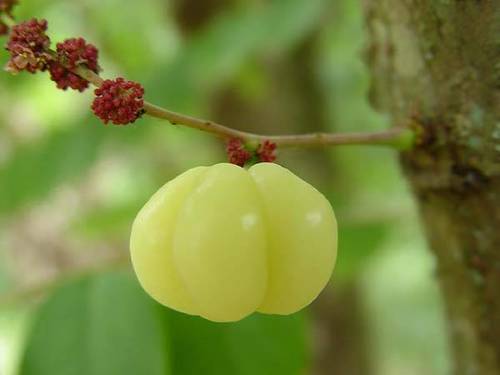
A medium sized tree. It grows up to 2-10 m tall. It loses its leaves during the year. The leaves are smooth and 20-40 cm long and divided. The leaflets are light green and rounded at the base and pointed at the tip. The leaflets are alternate and pointed at the tip, rounded at the base and 2 to 7 cm long. Nodules develop on branches where leaves have fallen. Leaves tend to be clustered near the ends of branches. Flowers develop from these. Flowers are small and pink and crowded in clusters from these nodules. Male and female flowers are on separate trees. The fruit is medium sized, with 6 lobes, pale green but yellow when mature and sour. They are 1 to 1.5 cm across. The surface of the skin is smooth but the fruit are slightly ridged. It contains a bony hard grooved stone with 6-8 seeds.
Nutrition Score: 27/100
| Part | Moisture | kJ | kcal | Protein | Vit A | Vit C | Iron | Zinc |
|---|---|---|---|---|---|---|---|---|
| Fruit | 91.4 | 155 | 37 | 1 | 3.2 | 8 | 3.2 | — |
How to Grow
Trees can be grown from seed. Trees can be grown by cleft grafting. They can also be grown from cuttings and air layering.
Propagation: Seed - easily germinated, it is the most common way of propagating the plant. Greenwood cuttings. Budding. Air layering.
Medicinal Uses
The root is an active purgative. An infusion of the root is taken to alleviate asthma. An extract from the root is used to cure skin diseases especially to bring relief from itching. The leaves are used as one of the ingredients in a Thai remedy to control fevers. A leaf decoction is applied to urticaria. An infusion of the leaves is used as a dieting aid for people who are dieting and wish to remain slim. The latex is credited with emetic and purgative activity. The bark is heated with coconut oil and spread on eruptions on feet and hands. A decoction of the bark is used to treat bronchial catarrh. The fruit is used as a laxative. They are also taken as a liver tonic to enrich the blood. The juice of the fruit is instilled in the eyes to treat eye-troubles. The seeds are cathartic.
Other Uses
The bark is used in India as a tanning agent. An extract from the plant has shown nematicidal activity against the pine wood nematode, Bursaphelenchus xylophilus. The reddish-brown wood is fine-grained; of moderate weight; fairly hard; strong; tough; and durable if seasoned. It takes a good polish. Seldom available in any but small sizes, it can be used for utensils and other small objects. The wood is used for fuel.
Wikipedia
Source ↗Phyllanthus acidus, known as the Otaheite gooseberry, Malay gooseberry, Tahitian gooseberry, country gooseberry, star gooseberry, starberry, arbari, West India gooseberry, Grosella, or simply gooseberry tree, is one of the trees with small edible yellow berries in the family Phyllanthaceae. Despite its name, the plant does not resemble the gooseberry, except for the acidity of its fruits.
Production
It is fast growing. Trees produce after about 4 years. Fruiting occurs throughout the year. Fruit mature in 90-100 days.
Other Information
They are not the most popular fruit and are often left unused. The fruit are sold in markets. It is cultivated.
Notes
There are about 600-800 Phyllanthus species. They are mostly in the tropics. Fruit are very acid. There are 200 Phyllanthus species in tropical America. These were previously in the Euphorbiaceae.
Names & Synonyms
Amla, Arinelli, Aura, Bai mak nyom, Bangkiling, Ceremoi, Cermai, Chalmeri, Chermai, Chum ruot, Goambili, Gooseberry Tree, Groselha, Grosella, Grosellero, Harfaruri, Harphareuri, Holpholi, Hor bori, Iba, Indian gooseberry, Kantuet, Kanturk srok, Kawl-sun-hlu, Kumpira waitni, Lewathai, Ma yom, Mak-hkam-sang-paw, Mak nkom, Mak nyom, Malay apple, Malay gooseberry, Manzana lora, Mayom, Nelli, Nellipuli, Orbori, Orboroi, Peras, Pom lokhi, Pora amlokhi, Ratta nelli, Star gooseberry, Takeri thelu, Takiri thelu, Thinbaw-zibyu, Vini
References (99)
- Ajesh, T. P., et al, 2012, Ethnobotanical Documentation of Wild Edible Fruits used by Muthuvan Tribes of Idukki, Kerala-India. International Journal of Pharma and Bio Sciences 3(3): 479-487
- Altschul, S.V.R., 1973, Drugs and Foods from Little-known Plants. Notes in Harvard University Herbaria. Harvard Univ. Press. Massachusetts. no. 2089
- Ambasta, S.P. (Ed.), 2000, The Useful Plants of India. CSIR India. p 123, 450
- Anderson, E. F., 1993, Plants and people of the Golden Triangle. Dioscorides Press. p 218
- Arora, R. K., 2014, Diversity in Underutilized Plant Species - An Asia-Pacific Perspective. Bioversity International. p 81
- Ashton, M. S., et al 1997, A Field Guide to the Common Trees and Shrubs of Sri Lanka. WHT Publications Ltd. pdf p 208
- Bajpai, O., et al, 2015, Tree species of the Himalayan Terai region of Uttar Pradesh, India: a checklist. Check List 11(4): 1718
- Barrau, J., 1961 (1976 reprint), Subsistence Agriculture in Polynesia and Micronesia. Bernice P. Bishop Museum Bulletin 223, Honolulu, Hawaii, p 63 (As Cicca acida)
- Barwick, M., 2004, Tropical and Subtropical Trees. A Worldwide Encyclopedic Guide. Thames and Hudson p 318
- Bernal, R., et al, (Eds), 2016, Catalogo de Plantas y Liquenes de Colombia, Volumen 2, Magnoliaceae a Zygophyllaceae. Universidad Nacional de Colombia. p 2531
- Bingtao, Li, et al, Euphorbiaceae. p 180
- Blench, R., 2004, Fruits and Arboriculture in the Indo-Pacific Region. Indo-Pacific Prehistory Association Bulletin 24. (Taipei Papers Volume 2) p 39
- Bodkin, F., 1991, Encyclopedia Botanica. Cornstalk publishing, p 789
- Brown, W.H., 1920, Wild Food Plants of the Philippines. Bureau of Forestry Bulletin No. 21 Manila. p 88 (As Cicca acida)
- Burkill, H. M., 1985, The useful plants of west tropical Africa, Vol. 2. Kew.
- Burkill, I. H., 1966,
- Chakraborty, S. & Chaturbedi, H. P., 2014, Some Wild Edible Fruits of Tripura- A Survey. Indian Journal of Applied research. (4) 9
- Chandrashekara, U. M., 2009, Tree species yielding edible fruit in the coffee-based homegardens of Kerala, India: their diversity, uses and management. Food Sec. 1:361-370 (As Cicca disticha)
- Chatterjee, A. S., 1997, Fruit Trees in Cambodian Home Gardens. Trainers' training manual. Home garden series No.3 p 41
- Chin, H.F., & Yong, H.S., 1996, Malaysian Fruits in Colour. Tropical press, Kuala Lumpur p 44 (As Cicca acida)
- Coe, F. G. & Anderson, G. J., 1997, Ethnobotany of the Miskitu of Eastern Nicaragua. Journal of Ethnobiology 17(2): 171-214
- Coronel, R.E., 1982, Fruit Collections in the Philippines. IBPGR Newsletter p 6 (As Cicca acida), 10 (As Phyllantus acidus)
- Cruz-Garcia, G. S., & Price, L. L., 2011, Ethnobotanical investigation of 'wild' food plants used by rice farmers in Kalasin, Northeast Thailand. Journal of Ethnobiology and Ethnomedicine 7:33
- Cundall, P., (ed.), 2004, Gardening Australia: flora: the gardener's bible. ABC Books. p 1034
- Darley, J.J., 1993, Know and Enjoy Tropical Fruit. P & S Publishers. p 129
- Das, S. and De, B., 2013, Evaluation of Angiotension I-Converting Enzyme (ACE) inhibitory potential of some underutilized indigenous fruits of West Bengal using an in vitro model. Fruits, Vol. 68:499-506 (As Cicca acida)
- Duarte, M. C., et al, 2022, Diversity of Useful Plants in Cabo Verde Islands: A Biogeographic and Conservation Perspective. Plants 2022, 11, 1313 p 15
- Engel, D.H., & Phummai, S., 2000, A Field Guide to Tropical Plants of Asia. Timber Press. p 110
- Ethnobotany of Karbis. Chapter 4 in p 99
- Facciola, S., 1998, Cornucopia 2: a Source Book of Edible Plants. Kampong Publications, p 100 (As Cicca acida)
- Flora of Pakistan. www.eFloras.org
- Food Composition Tables for use in East Asia FAO http://www.fao.org/infoods/directory No. 947
- Hearne, D.A., & Rance, S.J., 1975, Trees for Darwin and Northern Australia. AGPS, Canberra p 94, Pl 26
- Hedrick, U.P., 1919, (Ed.), Sturtevant's edible plants of the world. p 489 (As Phyllanthus acidissimus) (Also as Phyllanthus distichus)
- Heywood, V.H., Brummitt, R.K., Culham, A., and Seberg, O., 2007, Flowering Plant Families of the World. Royal Botanical Gardens, Kew. p 251
- Hibbert, M., 2002, The Aussie Plant Finder 2002, Florilegium. p 232
- Jacquat, C., 1990, Plants from the Markets of Thailand. D.K. Book House p 76
- Jahan, S. et al, 2011, Nutritional Profile of Some Tropical Fruits in Bangladesh: Specially Anti-Oxidant Vitamins and Minerals. Bangladesh Journal of Medical Science Vol. 10 No. 2 (As Cicca acida)
- Jardin, C., 1970, List of Foods Used In Africa, FAO Nutrition Information Document Series No 2.p 154
- John, L., & Stevenson, V., 1979, The Complete Book of Fruit. Angus & Robertson p 290
- Kar, A., & Borthakur, S. K., 2008, Wild edible fruits of Karbi's of Karbi Anglong district of Assam, India, Pleione 2(2): 175-181 (As Cicca acida)
- Kar, A., et al, 2013, Wild Edible Plant Resources used by the Mizos of Mizoram, India. Kathmandu University Journal of Science, Engineering and Technology. Vol. 9, No. 1, July, 2013, 106-126
- Khan, D. & Shaukat, S.S., 2006, The Fruits of Pakistan: Diversity, Distribution, Trends of Production and Use. Int. J. Biol. Biotech., 3(3):463-499
- Kiple, K.F. & Ornelas, K.C., (eds), 2000, The Cambridge World History of Food. CUP p 1827
- Kohila, A. & Kensa, V. M., 2019, Survey of Wild Edible Plants of Dhanakarkulam Panchayath, Tirunelveli District, Tamil Nadu, India. Kong. Res. J. 6(2): 20-27, 2019
- Llamas, K.A., 2003, Tropical Flowering Plants. Timber Press. p 195
- Lorenzi, H., Bacher, L., Lacerda, M. & Sartori, S., 2006, Brazilian Fruits & Cultivated Exotics. Sao Paulo, Instituto Plantarum de Estuados da Flora Ltda. p 474
- Luczaj, L., et al, 2021, Wild food plants and fungi sold in the markets of Luang Prabang, Lao PDR. Journal of Ethnobiology and Ethnomedicine (2021) 17:6
- Macmillan, H.F. (Revised Barlow, H.S., et al) 1991, Tropical Planting and Gardening. Sixth edition. Malayan Nature Society. Kuala Lumpur. p 305
- Mahapatra, A. K., et al, 2012, Nutrient Analysis of some selected wild edible fruits of deciduous forests of India. Advance Journal of Food Science and Technology 4(1):15-21
- Manandhar, N.P., 2002, Plants and People of Nepal. Timber Press. Portland, Oregon. p 359
- Martin, F.W. & Ruberte, R.M., 1979, Edible Leaves of the Tropics. Antillian College Press, Mayaguez, Puerto Rico. p 55, 192
- Martin, F. W., et al, 1987, Perennial Edible Fruits of the Tropics. USDA Handbook 642 p 27
- Martin, M.A., 1971, Introduction L'Ethnobotanique du Cambodge. Centre National de la Recherche Scientifique. Paris.
- McMakin, P.D., 2000, Flowering Plants of Thailand. A Field Guide. White Lotus. p 106
- Medhi, P. & Borthakur, S. K., 2012, Phytoresources from North Cachur Hills of Assam -3: Edible plants sold at Hflong market. Indian Journal of Natural Products and Resources. 3(1) pp 84-109
- Miguel, E., et al, 1989, A checklist of the cultivated plants of Cuba. Kulturpflanze 37. 1989, 211-357
- Milow, P., et al, 2013, Malaysian species of plants with edible fruits or seeds and their evaluation. International Journal of Fruit Science. 14:1, 1-27 (Also as Cicca acida)
- Monsalud, M.R., Tongacan, A.L., Lopez, F.R., & Lagrimas, M.Q., 1966, Edible Wild Plants in Philippine Forests. Philippine Journal of Science. p 467 (As Cicca acida)
- Morton, J. F., 1987, Fruits of Warm Climates. Wipf & Stock Publishers p 211
- Ochse, J.J. et al, 1931, Vegetables of the Dutch East Indies. Asher reprint. p 285
- Owen, S., 1993, Indonesian Food and Cookery, INDIRA reprints. p 5 (As Cicca acida)
- Parham, B. E. V., 1972, Plants of Samoa. New Zealand Department of Scientific and Industrial Research. Information Series. No. 85 p 148
- Pasha, M. K. & Uddin, S. B., 2019, Minor Edible Fruits of Bangladesh. Bangladesh J. Plant Taxon. 26(2): 299–313
- Patiri, B. & Borah, A., 2007, Wild Edible Plants of Assam. Geethaki Publishers. p 128
- Phon, P., 2000, Plants used in Cambodia. © Pauline Dy Phon, Phnom Penh, Cambodia. p 496
- Plants of Haiti Smithsonian Institute http://botany.si.edu/antilles/West Indies
- Polinag, M. A., 2003, Food from the Wilderness. Department of Environment and Natural Resources. Laguna. (As Cicca acida)
- Prixar, S., et al, 2006, Species composition, distribution and management of trees in paddy fields in central Laos. p 24
- PROSEA handbook Volume 13 Spices. p 279 and No. 2
- Purseglove, J.W., 1968, Tropical Crops Dicotyledons, Longmans. p 139
- Reis, S. V. and Lipp, F. L., 1982, New Plant Sources for Drugs and Foods from the New York Botanical Garden herbarium. Harvard. p 160
- Roa, J. A. G. & Boada, D. S. G., 2018, Fundación para el Fortalecimiento de la Fruticultura y Plantas Alimenticias no Convencionales en Colombia.
- Royal Botanic Gardens, Kew (1999). Survey of Economic Plants for Arid and Semi-Arid Lands (SEPASAL) database. Published on the Internet; http://www.rbgkew.org.uk/ceb/sepasal/internet [Accessed 16th April 2011]
- Sarma, H., et al, 2010, Updated Estimates of Wild Edible and Threatened Plants of Assam: A Meta-analysis. International Journal of Botany 6(4): 414-423
- Segura, S., et al, 2018, The edible fruit species in Mexico. Genet Resour Crop Evol (2018) 65:1767–1793
- Selvam, V., 2007, Trees and shrubs of the Maldives. RAP Publication No. 2007/12 p 128
- Shah, G.L., 1984, Some economically important plant of Salsette Island near Bombay. J. Econ. Tax. Bot. Vol. 5 No. 4 pp 753-765 (As Cicca acida)
- Sharma, B.B., 2005, Growing fruits and vegetables. Publications Division. Ministry of Information and broadcasting. India. p 7
- Srichaiwong, P., et al, 2014, A Study of the Biodiversity of Natural Food Production to Support Community Upstream of Chi Basin, Thailand. Asian Social Science 10 (2):
- Standley, P. C. & Record, S. J., 1936, The Forests and Flora of British Honduras. (Belize). p 222
- Staples, G.W. and Herbst, D.R., 2005, A tropical Garden Flora. Bishop Museum Press, Honolulu, Hawaii. p 294
- Sujanapal, P., & Sankaran, K. V., 2016, Common Plants of Maldives. FAO & Kerala FRI, p 204
- Sukarya, D. G., (Ed.) 2013, 3,500 Plant Species of the Botanic Gardens of Indonesia. LIPI p 444
- Swaminathan, M.S., and Kochnar, S.L., 2007, An Atlas of major Flowering Trees in India. Macmillan. p 238 (As Cicca acida)
- Teron, R. & Borthakur, S. K., 2016, Edible Medicines: An Exploration of Medicinal Plants in Dietary Practices of Karbi Tribal Population of Assam, Northeast India. In Mondal, N. & Sen, J.(Ed.) Nutrition and Health among tribal populations of India. p 152
- Thaman, R. R, 2016, The flora of Tuvalu. Atoll Research Bulletin No. 611. Smithsonian Institute p 84
- Terra, G.J.A., 1973, Tropical Vegetables. Communication 54e Royal Tropical Institute, Amsterdam, p 67
- U.S.D.A. Bur. Pl. Industr. Bull. 148:17. 1909
- USDA, ARS, National Genetic Resources Program. Germplasm Resources Information Network - (GRIN). [Online Database] National Germplasm Resources Laboratory, Beltsville, Maryland. Available: www.ars-grin.gov/cgi-bin/npgs/html/econ.pl (10 April 2000)
- van Roosmalen, M.G.M., 1985, Fruits of the Guianan Flora. Utrecht Univ. & Wageningen Univ. p 124
- van Wyk, B., 2005, Food Plants of the World. An illustrated guide. Timber press. p 292
- Wiersema, J. H. & Leon, B., 2013, World Economic Plants. A Standard Reference CRC Press. 2nd Ed. p 519
- World Checklist of Useful Plant Species 2020. Royal Botanic Gardens, Kew
- http://cookislands.bishopmuseum.org
- www.nationalherbarium.nl/thaueuph/ Flora of Thailand.
- www.worldagroforestrycentre.org/treedb/
- Zawiah, N. & Othaman, H., 2012, 99 Spesies Buah di FRIM. Institut Penyelidikan Perhutanan Malaysia. p 194
- Zeven, A. C. & de West, J. M. J., 1982, Dictionary of cultivated plants and their regions of diversity. Wageningen. p 52 (As Phyllanthus distichus)