Typha elephantina
Roxb. non Grah.
Elephant grass, Indian reed-mace
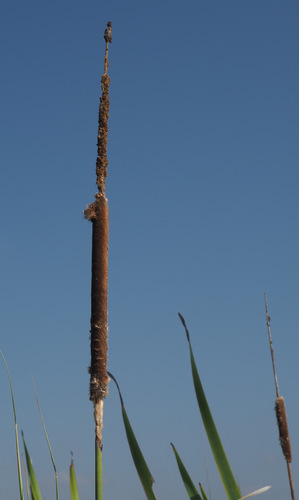
(c) Ron Frumkin, some rights reserved (CC BY-NC), uploaded by Ron Frumkin
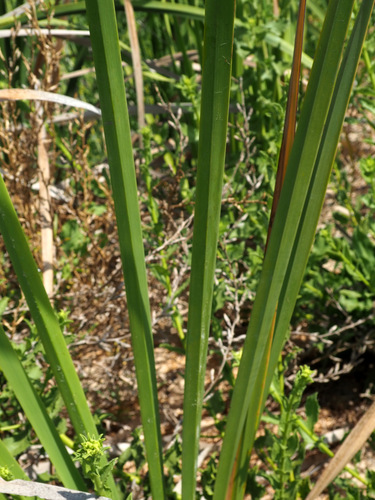
(c) Ron Frumkin, some rights reserved (CC BY-NC), uploaded by Ron Frumkin
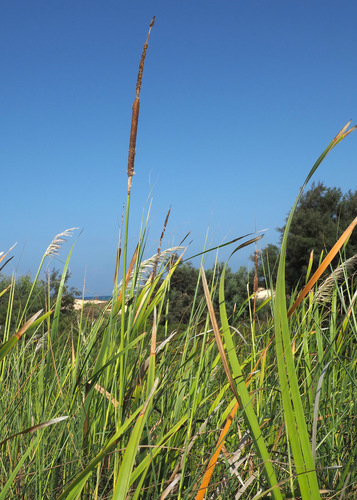
(c) Ron Frumkin, some rights reserved (CC BY-NC), uploaded by Ron Frumkin
What to Eat
Edible parts: Rhizome, Leaves, Flowers, Pollen, Stems, Roots, Vegetable
This species shares the same properties as other Typha species but is considered particularly well suited to exploitation owing to its enormous size. Based on the general uses of other large Typha species: rhizomes are eaten raw or cooked and have a sweet flavour. Rich in starch (around 30–46%), they can be boiled like potatoes or macerated and boiled to yield a sweet syrup. Dried and ground into a protein-rich flour, they work as a soup thickener, a cereal flour supplement, or the base for biscuits, bread and cakes. The rhizomes at the base of erect shoots are mostly horizontal and unbranched, up to 70cm long and 5–40mm in diameter — starchy, firm and scaly. To remove the fibrous content, peel 20–25cm lengths, dry briefly by a fire, then twist to loosen the fibres so the starch can be shaken out. Young spring shoots — the inner core — are eaten raw or cooked as an asparagus substitute; cut from underground stems when 10–40cm long. The base of the mature stem, where it joins the rhizome, is eaten raw or cooked with the outer layer removed, or boiled and roasted like potatoes. The young flowering stem is eaten raw, cooked or as soup and tastes like sweet corn. Seeds are cooked; small and fiddly, they have a pleasant nutty flavour when roasted. An edible oil is obtained from the seed — seeds contain about 18–20% oil, of which 69% is linolenic acid — though the small seed size makes this an impractical crop. Pollen is a protein-rich flour additive for bread and porridge; bright yellow-green, it gives pancakes, cookies and biscuits an attractive yellow colour. It is easier to use when eaten with the young flowers. To harvest, hold the flowering stem over a wide shallow container and gently tap and brush off the pollen — this also aids pollination, helping ensure both pollen and seeds can be collected.
Where to Find It
A tropical plant. It grows on the Deccan in India. It grows on the edge of water. It grows in the Sahara and the Sahel. It can grow in salty soils. It can grow in arid places.
Africa, Algeria, Asia, Bangladesh, Bhutan, Central Africa, Central Asia, Chad, China, Egypt, Eritrea, Ethiopia, Europe, Himalayas, India, Iran, Israel, Mali, Mauritania, Mediterranean, Middle East, Morocco, Myanmar, Nepal, Niger, North Africa, Northeastern India, Pakistan, Sahel, Saudi Arabia, SE Asia, Senegal, Spain, Tajikistan, Turkmenistan, Uzbekistan, West Africa, Yemen,
How to Identify
A herb. It is a reed like plant. It keeps growing from year to year. It is 1.5-4 m tall. The leaves are narrow. The leaf sheath is angular and keeled. The leaf blade is 25-40 mm wide. The male and female parts of the flower are separate.
How to Grow
Succeeds in sun or part shade. Grows in boggy pond margins or shallow water to 15cm deep. Requires a rich wet soil if it is to well. Tolerates moderate levels of salt. Prefers a pH in the range 6.5 - 7.5, tolerating 6 - 8. The rhizomes of the vigorous species of Typha contain around 30% - 46% starch. The core of these rhizomes can be ground into a flour. One hectare of plants would yield about 7 tonnes of flour per year. This flour would probably contain about 80 % carbohydrates and around 6% - 8% protein. Since these species occur around the world, the plants are a potential source of food for the world's population. Seedlings rapidly form clones by means of rhizomes in their first season, flower the second season, and often form very large, persistent, often monospecific stands. Unless restrained by some means, such as a large bottomless container, the plant will soon completely take over a site and will grow into the pond, gradually filling it in. It will often form an almost complete monoculture in boggy soil. The dense growth provides excellent cover for water fowl. Carbon Farming - Cultivation: regional crop. Management: hay.
Propagation: Seed — surface sow in a pot standing in 3cm of water. Pot up seedlings as soon as possible, gradually increasing the water depth as plants develop, and plant out in summer. Division in spring is very easy — harvest young shoots at 10–30cm tall with some root attached and plant directly into permanent positions.
Medicinal Uses
This species shares the same properties as other Typha species but is considered particularly well suited to exploitation owing to its enormous size. Based on the general uses of other large Typha species: the leaves are diuretic. The pollen is astringent, desiccant, diuretic, haemostatic and vulnerary, used in the treatment of nosebleeds, haematemesis, haematuria, uterine bleeding, dysmenorrhoea, postpartum abdominal pain, gastralgia, scrofula and abscesses. It is contraindicated for pregnant women. The seed down is haemostatic. The rootstock is astringent and diuretic.
Other Uses
This species shares the same properties as other Typha species but is considered particularly well suited to exploitation owing to its enormous size. The plant's extensive root system makes it well suited to stabilizing wet riverbanks and lakesides. It can be grown in water purification systems to remove pollutants from water and soil, with top growth removed once or twice during the growing season for use as fuel or recovered materials. Stems and leaves make good thatching for roofs, walls and floor coverings, can be woven into mats, chairs, hats and other handicrafts, and serve as a caulking material for barrels and boats. Fibre from the leaves and stems is used in papermaking; fibre from the roots can be made into string. The plant produces biomass comparable to the most productive agricultural crops and is a potential energy source, including for alcohol manufacture. Stems make an excellent compost addition or fuel. Fruit hairs are used as stuffing for pillows, mattresses and toys, with good buoyancy properties suitable for life preservers and excellent insulation properties for use in construction. Female flowers make outstanding tinder, ignitable from a flint spark, and the highly inflammable pollen is used in making fireworks.
Wikipedia
Source ↗Typha elephantina is a plant species widespread across northern Africa and southern Asia. It is considered native in Algeria, Egypt, Libya, Mauritania, Senegal, Chad, Eritrea, Ethiopia, Turkmenistan, Tajikistan, Uzbekistan, the Palestine region, Saudi Arabia, Yemen, Yunnan, Assam, Bangladesh, India, Bhutan, Nepal, Pakistan and Burma. It grows in freshwater marshes and on the banks of lakes and streams.
Notes
There are 10 Typha species.
Names & Synonyms
Anaikkorai, Anaippul, Apu, Berdi, Boj, Bora, Bori, Chamba, Dib, Eenugajammu, Eraka, Ghabajarin, Gond, Googol bon, Gundra, Hagla, Hogla, Jambuhallu, Kundar, Lukh, Mothitrina, Patira, Pitz, Pun, Rambdna, Sako, Shin-mwe-lon, Yira
References (15)
- Al-Sodany, Y. M., et al, 2013, Medicinal Plants in Saudi Arabia: I. Sarrwat Mountains at Taif, KSA. Academic Journal of Plant Sciences 6 (4): 134-145
- Ambasta, S.P. (Ed.), 2000, The Useful Plants of India. CSIR India. p 658
- Burkill, H. M., 1985, The useful plants of west tropical Africa, Vol. 5. Kew.
- Facciola, S., 1998, Cornucopia 2: a Source Book of Edible Plants. Kampong Publications, p 242
- Fl. ind. ed. 1832, 3:566. 1832
- Flora of Pakistan. www.eFloras.org
- Grubben, G. J. H. and Denton, O. A. (eds), 2004, Plant Resources of Tropical Africa 2. Vegetables. PROTA, Wageningen, Netherlands. p 565
- Hedrick, U.P., 1919, (Ed.), Sturtevant's edible plants of the world. p 662
- Jardin, C., 1970, List of Foods Used In Africa, FAO Nutrition Information Document Series No 2.p 20, 108
- Martin, F.W. & Ruberte, R.M., 1979, Edible Leaves of the Tropics. Antillian College Press, Mayaguez, Puerto Rico. p 221
- Patiri, B. & Borah, A., 2007, Wild Edible Plants of Assam. Geethaki Publishers. p 154
- Royal Botanic Gardens, Kew (1999). Survey of Economic Plants for Arid and Semi-Arid Lands (SEPASAL) database. Published on the Internet; http://www.rbgkew.org.uk/ceb/sepasal/internet [Accessed 13th June 2011]
- Uphof,
- Romanowski, N., 2007, Edible Water Gardens. Hyland House. p 71
- World Checklist of Useful Plant Species 2020. Royal Botanic Gardens, Kew