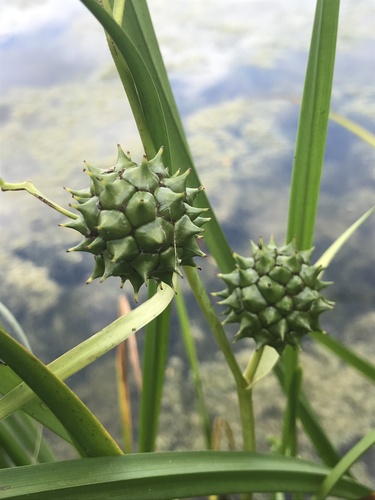
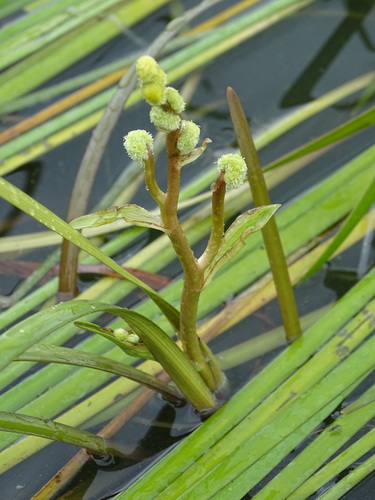
Sparganium androcladum
(Engelm.) Morong.
Branching bur-reed
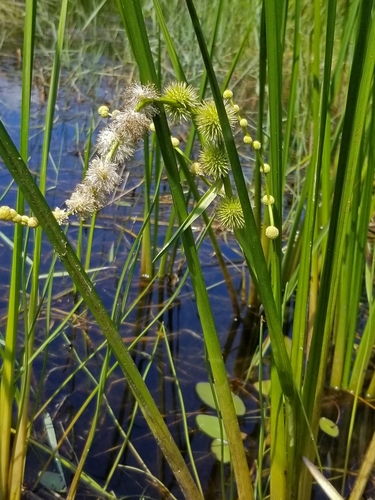
(c) Rob Routledge, some rights reserved (CC BY-NC), uploaded by Rob Routledge
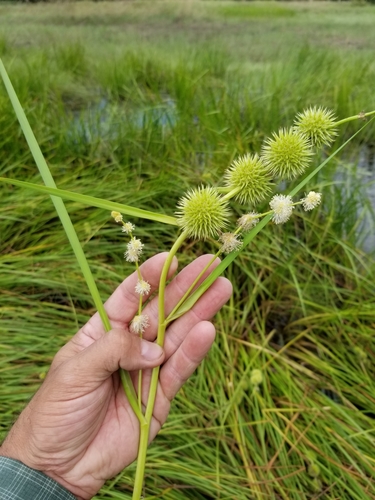
(c) Rob Routledge, some rights reserved (CC BY-NC), uploaded by Rob Routledge

(c) smwhite, some rights reserved (CC BY-NC), uploaded by smwhite
What to Eat
Edible parts: Root, Stem
Both the root and the base of the stem are edible when cooked.
Where to Find It
It is a temperate plant.
North America, USA,
How to Identify
Sparganium androcladum is a perennial wetland plant reaching 1.2 m tall with a spreading habit. It flowers from June to August and thrives in wet soils or shallow water. The plant is monoecious with wind-pollinated flowers. It adapts well to light sandy, medium loamy, and heavy clay soils across mildly acid to basic pH ranges. Growth is possible in semi-shade or full sun, making it suitable for light woodland edges and open wetlands. The species attracts wildlife.
How to Grow
Propagation: Seed is best sown as soon as it is ripe in pots in a greenhouse stood in 2–3cm of water. Prick out seedlings into individual pots when large enough to handle, gradually increasing the water depth as they grow until it reaches roughly the top of the pots. Plant out in summer if growth is sufficient, otherwise in the following spring. Divide plants in spring or autumn — larger divisions can go directly into permanent positions, while smaller ones are best potted up and grown on in a lightly shaded cold frame, then planted out once well established in summer.
Medicinal Uses
None known
Other Uses
None known
Wikipedia
Sparganium androcladum is a perennial wetland plant reaching 1.2 m tall with a spreading habit. It flowers from June to August and thrives in wet soils or shallow water. The plant is monoecious with wind-pollinated flowers. It adapts well to light sandy, medium loamy, and heavy clay soils across mildly acid to basic pH ranges. Growth is possible in semi-shade or full sun, making it suitable for light woodland edges and open wetlands. The species attracts wildlife.
References (1)
- Plants for a Future database, The Field, Penpol, Lostwithiel, Cornwall, PL22 0NG, UK. http://www.scs.leeds.ac.uk/pfaf/