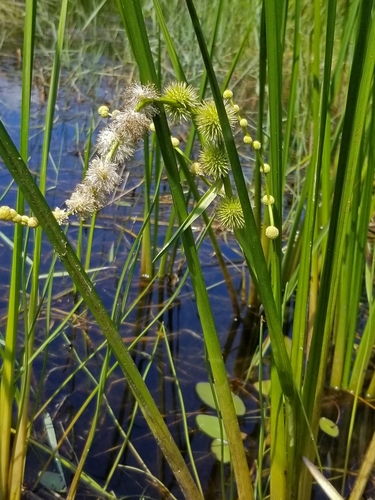
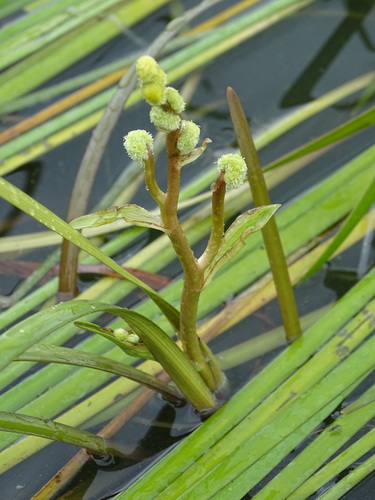
Sparganium eurycarpum
Engelm.
Giant bur reed
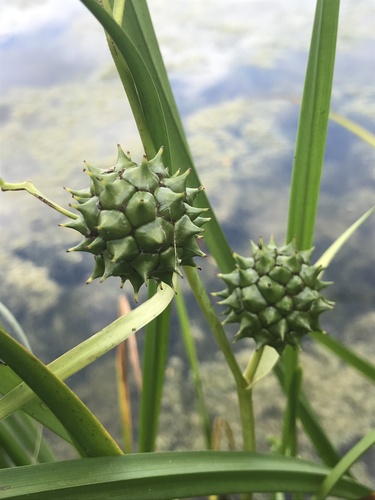
(c) Whitney Suurd, some rights reserved (CC BY-NC), uploaded by Whitney Suurd
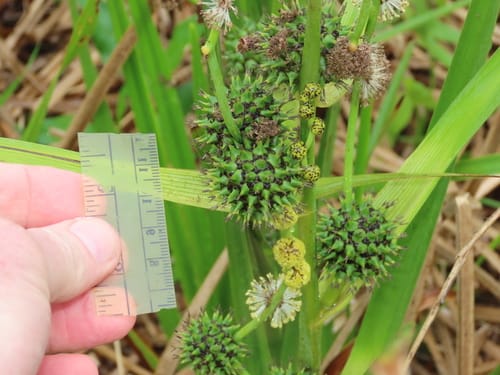
(c) Chuck Cantley, some rights reserved (CC BY-NC)
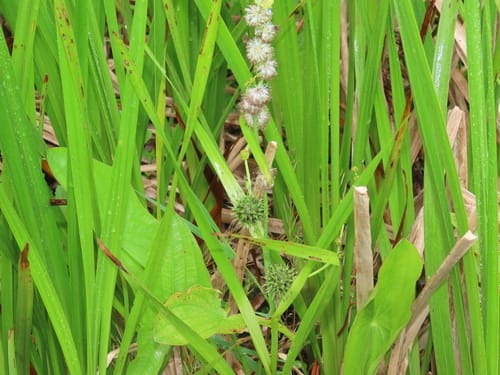
(c) Chuck Cantley, some rights reserved (CC BY-NC)
What to Eat
Edible parts: Leaf base, Roots, Tubers, Seeds
The bulb at the base of the stem, leaf bases, roots, tubers, and seeds are used as food.
Where to Find It
It is a temperate plant.
North America, USA,
How to Identify
A stout erect plant that grows in mud or shallow water. It grows 2.5 m tall. The leaves are erect and 80 cm long by 1-2 cm wide. The flowering shoot is branched.
Wikipedia
Source ↗Sparganium eurycarpum is a species of bur-reed known by the common names broadfruit bur-reed and giant bur-reed. It is native to wetlands in Eurasia and North America. It is a clonal perennial, spreading by below-ground rhizomes. The common name, bur-reed, arises from the distinctive round clusters of fruits that take the form of a mace. It can be distinguished from all other species of bur-reed by the presence of two stigmas. This species frequently occurs in areas with spring flooding, and may be emersed during periods of lower water. The buried rhizomes provide one method to survive periods of drought, fire, or ice scour. The flowers are wind pollinated, the male flower clusters being separate and more highly elevated than the female. It also produces large seeds, which can accumulate in the soil as buried reserves. It can form dense stands under the right conditions; for example, Sparganium is one of the four main vegetation types in the Ottawa River, Canada. Muskrats feed on the plant, particularly its rhizomes, while the seeds are an important food source for waterfowl.[1]
References (5)
- Beckstrom-Sternberg, Stephen M., and James A. Duke. "The Foodplant Database." http://probe.nalusda.gov:8300/cgi-bin/browse/foodplantdb.(ACEDB version 4.0 - data version July 1994)
- A. Gray, Manual ed. 2:430. 1856
- Kermath, B. M., et al, 2014, Food Plants in the Americas: A survey of the domesticated, cultivated and wild plants used for Human food in North, Central and South America and the Caribbean. On line draft. p 831
- Moerman, D. F., 2010, Native American Ethnobotany. Timber Press. p 539
- Romanowski, N., 2007, Edible Water Gardens. Hyland House. p 115