Typha glauca
Godr.
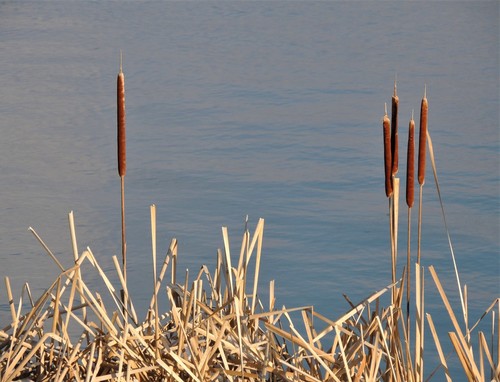
(c) Catriona Leven, some rights reserved (CC BY-NC)

(c) Catriona Leven, some rights reserved (CC BY-NC)

(c) Catriona Leven, some rights reserved (CC BY-NC)
What to Eat
Edible parts: Flowers, Leaves, Oil, Pollen, Root, Seeds, Stem
Roots can be eaten raw or cooked — boil them like potatoes or macerate and boil to produce a sweet syrup. Dried and ground into a starch-rich flour, the roots work as a soup thickener or can be blended with cereal flours to make biscuits, bread, and cakes. Young spring shoots are eaten raw or cooked as an asparagus substitute and should be peeled before eating. The base of the mature stem is also edible raw or cooked, with the outer portion removed first. The young flowering stem can be eaten raw, cooked, or made into soup and tastes like sweet corn. Seeds are small and fiddly to work with but have a pleasant nutty flavour when roasted; an edible oil can also be extracted from them, though the small seed size makes this a marginal crop. Pollen is a protein-rich addition to flour for bread, porridge, and similar foods, or it can be eaten directly with the young flowers — by far the easiest way to use it. To harvest pollen, hold the flowering stem over a wide, shallow container and gently tap and brush it free with a fine brush; this process also aids pollination, helping ensure future pollen and seed harvests.
Where to Find It
It is a temperate plant.
North America, USA,
How to Identify
Tall perennial reaching 3m with monoecious wind-pollinated flowers. Tolerates light sandy, medium loamy, and heavy clay soils across mildly acid to basic pH. Requires full sun and prefers wet soil or water habitats; not shade-tolerant.
How to Grow
Grows in boggy pond margins or shallow water to 15cm deep. Requires a rich wet soil if it is to well. Succeeds in sun or part shade. This species is believed to be a naturally occurring hybrid between T. angustifolia and T. latifolia. Plants can be very invasive, spreading freely at the roots when in a suitable site.
Propagation: Surface sow seed in a pot stood in 3cm of water. Pot up seedlings as soon as possible and gradually increase the water depth as the plants grow. Plant out in summer. Division in spring is very easy — harvest young shoots when they are 10–30cm tall, ensuring some root is attached, and plant directly into permanent positions.
Medicinal Uses
No medicinal uses are currently known for this species.
Other Uses
Stems and leaves have a wide range of practical applications: gathered in autumn, they make good thatching material, can be used in paper production, and can be woven into mats, chairs, and hats. They are a useful biomass resource, suitable for composting or use as fuel. The fruit hairs are used to stuff pillows and similar items, offering good insulation and buoyancy. Pollen is highly flammable and is used in making fireworks. The plant's extensive root system makes it highly effective at stabilising the wet banks of rivers and lakes.
Wikipedia
Source ↗Tall perennial reaching 3m with monoecious wind-pollinated flowers. Tolerates light sandy, medium loamy, and heavy clay soils across mildly acid to basic pH. Requires full sun and prefers wet soil or water habitats; not shade-tolerant.
Notes
There are 10 Typha species.
References (1)
- Plants for a Future database, The Field, Penpol, Lostwithiel, Cornwall, PL22 0NG, UK. http://www.scs.leeds.ac.uk/pfaf/