Typha orientalis
C. Presl.
Bulrush, Broad-leaved Cumbungi
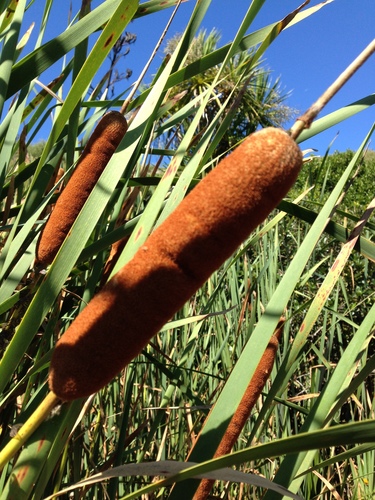
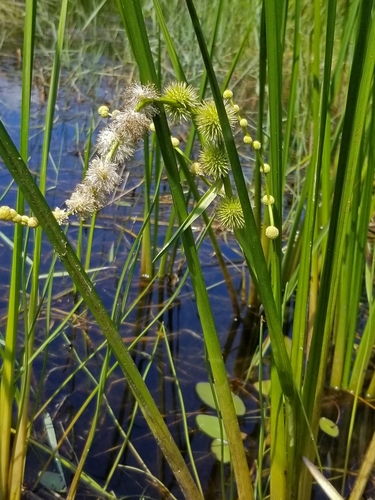
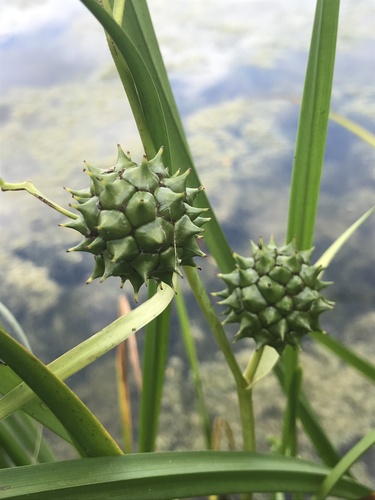
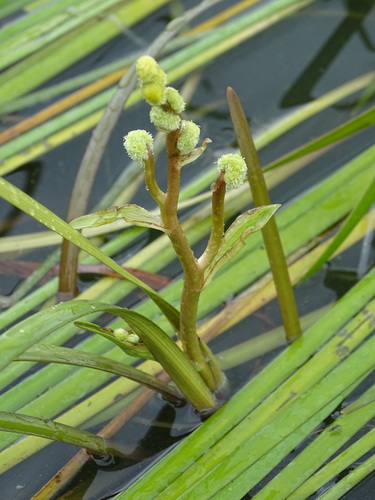
(c) Jordi Tablada, some rights reserved (CC BY-NC-SA), uploaded by Jordi Tablada
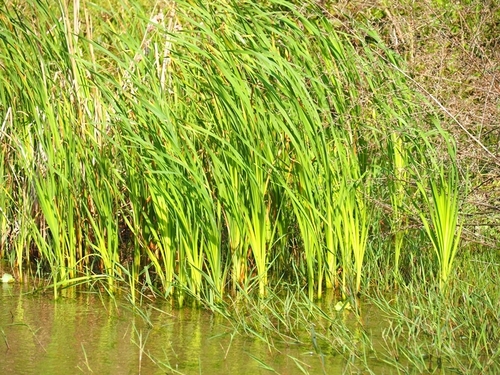
(c) chen_z, some rights reserved (CC BY-NC), uploaded by chen_z

(c) nick_goldwater, some rights reserved (CC BY), uploaded by nick_goldwater
What to Eat
Edible parts: Leaves, Root, Pollen
Roots are usually peeled before use and can be eaten raw or cooked — boil them like potatoes or macerate and boil to produce a sweet syrup. They can also be dried, ground into a protein-rich flour, and used as a soup thickener or blended with cereal flours to make biscuits, bread, and cakes. The roots contain a significant amount of fibre; one method to remove it is to peel 20–25cm lengths, dry briefly beside a fire, then twist and loosen the fibres so the starch can be shaken out. Young spring shoots are eaten raw or cooked as an asparagus substitute. The base of the mature stem is edible raw or cooked with the outer layer removed. The young flowering stem, as well as the cooked flowering stem, can be eaten raw, cooked, or made into soup and tastes like sweet corn. Seeds are small and fiddly but have a pleasant nutty flavour when roasted; an edible oil is also obtained from the seed, though the small seed size makes this a marginal crop. Pollen is a protein-rich addition to flour for bread and porridge, and is easiest used by eating it along with the young flowers. To harvest pollen, hold the flowering stem over a wide, shallow container and gently tap and brush it free; this also aids pollination to ensure future pollen and seed yields.
Known Hazards
Where to Find It
A tropical plant. It mostly grows in tropical and subtropical places. It grows in moist soils or shallow pools. It grows in wetlands. It needs an open sunny position. It can tolerate frost but not drought. In Papua New Guinea it grows from sea level to 2600 m altitude. It grows in fresh or brackish water up to 2 m deep. It suits hardiness zones 9-11.
Asia, Australia*, China, Japan, Korea, Malaysia, Mongolia, Myanmar, New Zealand, Pacific, Papua New Guinea, PNG, Philippines, Russia, SE Asia, Tasmania*,
How to Identify
It is a plant which continues to grow from year to year. It is 2 m high and spreads to 50 cm across. There is an extensive network of fleshy white underground stems or rhizomes. These produce aerial shoots. The stem is erect, stout and round in cross section. The leaves are bluish-green and narrow. They can be 2 m long. The flowers are brown, in erect spikes at the ends of stalks. The flowers are green at first, then turn brown. The flower spike is 30 mm across.
How to Grow
Grow in a rich soil in boggy pond margins or shallow water to 15cm deep. Succeeds in sun or part shade. Plants can be very invasive, spreading freely at the roots when in a suitable site. Provides excellent cover for wildlife.
Propagation: Surface sow seed in a pot stood in 3cm of water. Pot up seedlings as soon as possible and gradually increase the water depth as the plants develop. Plant out in summer. Division in spring is very easy — harvest young shoots when they are 10–30cm tall with some root attached and plant directly into permanent positions.
Medicinal Uses
The pollen is astringent, diuretic, emmenagogue, galactogogue, and haemostatic. Dried pollen is said to be anticoagulant, but when roasted with charcoal it becomes haemostatic. Internally, it is used to treat kidney stones, haemorrhage, painful menstruation, abnormal uterine bleeding, post-partum pains, abscesses, and cancer of the lymphatic system. It should not be prescribed for pregnant women. Externally it is used in the treatment of tapeworms, diarrhoea, and injuries.
Other Uses
Stems gathered in autumn make good thatching material, can be used in paper production, and woven into mats, chairs, and hats. They are a useful biomass resource for composting or fuel. Leaf fibre can be used for papermaking — harvest leaves in summer, autumn, or winter, soak in water for 24 hours, cook fibres for 2 hours with soda ash, then beat in a ball mill for 1½ hours to produce green or brown paper. Fibre is also obtained from the blossom stem and flowers, and root fibre can be used for making string. Fruit hairs are used for stuffing pillows, providing good insulation and buoyancy; they have also been used as wound dressings and as lining for babies' nappies. Stems can be made into rush lights by removing the outer skin and leaving a spine running the full length for stability, then soaking in oil. Pollen is highly flammable and is used in making fireworks.
Wikipedia
Source ↗Typha orientalis, commonly known as bulrush, cumbungi, or raupō, is a perennial herbaceous plant in the genus Typha. It is native to Australia, New Zealand, Malaysia, Indonesia, Japan, Korea, Mongolia, Myanmar, Philippines, China and the Russian Far East (Sakhalin and Primorye). T. orientalis is a wetland plant that grows on the edges of ponds, lakes, salt marshes, and slow flowing rivers and streams.
Production
One plant can produce 200,000 seeds.
Notes
This plant is very similar to Typha domingensis. Typha angustifolia is similar but in the northern hemisphere. There are 10 Typha species.
Names & Synonyms
Broadleaf Cumbungi, Shin-mwe-lon, Raupo, Yinbun
References (36)
- Abh. Koenigl. Bohm. Ges. Wiss. ser. 5, 6:599; Epimel. bot. 239. 1851 ("1849")
- Bodkin, F., 1991, Encyclopedia Botanica. Cornstalk publishing, p 997
- Caton, J.M. & Hardwick, R. J., 2016, Field Guide to Useful Native Plants from Temperate Australia. Harbour Publishing House. p 182
- Cherikoff V. & Isaacs, J., The Bush Food Handbook. How to gather, grow, process and cook Australian Wild Foods. Ti Tree Press, Australia p 191, 197
- Crowe, A., 1997, A Field Guide to the Native Edible Plants of New Zealand. Penguin. p 102
- Cundall, P., (ed.), 2004, Gardening Australia: flora: the gardener's bible. ABC Books. p 1445
- Curtis, W.M., & Morris, D.I., 1994, The Student's Flora of Tasmania. Part 4B St David's Park Publishing, Tasmania, p 363
- Dashorst, G.R.M., and Jessop, J.P., 1998, Plants of the Adelaide Plains & Hills. Botanic Gardens of Adelaide and State Herbarium. p 190
- Daw, B., Walley, T. & Keighery, G., 2001, Bush Tucker. Plants of the South-West. Department of Conservation and Land Management. Western Australia. p 54
- Flora of Australia Volume 49, Oceanic Islands 1, Australian Government Publishing Service, Canberra. (1994) p 499
- Hardwick, G., 2001, Economically Useful Plants for Northern Australia: Master Species List. Crusader eBooks.
- Haslam, S., 2004, Noosa's Native Plants. Noosa Integrated Catchment Assn. Inc. p 158
- Hastings Advance Community College, 2017, Uses for Native Plants of the Mornington Peninsula. 86pp. p 79
- Hiddins, L., 1999, Explore Wild Australia with the Bush Tucker Man. Penguin Books/ABC Books. p 130
- Hussey, B.M.J., Keighery, G.J., Cousens, R.D., Dodd, J., Lloyd, S.G., 1997, Western Weeds. A guide to the weeds of Western Australia. Plant Protection Society of Western Australia. p 74
- Irvine, (As Typha muelleri)
- Lazarides, M. & Hince, B., 1993, Handbook of Economic Plants of Australia, CSIRO. p 242
- Leach, G.J., & Osborne, P.L., 1985, Freshwater Plants of Papua New Guinea. UPNG Press, p 235
- Lim, T. K., 2015, Edible Medicinal and Non Medicinal Plants. Volume 9, Modified Stems, Roots, Bulbs. Springer p 83
- Low, T., 1991, Wild Herbs of Australia and New Zealand. Angus & Robertson. p 106
- Low, T., 1991, Wild Food Plants of Australia. Australian Nature FieldGuide, Angus & Robertson. p 54
- Low, T., 1992, Bush Tucker. Australia’s Wild Food Harvest. Angus & Robertson. p 109
- Marinelli, J. (Ed), 2004, Plant. DK. p 278
- Paczkowska, G. & Chapman, A.R., 2000, The Western Australian Flora. A Descriptive Catalogue. Western Australian Herbarium. p 130
- Plants for a Future database, The Field, Penpol, Lostwithiel, Cornwall, PL22 0NG, UK. http://www.scs.leeds.ac.uk/pfaf/
- Robins, J., 1996, Wild Lime. Cooking from the Bush food garden. Allen & Unwin p 149
- Romanowski, N., 2007, Edible Water Gardens. Hyland House. p 71
- Sainty, G.R. & Jacobs, S.W.L., 1981, Waterplants of New South Wales. Water Resources Commission. NSW p 417
- Skinner, G. & Brown, 1981, C., Simply Living. A gatherer's guide to New Zealand's fields, forests and shores. Reed. p 19
- Stephens, K.M., & Dowling, R.M., 2002, Wetland Plants of Queensland. A field guide. CSIRO p 90
- Tasmanian Herbarium Vascular Plants list p 92
- Ulian, T., et al, 2020, Unlocking plant resources to support food security and promote sustainable agriculture. Plants, People, Planet. 2020;2:421–445.
- Urgamal, M., Oyuntsetseg, B., Nyambayar, D. & Dulamsuren, Ch. 2014. Conspectus of the vascular plants of Mongolia. (Editors: Sanchir, Ch. & Jamsran, Ts.). Ulaanbaatar, Mongolia.
- Williams A. & Sides, T., 2008, Wiradjuri Plant Use in the Murrumbidgee Catchment. Murrumbidgee Catchment Management Authority. Wagga Wagga, p 93
- World Checklist of Useful Plant Species 2020. Royal Botanic Gardens, Kew
- Zhang, Y., et al, 2014, Diversity of wetland plants used traditionally in China: a literature review. Journal of Ethnobiology and Ethnomedicine. 10:72